Tag Archives: west virginia

From making to exhibiting

I attended the opening of FABRICation at the WVU Art Museum in Morgantown, WV and was curious how the variety of display challenges were surmounted by the artists, curators and facility. Not a single item is hung by traditional wires.  Velcro, screws in the wall to mount a panel flush, grommets and 20 penny nails, wood blocks hiding screws, templates and detailed dimensions all were included by the artists in their packages along with the artwork.

Since 2014 FABRICation co-curators Reni Gower and Kristy Deetz have incorporated seven fiber artists’ organic creations into a successful traveling collection exhibited in thirteen public spaces. Through March 19 the WVU Art Museum in Morgantown, WV is hosting the works with informative lectures. On Feb 22 there is a lunchtime talk by preparator Michael Loop who will reveal tips of his job in bridging the studio art making and presenting the art in a public exhibition.

As makers of art, how our work is displayed often requires technical skills outside of those we used to create it. These artists considered presentation techniques to emphasize their message. The graceful drape of Susan Iverson’s woven panels encourage the public to look at the grouping, follow the designs rhythmically up and along to the next, enjoying the natural themes in the panels. Susan included a template to mount the velcro strips, numbered the panels and gave specific measurements for height.

Verdant 2010, Susan Iverson wool tapestry and glass

Verdant 2010, Susan Iverson wool tapestry and glass

Reni Gower’s three panels incorporate a multitude of strips spaced in layers to adding shadowed shapes on the patterns she has created. Her directions began with the height on the wall from floor to install a row of specifically spaced screws that allowed the three wooden rods with pre-drilled holes to be set onto. An easy job for the preparator because of the directions. For the viewer we are drawn close to examine the details and back out appreciating the cacophony of color and shapes.

Natalie Smith created boldly painted blocks as elements in her design and to hide the hanging nails. The minimalism of her work misleads us to think it is simplistic. She incorporates modern materials – plastic and permanent marker, with traditional draping cotton in a manner to suggest a fun, playful perhaps 1960’s era (an innocence).

Coming True, Natalie Smith, cotton, plastic, wood

Coming True, Natalie Smith, cotton, plastic, wood

The venue dictates how the twenty one pieces are displayed. The curators are pleasantly surprised visiting a new space seeing how the works are relating with each other. Rachel Hayes piece Sympathy Falls is 192″ x 102″ with grommets installed for hanging vertically or horizontally. WVU Art Museum had installed in the ceiling a method to suspend the work in the middle of the gallery. This allowed people to view crowds through the sheer weave, adding new changing shapes to the patchwork. The placement foreshortened the long gallery with another “wall”.
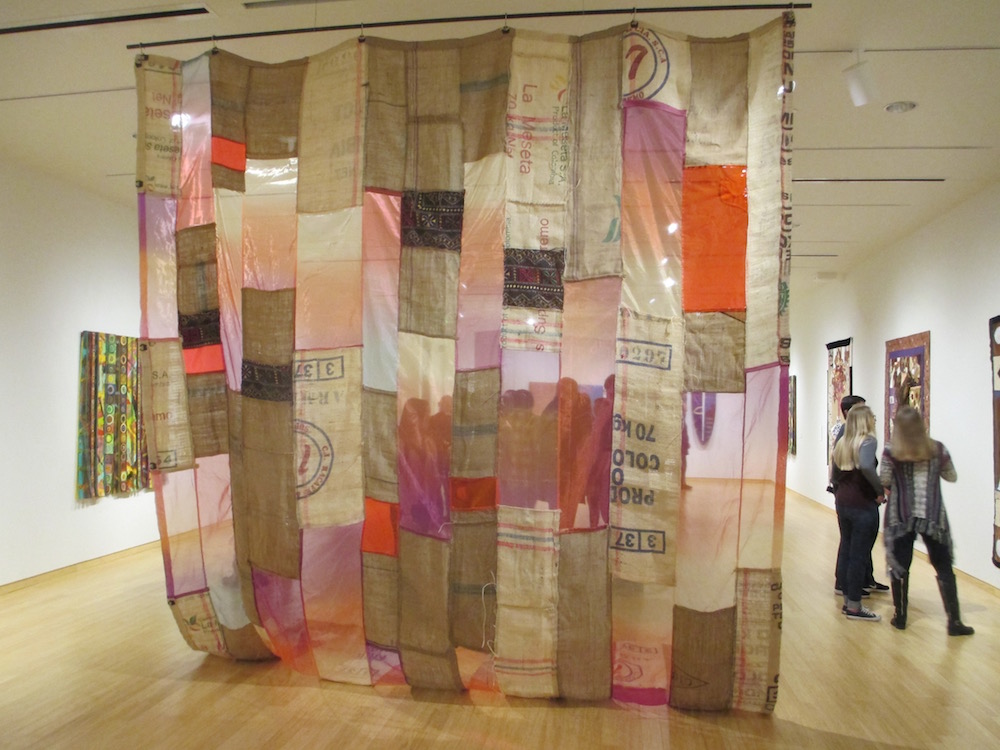
Sympathy Falls, Rachel Hayes patchwork

Sympathy Falls, Rachel Hayes patchwork

The digital prospectus prepared to solicit spaces includes sizes, descriptive labels, artist statements and outreach programming and costs. A variety of funding sources have assisted the facilities in funding the show. Ms. Gower listed FABRICations on Association of Academic Museums and Galleries (AAMG) website http://www.aamg-us.org/wp/ . An extensive catalog is available to order in print or as a digital version at FABRICation by Reni Gower. It includes artist statements, contacts, an art review and curators description and full color of each work.

The exhibit is scheduled through 2017. If people can visit in person the scale and close inspection of technique, materials and composition will be worth the trip at:
Academy Art Museum, Easton, MD; April 15 – Jul 9, 2017
Bowling Green State University, Fine Arts Center Gallery, Bowling Green, OH; Sep 1 – Oct 1, 2017

Textiles can often be folded or rolled up and usually ship without a FRAGILE label. These are positive selling points when a curator submits a proposal looking for exhibition space.  I encourage artists to create with their hearts, resolve presentation obstacles and submit their work to curators, juried opportunities or create relationships with venues and educate the public about traditional methods made by contemporary hands.
Rights and Action

The third in my women’s issues series addresses voting rights … “Iconic VOTE”
Size (18 x 24) and some design components were established by the two previous pieces.

Selecting the materials, techniques and design elements always seem to evolve from my first concept to the completed work. And this piece definitely changed. I worked it during the upcoming election with a confidence that has been challenged since. The circle would have three smaller circles placed in a pyramid. I VOTED (sticker we got when voting); the Clinton logo in blues; and Charlotte Pritt’s West Virginia Governor race in green. The remaining circle parts would be purple with a white edge for contrast.

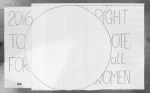
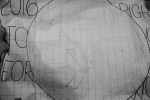
I thought I would depict our flag as the background: cutting up the actual blue lawn sign for Hillary and hooking it in the upper left then hand piecing red and white cotton stripes making up the rectangle. The message would be gold, embroidered on the cotton, hooked in the blue section completing the suffragette reference (white, gold and purple). It read at this point: 2016 RIGHT TO VOTE FOR ALL WOMEN. People could read this with emphasis on ALL or WOMEN and leading to different meanings.

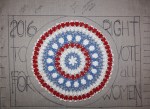
Iconic Vote evolving

Iconic Vote evolving

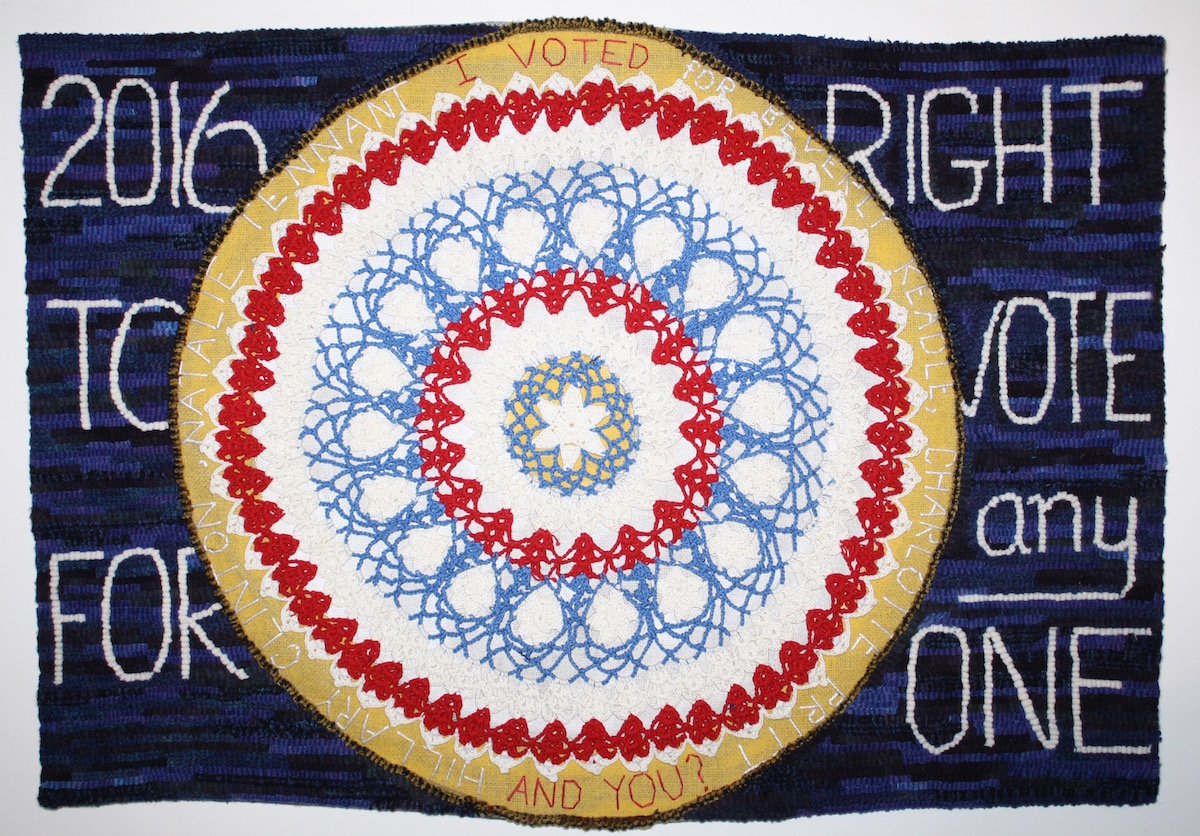
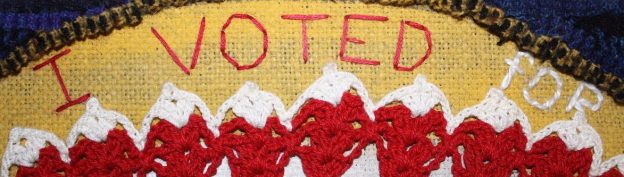
November 9 arrived. I decided to throw out the large logos and change the wording to 2016 RIGHT TO VOTE FOR ANY ONE. In my quest to repurpose items in my work I recalled a patriotic crocheted doily we purchased in Shartlesville, PA years ago. It was just right, leaving an inch for an interesting edge like my other pieces. I painted the backing gold under the white star in center, then white to enhance the reds and blues with the gold again outside.

Ok the USA part was taken care of. Now the women I voted for and the message to VOTE. Using thin and thick lines with different contrast, I wanted to draw people into the piece from afar to find a secondary message.  The red thread for I VOTED, AND YOU? can be read from farther than the white pearl cotton embroidered on the gold saying: “for BEVERLY KEADLE, CHARLOTTE PRITT, HILLARY CLINTON, NATALIE TENNANT“.

Iconic VOTE, Susan L Feller 2016

Iconic VOTE, Susan L Feller 2016

The background is hooked using five different wools in deep blue/purples with the brighter turquoise showing how, as in the other two pieces, the directional hooking creates stripes . I selected a very dark value for my solemn mood, a purple caste as one more acknowledgement of suffragette colors and for he highest contrast with the white wide hooked letters.

I think this is a strong piece with interesting details and look forward to the upcoming years exercising my right to VOTE. The eighteen year old women who vote for the first time in 2020 will be doing so 100 years and 25 Presidential Elections after the first.

A personal history

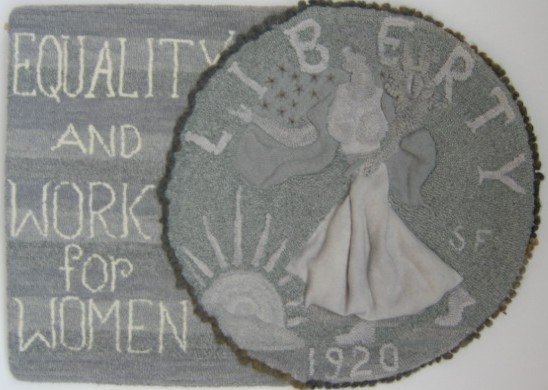
I knew when Iconic Liberty was finished in 2006 there would be more to the story. It represented the 19th Amendment to the US Constitution granting women the right to vote. It also represents my grandmother coming of age and later working alongside my grandfather in their business as I grew up. An example of equality I treasure.

Iconic Liberty by Susan L. Feller

Iconic Liberty by Susan L. Feller

Finally tonight three more chapters came together in words and images.

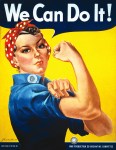
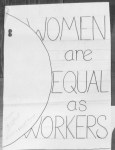
Icon 2 To continue the strong women examples in my family, and the history of female influence in US evolution I will use  “Rosie the Riveter”  in the circle with the words on right and a black and white scheme.  Changed the words from ‘as’ to ‘and’.

My mother worked in our family business.

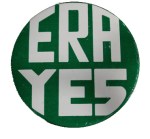
Icon 3 I came of age in the 1970’s, one of the first to vote at 18 in the presidential election. The Equal Rights Amendment was finally passed by Congress in 1972 and sent to be ratified by the states …. after ten years it failed to receive enough support. I recently realized it has failed, not just languished waiting for a few more states to ratify, FAILED. The third piece will be in green and white with the words above the circle with logo.

On Nov 7 I completed the Iconic ERA. The years of earning Girl Scout badges (1963-1973) add period coloring and an edge around my previously created hand hooked mat. If you connect the gold badges with lines to the middle the PEACE sign is created.  The stripes reflect the tie-dye craze of 70’s yet in subdued tones. I extended the swirls with Kaffe Fasset Stripes cotton. The letters are felted wool, attached with pearl cotton stitches.

Note the orientation changed from my design along with wording. I decided to mirror the first composition and broadened the message from just ‘women’ to WE ALL.  The embroidered message is more subtle than the emblem because it supports the message.

Iconic ERA, by Susan L Feller

Iconic ERA, by Susan L Feller

Icon 4 My upbringing has lead me to ignore public gender bias to pursue work, skills, leadership with personal preparation and persistence. In 2016 I cast my ballot (voting early is open in WV) for several women based on my understanding of their credentials. This work will be colored Red, White and Blue. Inside the circle the logos for Hillary Clinton (President of United States of America) and Charlotte Pritt (Governor for West Virginia) will be alongside the “I Voted” sticker with American Flag.

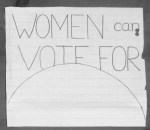
Update of design 4: the logos are scrapped for red,white,blue crocheted round doily. I painted white behind except for very center and outer rim which are gold. On that ring in white will be embroidered “I voted for Beverly and Charlotte and Hillary and Natalie” with “and you?” at the bottom of circle. Words on paper will be hooked in white and changed to “2016 Right to Vote for any one” with purple background. As of 11/23/16.


My muse …. nature

I gather nature – preserving the pieces for a while longer.
I use nature as the skeleton for my work.
I am nature and my actions reflect its energy.

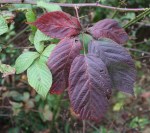
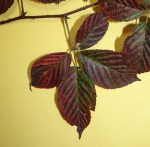
I noticed when the green leaves are behind the mahogany ones we can see them better.

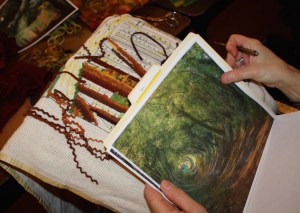
These leaves were not pressed and I decided to give my piece dimension stuffing two leaves and using yarns to define the veins.

finished with inspiration

finished with inspiration

After working the design I painted the linen. Best lesson here is paint surface FIRST then develop the motifs.

The year study lead me to reconsider how to approach each work. In rughooking the details are completed first, working out to background. But as noted in this square the surface needed to be painted before building up the leaves. I just have to remember to consider how before doing.

A Leaf Falls

One day in high school English class Mrs. Bowen assigned us an EE Cummings poem. Minutes went by as I stared at the letters and then….. I read it!

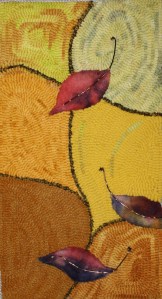
Decades later I honored this experience with “A Leaf Falls”.

Welcome to my favorite season.


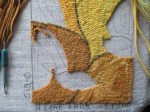
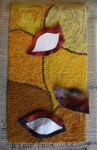
The design evolved from a sketch of migrating birds gathering seeds outside of our home one October day. The Carolina Wren’s tiny body with tail sticking up and beak down looked like a leaf. Gathering yellows and muted gold wools, I organically filled in defined shapes keeping three openings for my leaves. Two leaf shapes are stuffed and stitched onto the linen backing. Their veins and stems are copper wire anchored by  gold threads. The third is partially stuffed but its edge flutters because of a layer of iron-on interfacing with wire inserted between two pieces of wool and bent to shape.
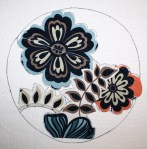
I sent off a card with the image and poem as a thank you note to Mrs. Bowen and received a lovely note back. It felt nice to have been able to send my appreciation after all these years.
Inspiration explored 50 years later

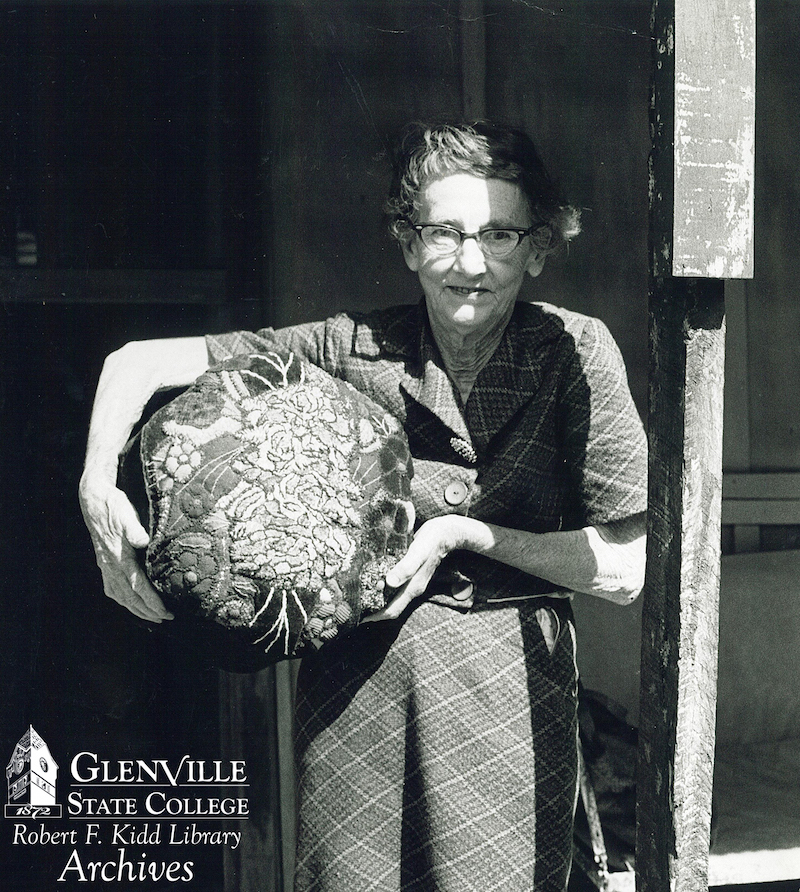
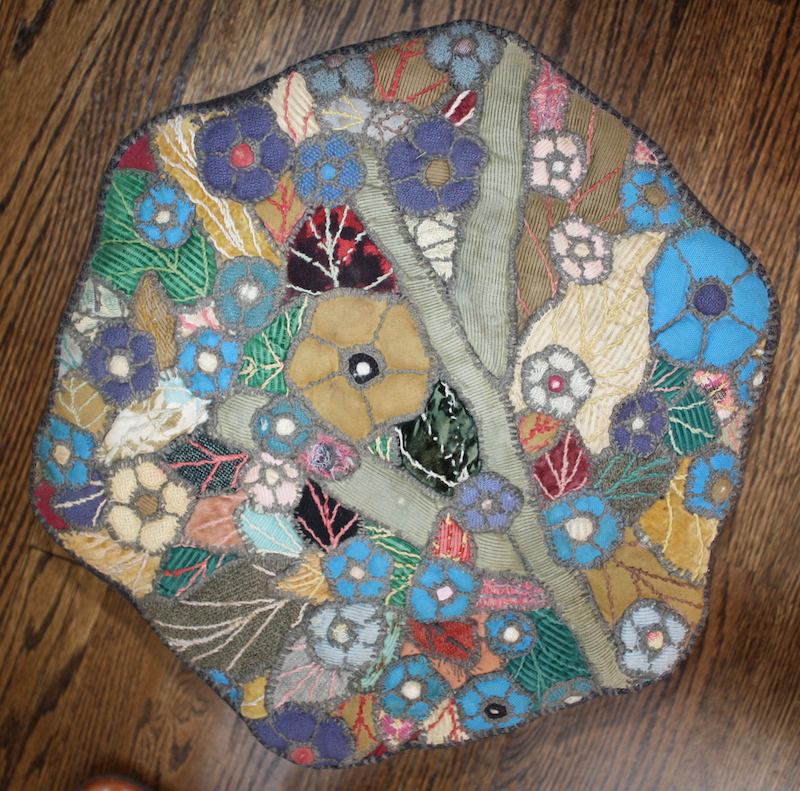
Blanche McDonald, Letter Gap, WV circa 1965 with mixed media footstool

Blanche McDonald, Letter Gap, WV circa 1965 with mixed media footstool

In a five year research project gathering personal background about Otha and Blanche McDonald from Letter Gap, WV I have been inspired by their textile work. Incorporating collage, embroidery, trapunto and stitching the ladies work embodies traditions, make-do, and balanced composition = art.  This post will describe my approach to making a footstool as they did in the 1960’s.

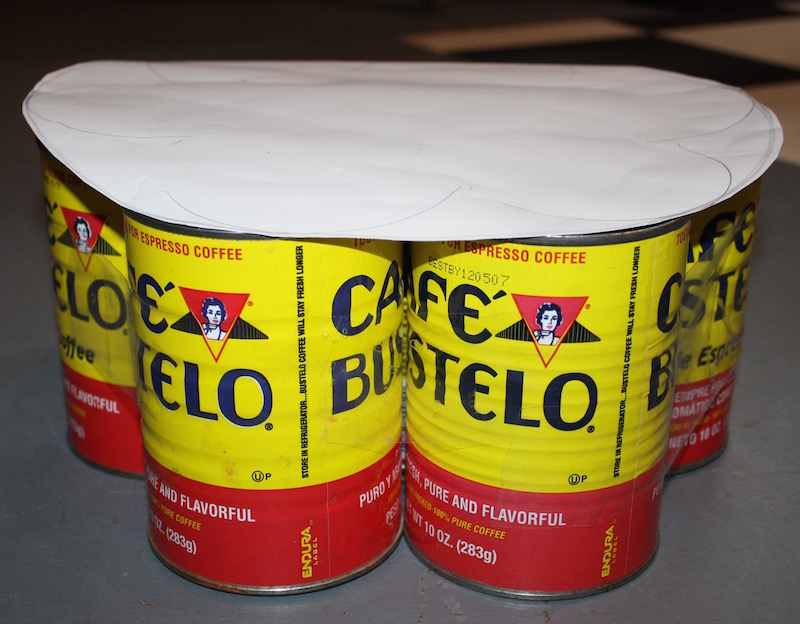
seven cans for the base of footstool

seven cans for the base of footstool

Materials needed: seven same sized empty cans (I used one pound coffee cans)
batting used in quilting
fabric to wrap the circumference of cans assembled into circle
embroidery threads your choice of colors
variety of heavy weight fabrics or upholstery fabric sample
fabric strips to hook (usually wool but your choice)
foundation backing open weave for hooking and stitching
needles, hook, scissors
mat board cut the shape of circle (two pieces)

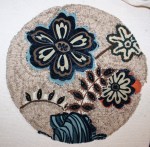
Tape the cans together, six around one in center. Trace this shape on paper and use as template for pattern. Draw onto backing and gather your fabrics, threads, tools. This is the time to play. The McDonald Sisters’ compositions all conjure up gardens and nature. They collaged scraps of velvet, brocades and drapery fabric common in the 1960’s in central West Virginia and any rural community in the United States. The shapes were defined with yarns unevenly anchoring the edges of each petal or stem. Some other materials used to embellish were unraveled copper threads from a Brillo pad which have tarnished over the years but still have a twinkle hint of metal.

top of footstool in private collection

top of footstool in private collection

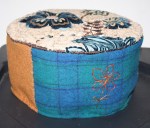
I do not want to replicate their designs for a couple of reasons. One the copyright has not expired, the ladies passed away in 1975 and 1976. Two as an artist I prefer to react and respond. Using a supply of discontinued samples of upholstery fabric acquired from Dillon’s Furniture in Romney (eliminating their dumping them into the landfill), cutting up and rearranging the pieces into a pleasing composition then filling in the spaces with hooked wool fabric and stuffing some of the fabric shapes this footstool cover evolved.

Piecing three colors of wool to wrap the cans, I attached the top and put on a bottom of corduroy with mat board buffering the cans and fabric. The sides were embroidered with simple flowers.  I stuffed the two main flowers on the top but stitched the stems with embroidery threads anchoring them lower than the hooked loops.

This footstool will be part of an exhibit at Sauder Village August 17-20, 2016focusing on Otha and Blanche McDonald’s life and their exposure to economic opportunities thanks to President Johnson signing the Economic Opportunity Act in 1964. They and many craftspeople have been honored in exhibits, purchase awards, and sales for the past fifty years.

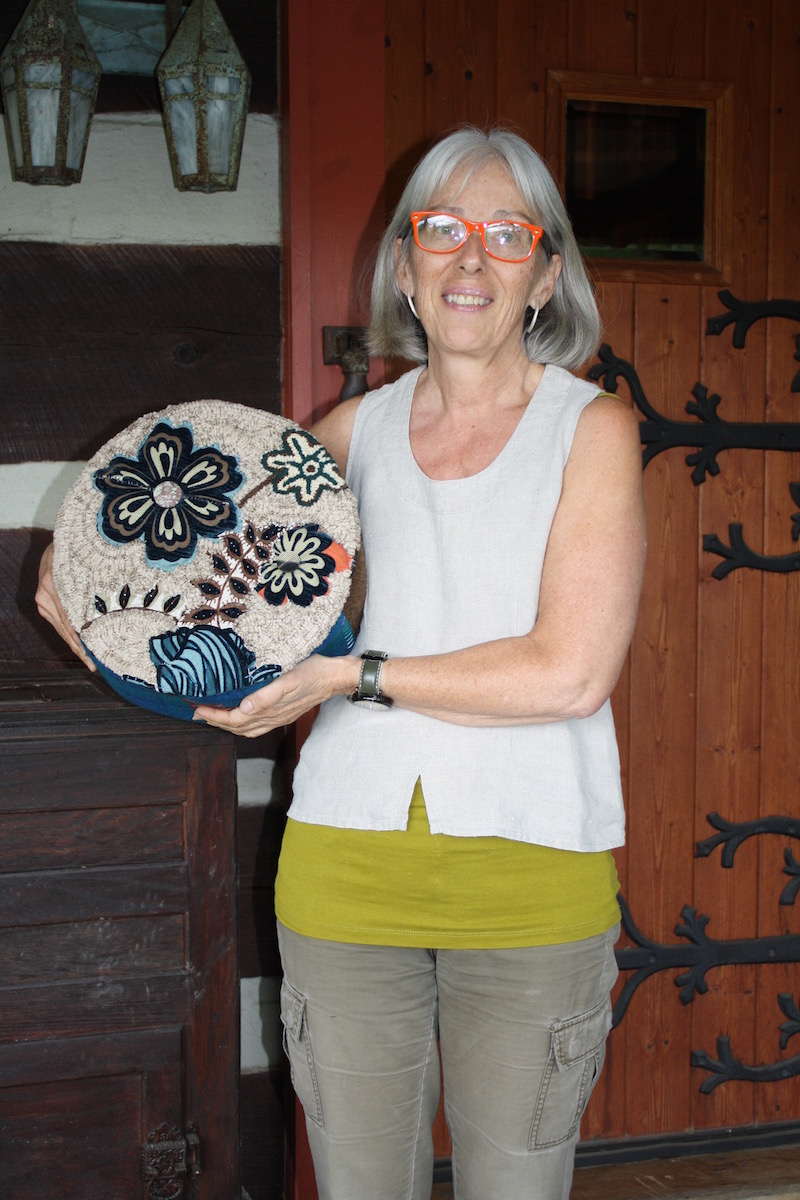
Susan L Feller with mixed media hassock

Susan L Feller with mixed media hassock

Fifty years later another footstool and craftsman outside of her log home… me.

A change of season

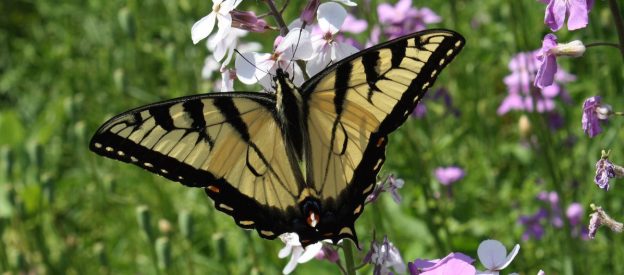
Here is one day in May where color, shapes and sounds announced new life in West Virginia. The natural cycle continues. As of the end of the month, with the squeaking song in early morning of the Indigo, all of the migratory birds have returned.  We are ready for summer.

My artist eye  looks for shadows, highlights and textures to exaggerate. When you look around what catches your eye and how will you show us the results?

Ninth Retreat Whitened

Early in April for the past nine years fiber enthusiasts have traveled to Hampshire County, WV for a weekend at Peterkin Camp and Conference Center. Anticipation of renewing friendships, flashes of pinks from native redbuds along Route 50, and pulling loops until midnight energize us.

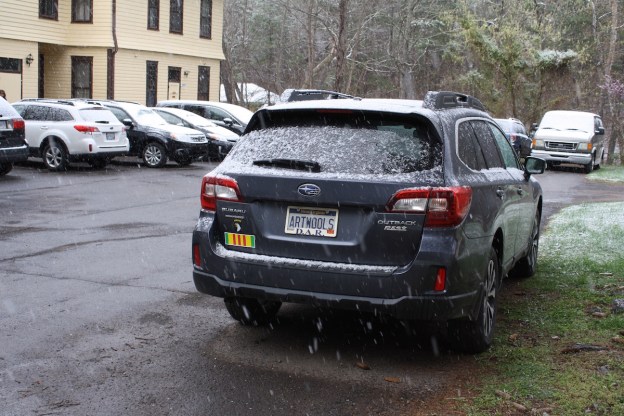
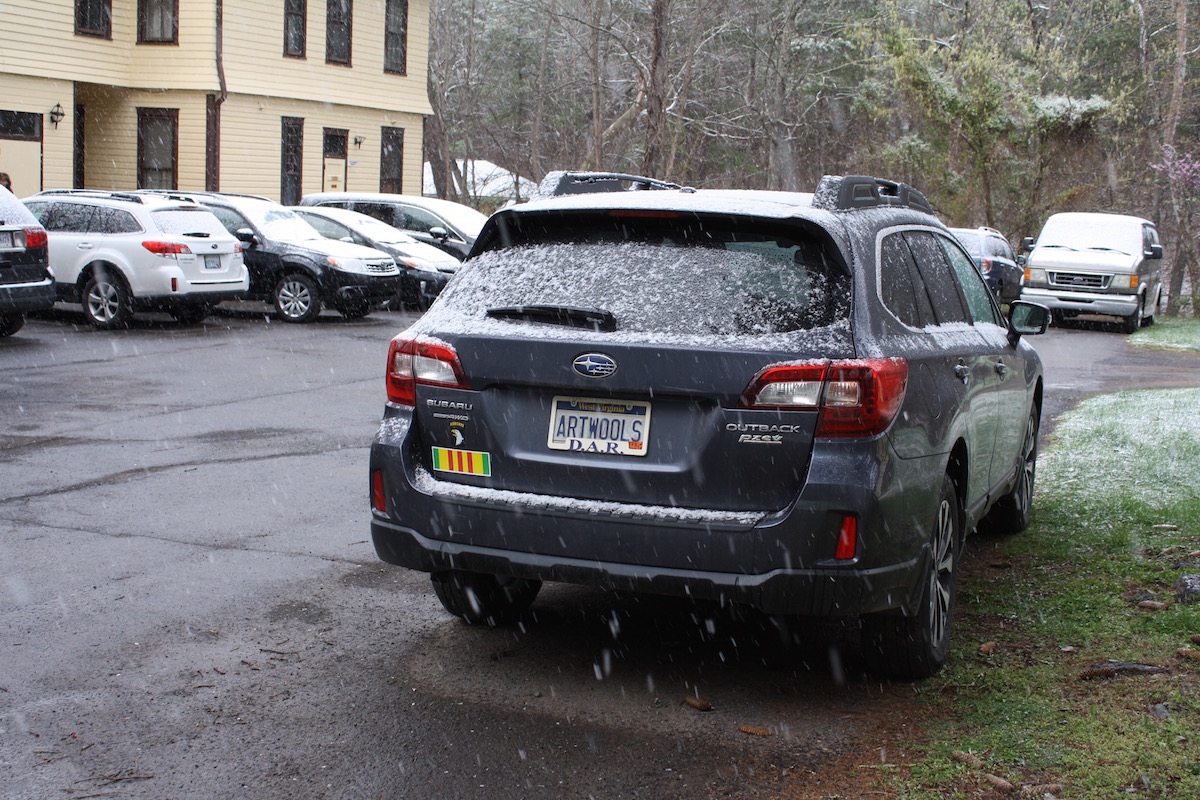
Snow but no travel on Saturday

Snow but no travel on Saturday

This year the weather included snow! We also had rain on Friday and bright sun on Sunday to travel home. In past years there has been hurricanes, tornadoes, and a full weekend of very warm sunny weather. Mother Nature is fickle in April in West Virginia.

We worked away on a wide variety of rughooking projects. Many of which will be works in progress next year too – they are quite intricate.

Too quickly the packing began and vehicles headed north, south, east and west filled with memories of conversations and visual fun.

Join with a friend or two and pull some loops soon, your mind and work will benefit.

What am I learning?

Sketches and small studies reveal patterns, address color nuances and encourage decisions.
What will be explored again, how large, using what materials, techniques, how many times?