Category Archives: elements and design in art

Realism Interpreted

I have described the technique of rughooking to artists as “painting with fibers”. We use a hook pushing it down through a loose weave backing (usually linen) to make a hole through which we pull up the strip of fabric or yarn held underneath creating a loop.  Then we go back down through a hole close by and pull on the strip again.  Depending on the VALUE, COLOR, TEXTURE AND THICKNESS OF STRIPS  the design evolves similarly to a painter’s brush strokes.

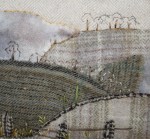
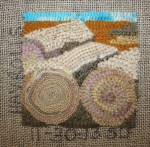
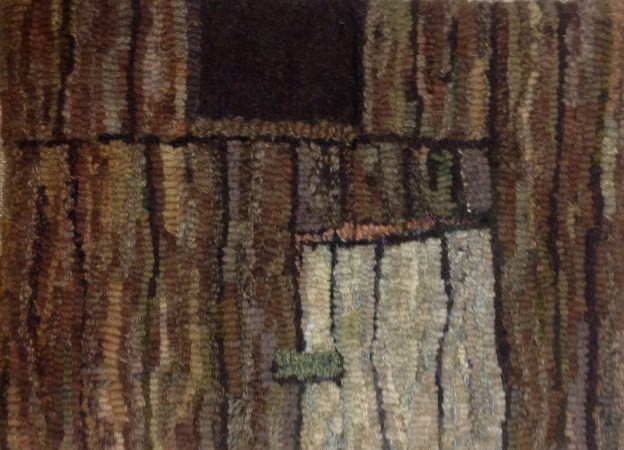
Most of my work has been with strips a bit smaller than 1/4 inch wide.  Since 2014 is the YEAR OF EXPERIMENT AND CHALLENGE, I jumped at an opportunity to spend a weekend in a class led by Roslyn Logsdon in Laurel, MD and use much thinner strips allowing for more changes within the space.  The theme was architecture and I took photos of the barn  across from our lane which I have depicted in several daily squares already.  Time for a larger piece…. 9″ x 12″!  Wow!

Roslyn encourages artists to study a photo, sketch the shapes onto the backing then put the visual away.  Select your fibers (in my case three bundles of brown, green, grays sorted into light, medium and dark) and begin to CREATE the subject you envision.  An artistic interpretation will be the results.  This advice is difficult to follow when the photo is someone close to you, or you THINK too much.  Become the child again and create.

I took her advice to heart only returning to the photo the second day to see where I could add depth by showing light behind the door.  See what you think.   I was so inspired that a second piece was worked up over the last ten days.  But that is for another post.

Jim’s newest installation

There are two artists in this home Jim and Susan.  We bounce inspirations off of each other, asking for critiques or just to think out loud.  The conversation recently went something like :

J  I have all of that colored nylon fabric sitting in the bag, when are you going to cut it into clothing shapes for me?

S  I have been waiting for you to tell me what you want?  and why?

J  Well I am not sure why or where I want to hang the “clothes”.  Maybe on the front porch.

S (too quickly) Oh NO.  (then) Well ok, but why?  That is pretty stereotypical. Is that the statement you are looking for?

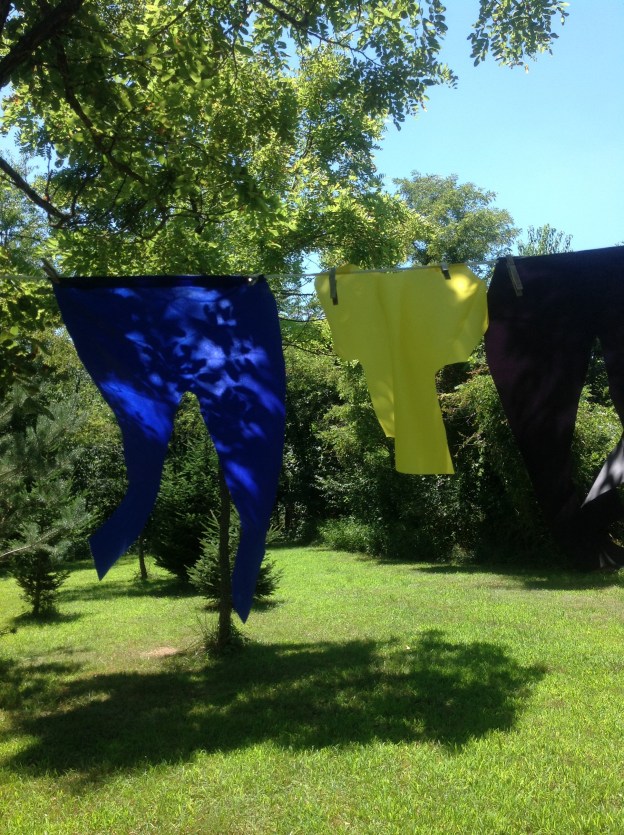
J  No I want people to say WHY? and I want to create another installation which you and I will enjoy looking at and smile.   How about those locust trees way down in the grove?  We can see it from the kitchen windows and people will wonder who hangs laundry 100 yards from the house.

S  GREAT!  I will get some of my clothes as patterns and cut a pile for you.


Inspirations Everywhere

Fabric Studies

Fabric Studies in month of February 2014, Susan L. Feller

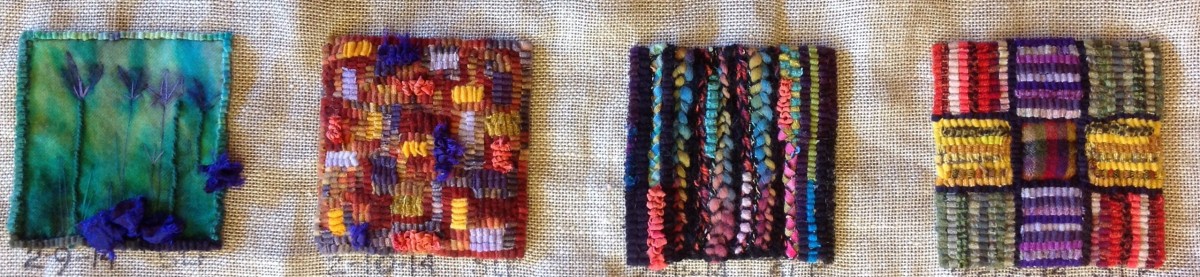
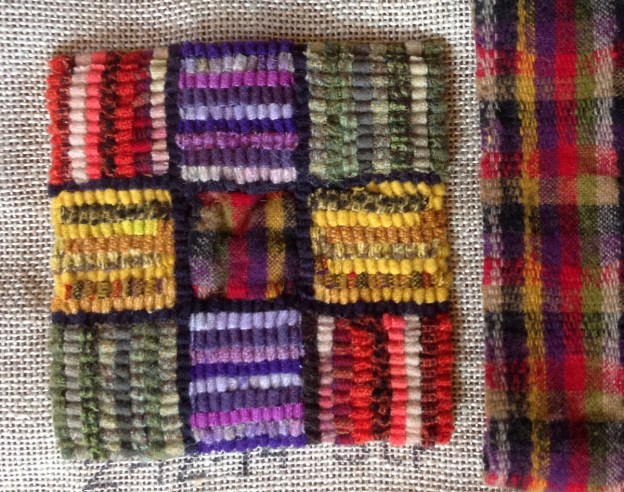
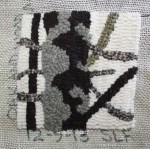
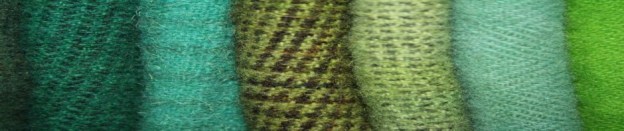
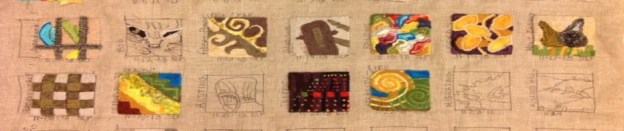
These four blocks were inspired by fabric.  The embroidered and embellished moody blue green I dyed and spoke of irises.  Next the colors from the piece used as overall background set the palette. I will line the back of this square when finished with the wool as an example.  The center panel of the striped piece is a wide, loose trim which I hooked an aqua and pink line through to anchor the fabric to backing.  Then I hooked through the edges and mimicked the patterning by hooking and braiding.  The last one was designed based on the striped fabric in center square.  I used high contrast to reproduce the stripes.

On to May journaling, the trees are bursting into bud and each migrating bird upon arrival is adding their music to the orchestra.  Sounds, sights and memories emerging as subjects.

What is new in your neighborhood? How can you record, document, or reinterpret these experiences?  Tap into your creative space and show others your thoughts.

February Studies

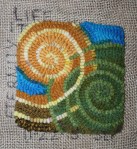
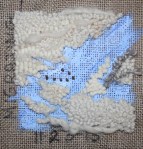
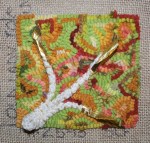
image The daily square project is moving along slowly visually but the knowledge I have explored is vast.  There are two more squares to be completed for February, one I thought would be a value study in fine cuts since it is made up of “petals” around a center. But as time has progressed I decided to build dimensional shapes using a modified shirred technique.  Fine cut later this year, maybe. Winter lead me to work in the kitchen near to constant free heat from our wood cook stove.  I empathize with people who do not have a dedicated studio space and work within the family living area.  I had to consolidate materials, did not have all the tools available to paint, sew, use wire or sort through the unusual materials for inspiration, and ended up hooking more squares than if in the studio.  Back there this month though.

Red, Green, Purple, Orange

Red, Green, Purple, Orange

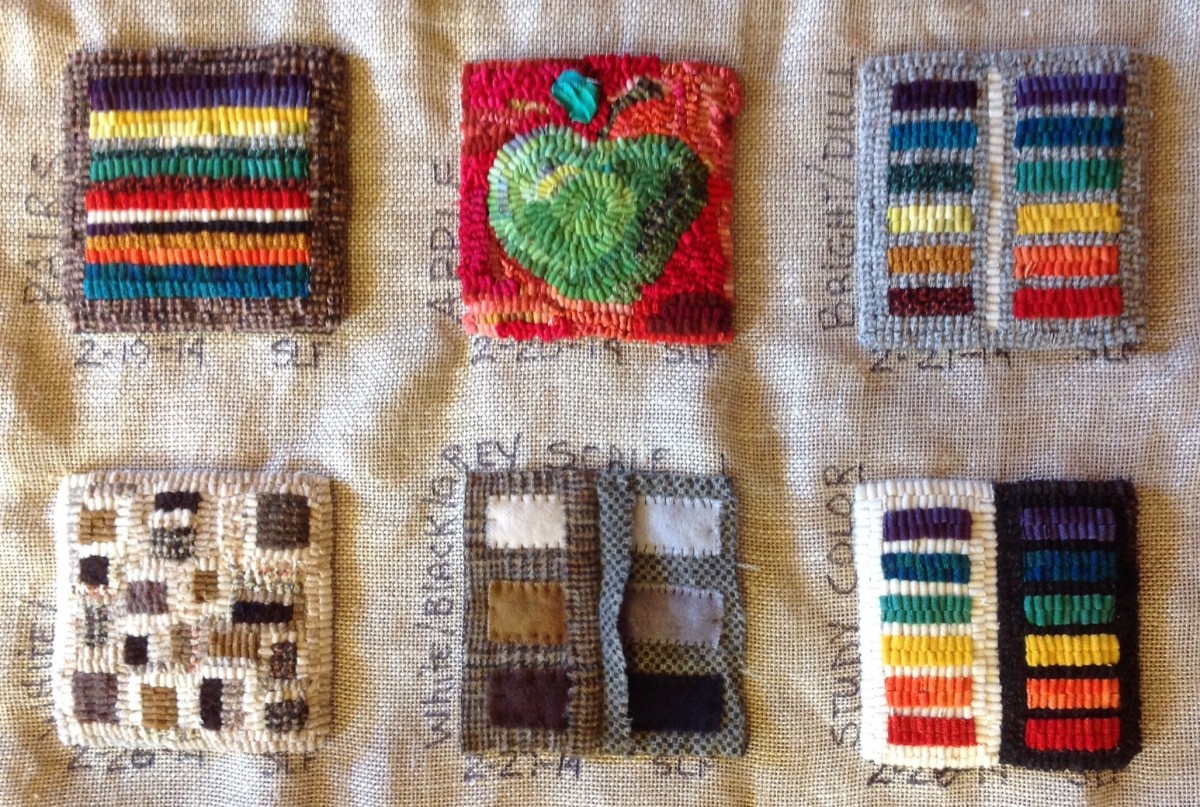
Workshops coming up were the topics for several squares.  The session at Green Mountain Hooked Rugs School in June will address color planning with a Mood — happy, sad, in love, sunny.  Red, Yellow, Blue, Orange, Green and Purple are interpreted with lines or motifs and in monochromatic palettes.

Complements, color and value

Complements, color and value

A presentation to With Hands & Hearts Antietam Chapter of ATHA covered relations of colors with values.  Squares address colors on white, black and textured gray backgrounds.

Fabric Studies

Fabric Studies

Just as in home decorating where the drapery fabric or a stunning piece of artwork cues the coloring for a room, I responded to a piece of wool or trim in four squares. March journal entries reflect the studying process.  Nightly a book from the library was reread, notes taken and a design exploring the technique or art style was drawn.

RETREAT 2014

2014 participants at RETREAT INTO THE MOUNTAINS sponsored by Susan L. Feller, Ruckman Mill Farm
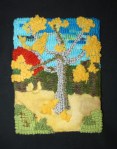
2014 participants at RETREAT INTO THE MOUNTAINS sponsored by Susan L. Feller, Ruckman Mill Farm
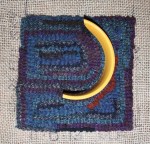
Seventeen personalities, piles of fibers, loads of tools and 1,400 acres to wander and be inspired means another RETREAT INTO THE MOUNTAINS of West Virginia on the grounds of Peterkin Camp and Conference Center, Romney, WV.

Our topic this year was the Design Process. Karen Larsen of Crows Foot Farm Designs described her approach as a graphic designer —  simplify and tell the message boldly.  As an example she used an organic shaped rug for her granddaughter depicting a fairy village, sharing their mutual memories.  Also her interpretation of the ‘Star Barn‘ outside of Harrisburg is bold while Nancy Parcel’s design evoked days gone by as a charming pictorial.

Karen Larsen explaining design process

Karen Larsen explaining design process

conversations about designing

conversations about designing

Casual learning sessions occurred throughout the weekend.  Lori LaBerge introduced us to working outdoors (Plein Air Hooking) with a few pointers. We do not have to sketch the design; rather locate a scene, arrange shapes of objects in a pleasing composition, draw in shadows and start selecting colors.  Get to work quickly responding to the environment which in our case was a creek rushing, birds singing, people chattering, winds blowing and sun all around.

capturing an inspiration for later

capturing an inspiration for later


appreciating friendly critiques

appreciating friendly critiques

Questions on process were exchanged; music inspired conversation and movement; the bell rang and we ate or traveled to visit the studio at Ruckman Mill Farm and enjoy a meal created by Jim.

Amazing how everyone’s talents combined for a wealth of fun, learning and friendship. Same time, same place next year.

December Studies

It was exciting to put out two months of squares and see the variety of techniques, materials, subjects and color/values.  I have found it challenging to keep coming up with new images and then decided I do not have to.  Revisiting a composition and changing some element involves experimenting.  The landscape subjects are especially good to look at again, weather and seasons change the details.  SNOW brings out high contrast and changes shapes along with visual focus.

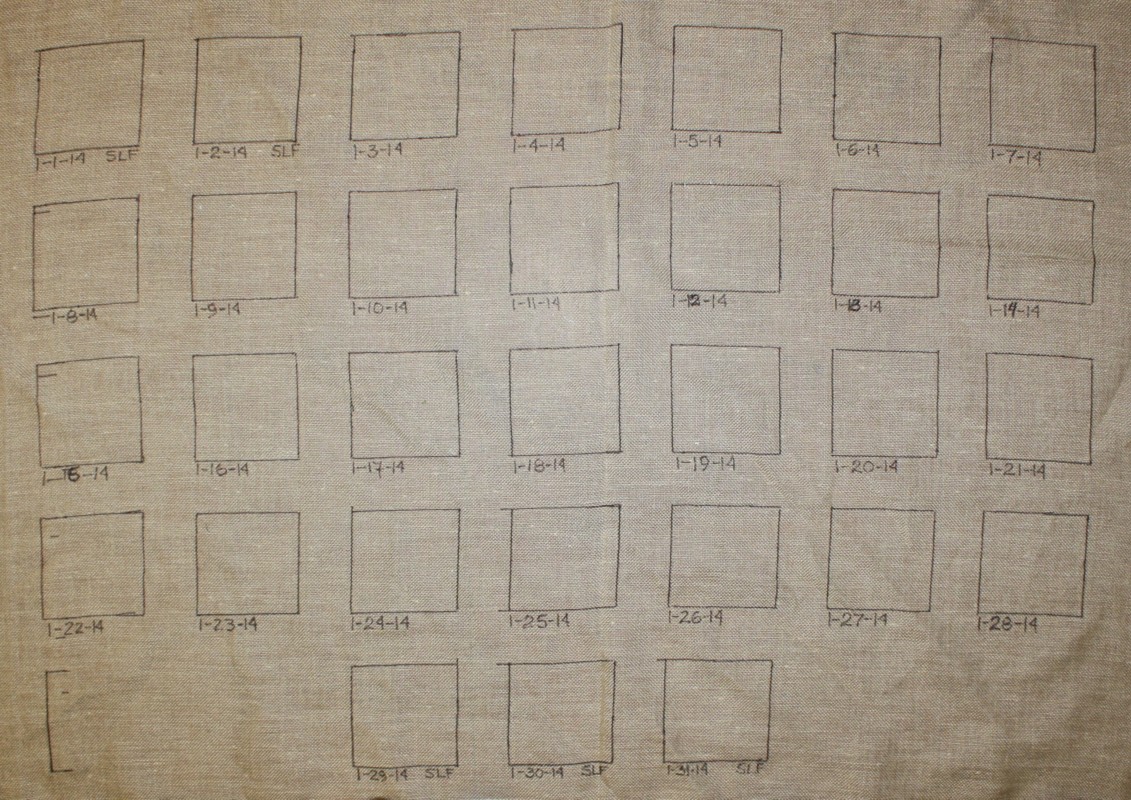
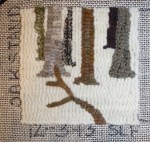
Not surprising, the December squares are filled with white and neutrals.  Color still abounds, but like spring in the Arizona Desert you need to look closely.  Bluebirds flitting, holly berries, sky blue, the warmth of our wooden buildings are all examples represented this month.  Enjoy a sampling including some subjects photographed but sketched from memory.  First a blank slate staring at me on January first:

January 2014
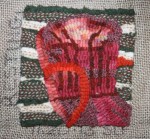
January 2014


Support the Arts


Willow 21st Century, Susan L. Feller

Willow 21st Century, Susan L. Feller

One hundred years ago craftsmen and women dedicated their skills to creating work by hand.  The Arts and Crafts movement is alive today. As a lifestyle or during a piece of their time, artisans and arts organizations are presenting unique objects to reflect on in your personal environment.  This was a long way of suggesting you BUY ART, buy from an artist you met or who’s story is communicated to you at a gallery, BUY LOCAL.

I am grateful for the support of clients who chose original pieces from the studio and through Tamarack in Beckley, WV.  Those of you who are working up rug patterns or using our dyed wools from Ruckman Mill Farm, thank you.  To the participants in workshops this year I look forward to seeing your personal designs.

We purchased these pieces for our collection.  I am sure each artist has some more work if you are interested. Look up Lori LaBerge, Gail Becker, Marie Sugar or visit my work at Ruckman Mill Farm. One was purchased at an auction supporting ATHA, one through an art gallery during a hooked art exhibit, and one directly from the artist.  I admired each of the individuals work before and was happy to be able to select tangible memories.

November Study Finished

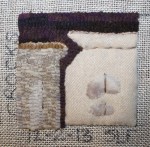
I am thrilled to create this post of the studies created in November 2013.  The variety of techniques include painting canvas, beads, hooking, applique’, using found objects (ceramic mug, twist ties, clothesline), alpaca yarns, proddy, wire.  Styles ranged from realistic, dimensional, abstract to geometric.

Inspired a larger piece

Inspired a larger piece

During the month I created three larger pieces inspired by the studies and like the feeling I had while making two random squares.  They too could become runners at least.  The palette is changing to softer, colder, and more subtle as the seasons change.  I am going to bring out the alpaca yarns in a range of neutrals and softness for winter and the bare woods.  Missing the FALL foliage wools already.  Sure the small sparks of color will be much more enjoyable as our birds, the evergreens and wintry sky become subjects.  But that is for December and into 2014.

I began this journal on October 18 and was literally in the studio or outside working each day.  As November’s weather changed and the work space became a warm corner in the kitchen (with wood cook stove going) my work ethic changed.  In the studio all the toys were accessible adding to pieces easily.  Away from those inspirations more of the squares were just hooked.  Those which I envisioned needed different materials awaited a trip downstairs.

So it took until December 13 to complete November’s squares.  That’s ok with me.  For the year each month will remain as you see on the header image, one large piece of linen divided in a calendar grid.  After that I will divide them out and finish in appropriate manner for the piece.  I have photographed changes, documenting the lessons I am learning.  Considering this year to be my Independant Study.  Self issued certificate at end.

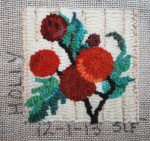
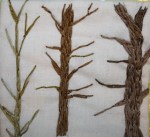
December has each square drawn out but I felt completing one month was important in the new discipline.  These pieces are revisiting some of the subjects with the new high contrast which snow adds.  Tree branches, railings, even a chair are different when defined by a blanket of snow.   Enjoy the Gallery of selected pieces.

Patterns found in Nature

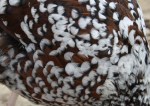
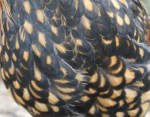
We added Speckled Sussex and Golden Polish chicks this spring to the barnyard.  In the order Murray McMurray included an extra chick which has grown into a MALE Hamburg.  So we have TWO roosters for 17 hens.  Trust me that is at least ONE too many and the girls think it is 2 too many.  BUT they both look spectacular, so who ends up in the stew pot?  Stay tuned.

Hamburg Rooster

Hamburg Rooster

Golden Polish Rooster

Golden Polish Rooster

In the mean time, with this variety we learned each breed has an identifiable voice along with feather pattern, and leg colors.  It is a chorus of clucks and chirps when we feed.

See if you can match the legs with feather patterns selecting one from column A and one from B.  Answers below the gallery.

Answer: Feet top to bottom (Dominique, Speckled Sussex, Golden Polish)

Feathers top to bottom (Speckled Sussex, Golden Polish, Dominique)

Year Long Study

Beginning the study, working outside

Beginning the study, working outside

I have decided to dedicate the year leading up to my 60th birthday to studio work. Each day a sketch and five inch square design will be worked up in techniques I want to explore.  The series began ahead of time on October 18th with a plein air landscape outside of the studio.

This does not mean I won’t  teach and travel, but right now there is a long stretch of time off the road and a routine was necessary.  The short term goal is a sketch for each day.  Several larger works have evolved from these exercises already.  It has been a productive and meditative time.

Lori LaBerge’s Plein Air Hooking Artists concept helped formulate the process.  Although I am religiously sketching my subject into a journal, and working from the image for color and values, most of the subjects are also photographed as documentation.  I am also documenting changes made anticipating compiling a text to accompany an exhibit.

So far skills from a wire jewelry workshop have been incorporated into several pieces; acrylic paints; quilting; embroidery; and coiling have augmented traditional rug hooking.Monthly there will be a progress report showing the seasonal palette; design evolution; and techniques explored.  Below is a gallery of some early subjects and works.