Let me introduce you

The best way to meet is through a friend. Here are some West Virginia artists I recommend:
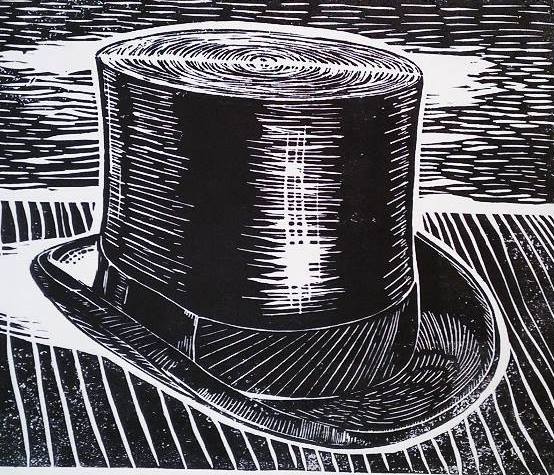
Michael Anderson

Michael Anderson


Michael Anderson is multi-talented from computer guru (my go-to guy) to photography and linocuts. He can be found on Facebook at Michael Anderson and is updating a website for online sales of print work.


2015 wenweave Collection

2015 wenweave Collection


Wendy Clark weaves her own hand dyed yarns into scarves, wraps and purses. The wild and wonderful scenery surrounding a comfortable log home studio provide inspiration and a necessary peaceful environment.  Her collections are sold nationally and on her website wenweave.com


Nellie Rose Textiles

Nellie Rose Textiles

Nellie Rose Davis grew up with parents manipulating fabrics and immersing them in dye pots creating colorful shibori garments and accessories. With her own flare, NellieRose scarves and dresses are marketed through national galleries thanks to assistance from the Tamarack Foundation’s From WV to Urban Markets.  Look for them in your local gallery or online at NellieRoseTextiles.com
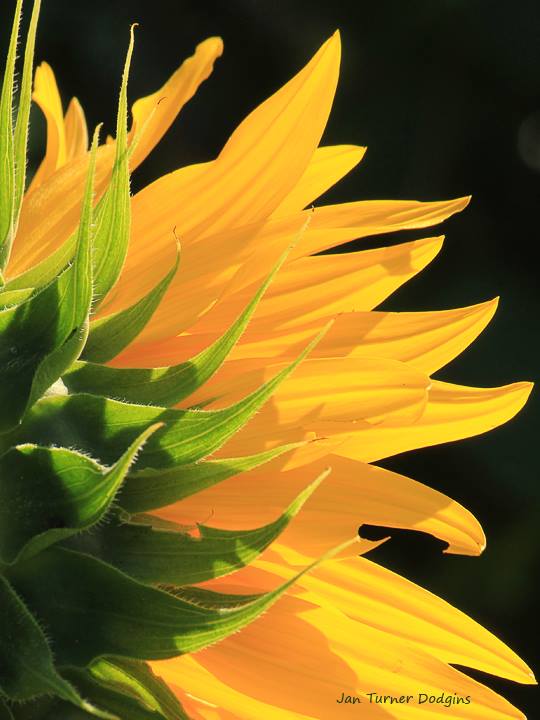
 

Jan Dodgins

Jan Dodgins


Jan Dodgins shows us the beauty of West Virginia through her camera lens often coming close to wild animals and flora.

Connect with Jan on Facebook at Jan Dodgins


Lisa Kovatch NICHE Winter 2015

Lisa Kovatch NICHE Winter 2015


Lisa Kovatch can be found at WestWind Potters in Harpers Ferry, WV. This shop is filled with American Made artwork (including my mats and artwork) and is a great destination when visiting the National Park of Harpers Ferry.  Her own line of pottery has been selected as a 2015 NICHE Finalist, and is sold nationally under the name of LK Pottery
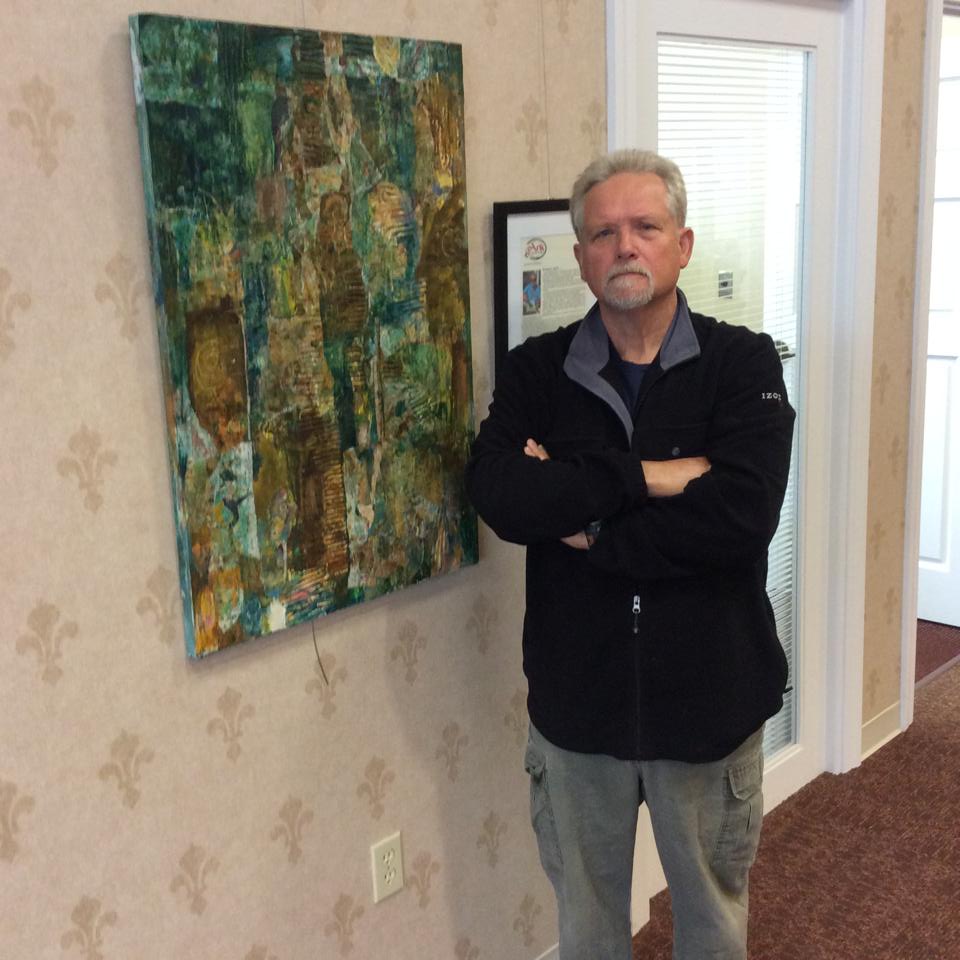


Michael O'Brien

Michael O’Brien


Michael O’Brien
works in stained glass, mixed media, and drawings all built up in layers of materials creating stories. The musician side can be found jamming in a variety of styles with Hampshire County friends. His work is available at Anderson’s Corner, 8 West Main Street, Romney and  you can meet Michael there during the Highlands Studio Tour in the fall. His web presence is at mkobrien333.tumblr.com
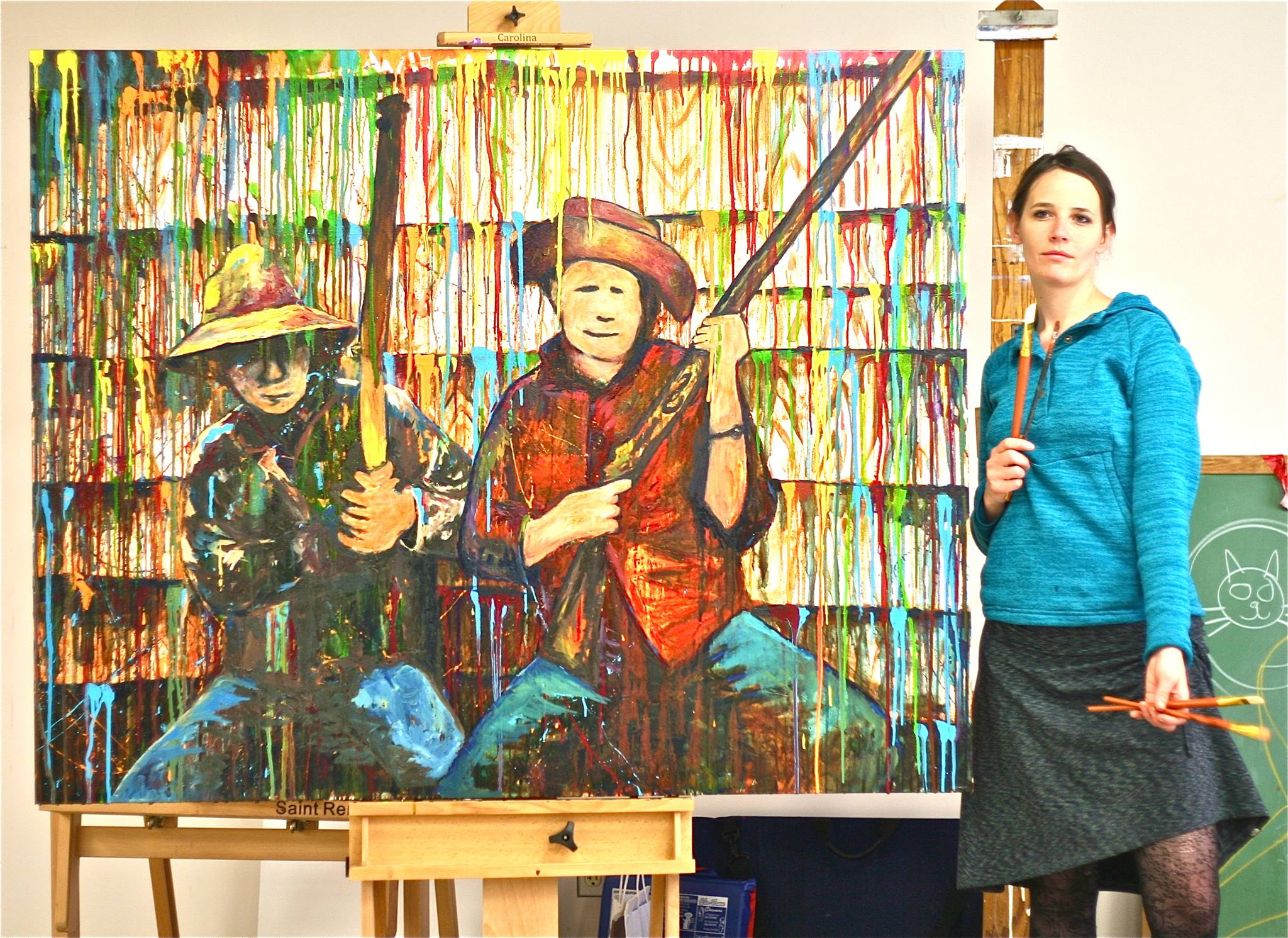
 

Rebecca Wudarski

Rebecca Wudarski


Rebecca Wudarski makes Tucker County her home and muse. A musician, mixed media artist and barista at Tip Top Coffees in Thomas, Rebecca lives an artist’s lifestyle. Visit her website and look around www.RebeccaWudarksi.com
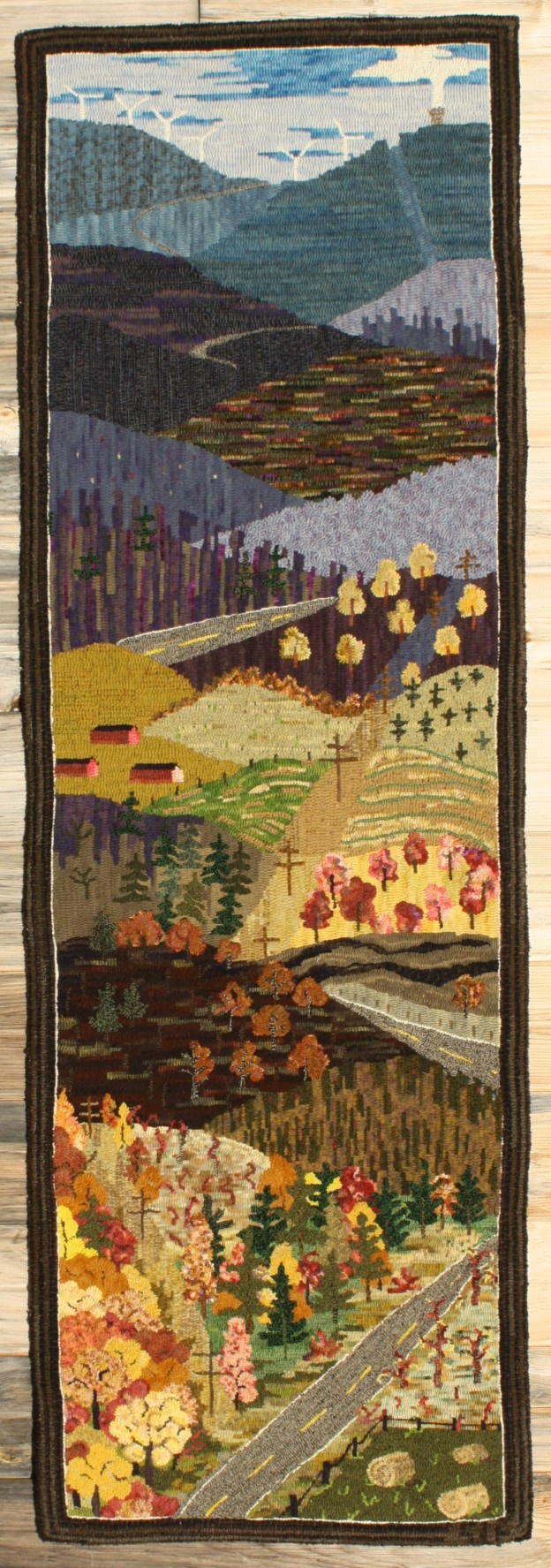
 

Progress in the Mountains

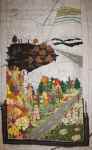
Progress in the Mountains, Susan L. Feller 2015

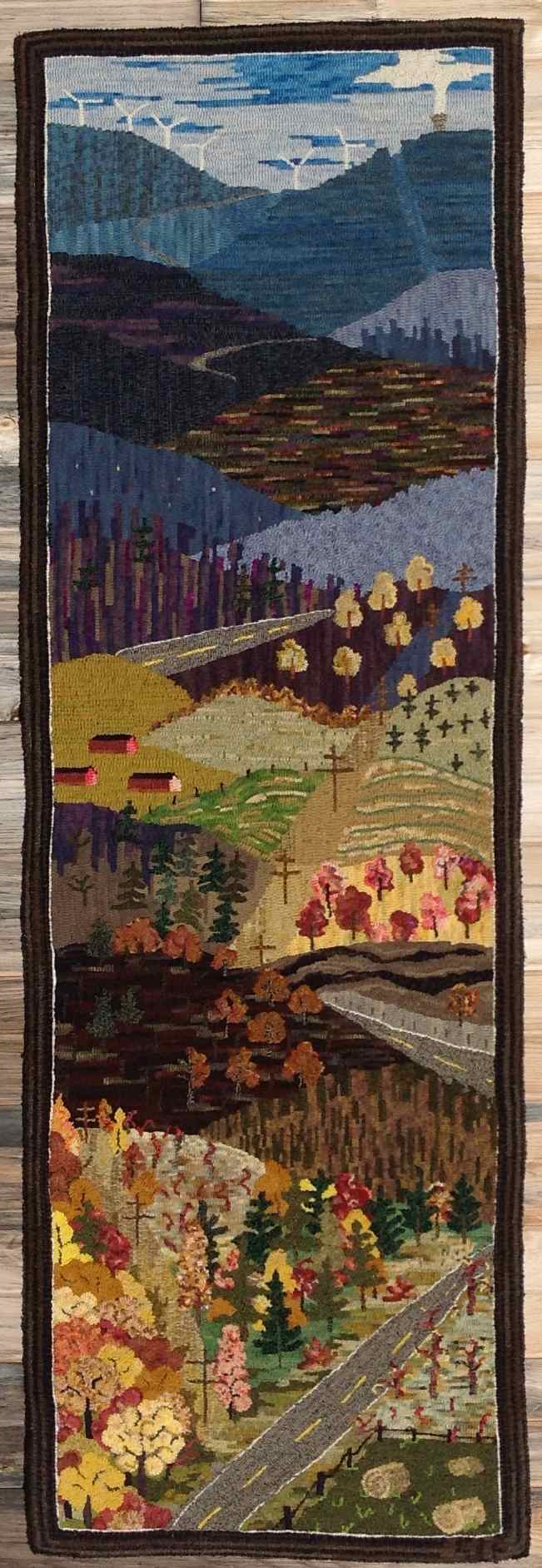
Progress in the Mountains, Susan L. Feller 2015

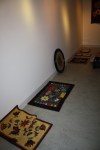
After three years of muddling over this topic I created “Progress in the Mountains“, a seven foot by 27 inch hand hooked runner.

Envision the impact on geography, environment, culture and community the human drive for progress has had on the natural resources of West Virginia (a micro example of the globe).

1. Major interstate highways create jobs for the construction industry, allow quicker access to towns and destinations for tourism and commerce but disturb migration paths, feeding and lodging habitat for fauna and flora.

2. Corporate farming in the form of one breed of cattle, poultry buildings for thousands, and processing plants for each creates excess of waste which needs to be distributed by vehicles to wider destinations or processed into a stable by-product.

3. Lumbering of the forests, many of which were contract planted for the pulp or board feet affects the terrain.  The undergrowth is necessary to keep erosion from happening, contributing to pollutants in the rivers.  Slow traffic from lumber trucks is alleviated with the new highway system.

4. Coal mining strips the tops of mountains to find the veins, moving the waste often into headwaters of small streams which will run into the major river systems.  But the coal is used to create electricity for the metropolitan population’s requirements to communicate, work, entertain.  The power lines to distribute the energy create wide cuts in direct paths economical for the corporations taking years of negotiating with landowners, environmentalists, historians and politicians but eventually “for the good of the majority” being implemented.

5. Wind turbines line the highest ridge lines feeding the energy generated into those power lines again going out of our state to the metropolitan region.  Although a regenerable resource (wind) the effect on birds’ migratory paths is being studied.

I find it interesting to use a traditional hands-on process of pulling one loop at a time, manipulating the fabric into shapes and directions (rug hooking) to depict these issues of the 21st Century.  For months this design was drawn horizontally spreading the seven feet with layers of hills, roads and power lines intersecting the organic shapes.  It did not seem to be the right format. Finally in my daily journal on June 27 I tried a vertical format and could see more layers allowing a longer trail to be able to tell more stories.  The piece evolved easily from there.

Study for Progress in the Mountains

Study for Progress in the Mountains

Working this runner was like reading a great book, each chapter and character held my interest. They built on previous sections with shapes, colors and values evolving along the path, progressing to the top and end.  Imagine walking along, following the flow of road and hills then turning around and coming back down the mountain in your hallway.

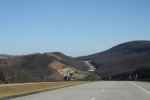
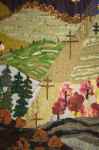
Following are subjects taken along the Robert C. Byrd Highway system in Hardy County, WV and the rug in stages of completion.


UPDATE: I wrote an article about the making of this rug for Rug Hooking Magazine Nov/Dec 2015.
After looking at the completed runner hanging in my studio for months I changed the perspective of one part of the highway and was satisfied enough to enter into the 2017 WV Bi-Annual Juried Exhibition. It received a purchase award and now resides in the archives of the State Museum, Culture Center, Charleston, WV.

Contemporary Fiber work at Schwenkfelder

My responsibility as co-curator of the ‘Garden to Table’ exhibit at the Schwenkfelder Library and Heritage Center was to collect contemporary work incorporating rughooking.  The pieces contributed by Carolyn Boutilier, Kris McDermet, Mary Jane Peabody and Darlene York  Trout along with several of mine portray a variety of techniques within the traditional rughooking medium.

hooked and sewn pumpkin base, wool stem, stuffed by Carolyn Boutilier

hooked and sewn pumpkin base, wool stem, stuffed by Carolyn Boutilier


Carolyn Boutilier from Harrisonburg, VA hooked and stuffed a 3-D pumpkin which complimented the wax fruit displays of the 1800’s.  Exhibited under it’s own plexi glass box the humble object receives the respect it deserves.  Candace Perry chuckled with glee when she saw the pumpkin.


Luscious Vermont  Kris McDermet 2014  Dummerston, Vermont

Luscious Vermont 
Kris McDermet 2014 
Dummerston, Vermont


Kris McDermet’s braiding, hooking and felting exemplifies contemporary fiber art using traditional crafts.  Living in Vermont the rug represents her generational family homes in a palette connoting the Green Mountain state. Kris is co-author of Combining Rug Hooking and Braiding published by Schiffer Publishing.


Fruit and Flowers, Mary Jane Peabody (pattern by Jacquelyn Hansen)

Fruit and Flowers, Mary Jane Peabody (pattern by Jacquelyn Hansen)


Mary Jane Peabody from New Hampshire was inspired to learn an old technique – sculpting or the Waldoboro style. She began this piece in a workshop conducted by designer,  author and expert Jacquelyn Hansen from Maine. The pattern Fruit and Flowers is by Hansen.


detail sculpting technique by Mary Jane Peabody

detail sculpting technique by Mary Jane Peabody


The 3-D effect is achieved by progressively pulling the loops higher as the shape is hooked from outline to center.  Then the thin strips are each clipped at the loop and gradually TRIMMED to create the shape. Popularized in Waldoboro, Maine in the early 1900’s on rugs, this piece is beautiful finished in a burled frame.


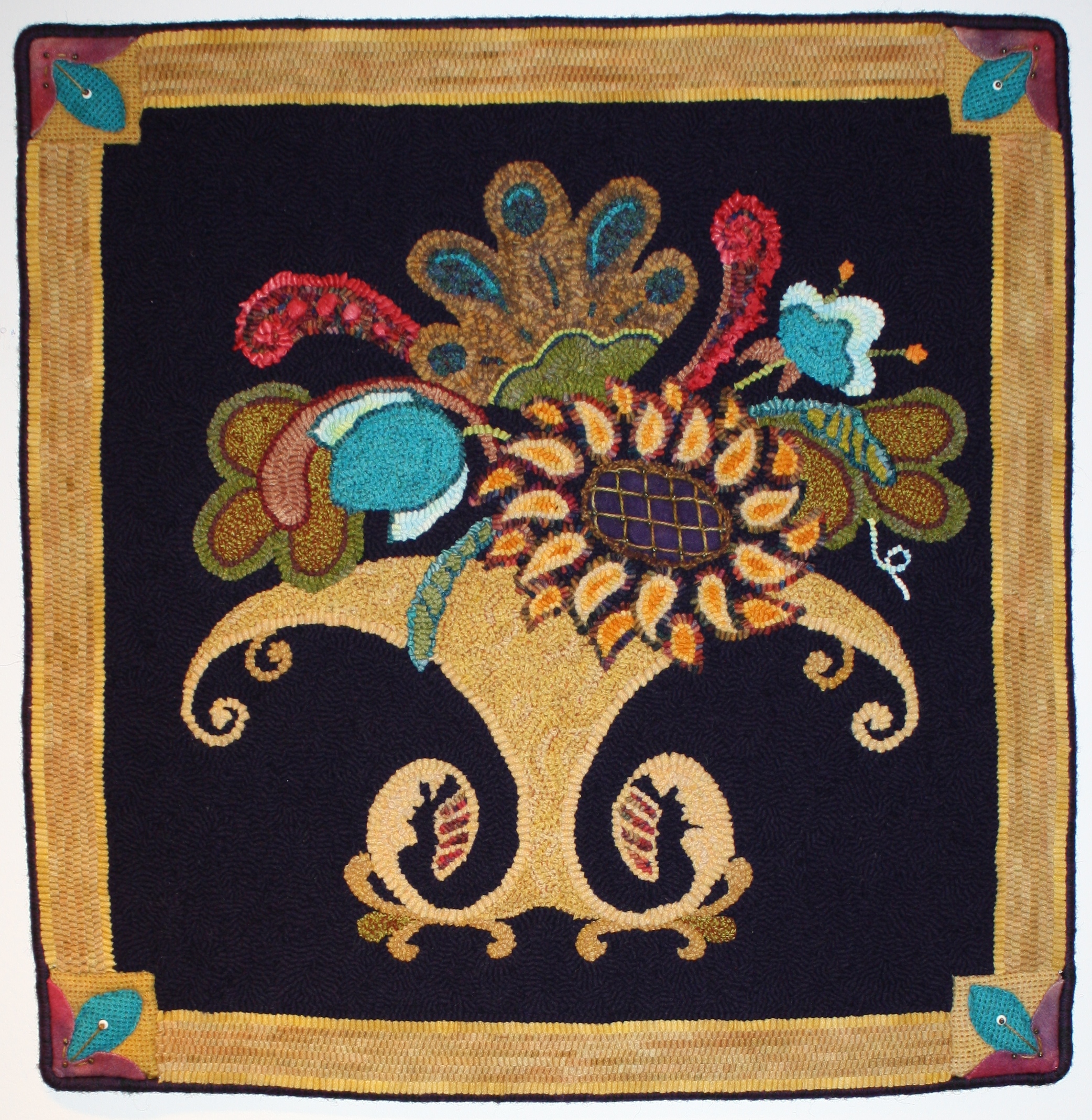
Paisley Bouquet by Darlene York Trout

Paisley Bouquet by Darlene York Trout


Darlene York Trout from Indiana is a designer willing to use any of the fiber skills she has accumulated to make a piece unique. This work was created specifically as a gift for her friend Patsy Jones which made it even more enjoyable to work on.  I enjoyed a week at Cedar Lakes Rug Camp working with Darlene on the Paisley Bouquet and knew it would reflect the fruit compotes in the Schwenkfelder collection.

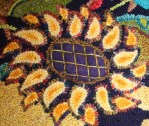
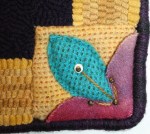
Embroidery skills are evident in the detailed cross hatch of the central flower and the quilted, appliqué corners.  She also used beads and hooked in sari silk ribbon to highlight some accents and hand dyed all the wool.


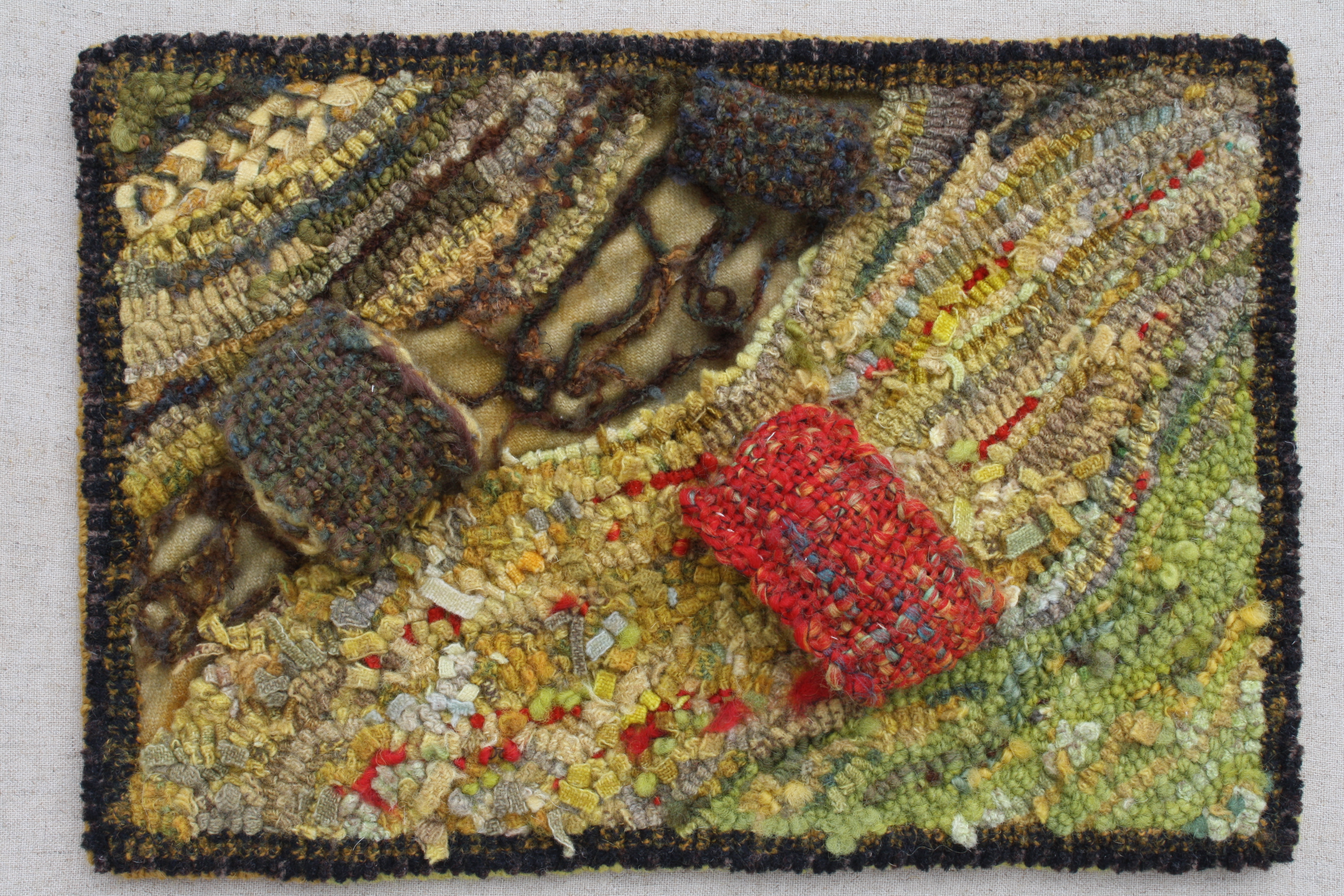
Haying Stages, Susan L. Feller

Haying Stages, Susan L. Feller

In Haying Stages I used several techniques to create the hay rolls, mowed fields, and scrabble of grasses. The rolls are made using a pin loom and continuous weaving. An addictive satisfying technique popularized in the 1940’s and seeing a resurgence in the crafts wave of the 21st C. The ends are closed with a plaited strip made from the wool I hook with.


detail plaiting, weaving by Susan L. Feller

detail plaiting, weaving by Susan L. Feller

I used a ragged approach to the ends, cutting them off higher in many areas to depict the grass. In the area where the rolls are there is hand dyed wool anchored by the same yarn used int the roll.

This piece was juried by Jane Dunnewold into an exhibit at Morehead State University, Kentucky titled 7Stitch.


Garden to Table Treasures

The third exhibit co-curated by myself and Candace Perry, Director of Collections at the Schwenkfelder Library and Heritage Center titled: “Garden to Table” will be displayed through March 1, 2015.  As I alluded to in the post Setting up an exhibit, the artifacts from the collection are a special glimpse into decorative skills the Schwenkfelders and their neighbors perfected.

There will be another post with the hooked and braided work intermingled with these pieces but I thought to show you creativity in making flowers and fruit from wax, wool, yarns, feathers, milkweed seeds, painted china, and paintings.

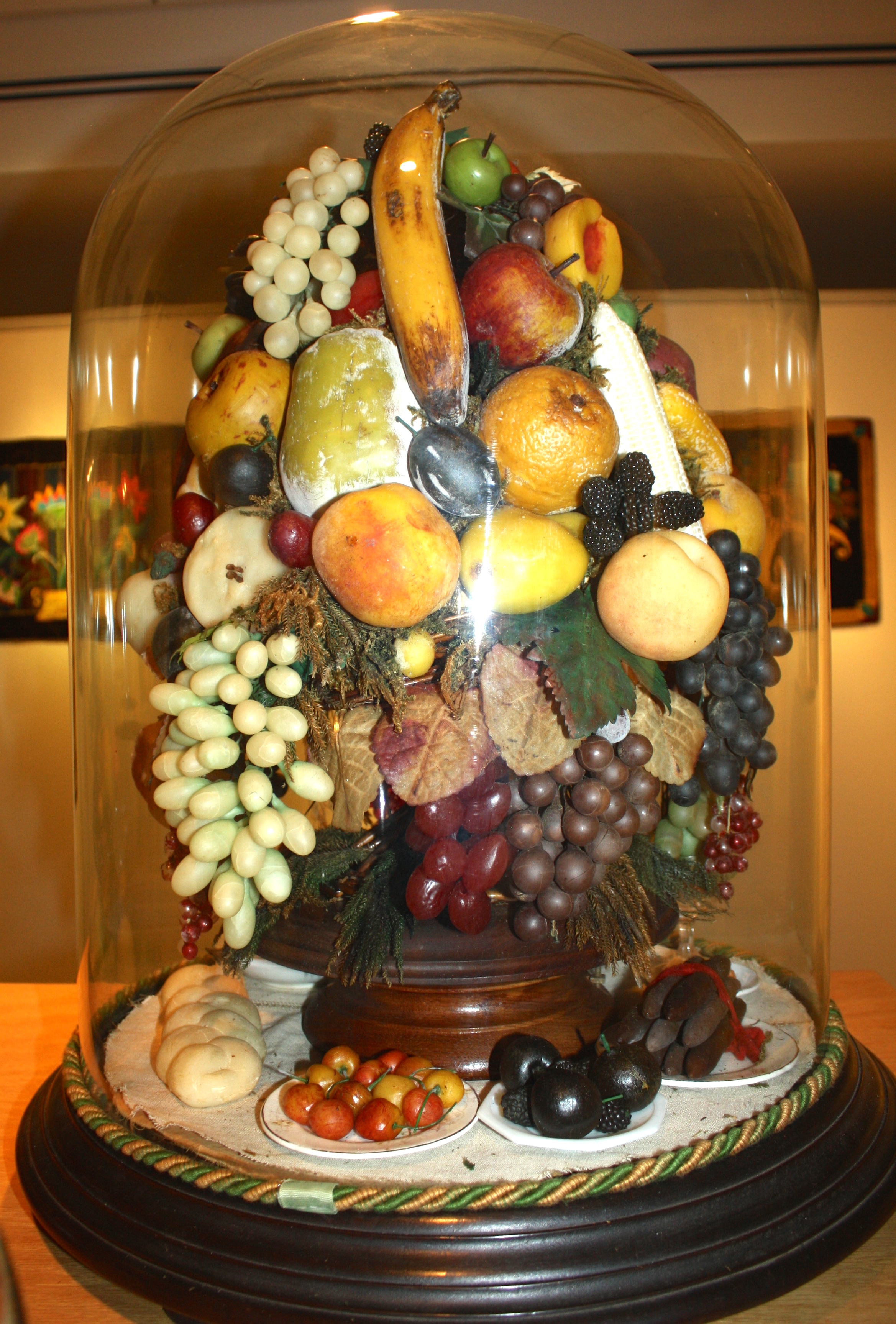
Elements made by hand using wax and sometimes molds by women as glass domed centerpiece in homeMaker unknown. Gift of John Whitenight and Fred LaValley.

Maker unknown, circa 1880’s Gift of John Whitenight and Fred LaValley.

Wax Fruit Arrangements

A popular craft for many women in Montgomery County in late 19th century was the making of wax fruit, and arranging the pieces under glass domes for parlor decorations. The Schwenkfelder Heritage Center has several of these arrangements including three that are from Schwenkfelder families, and one from the greater Philadelphia area.

The arrangements often contained vegetables, and sometimes other types of desserts and delicacies.


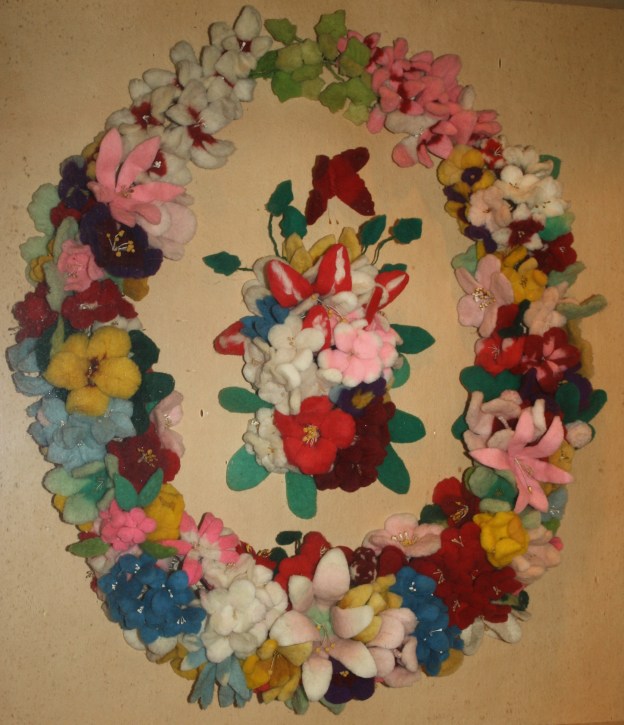
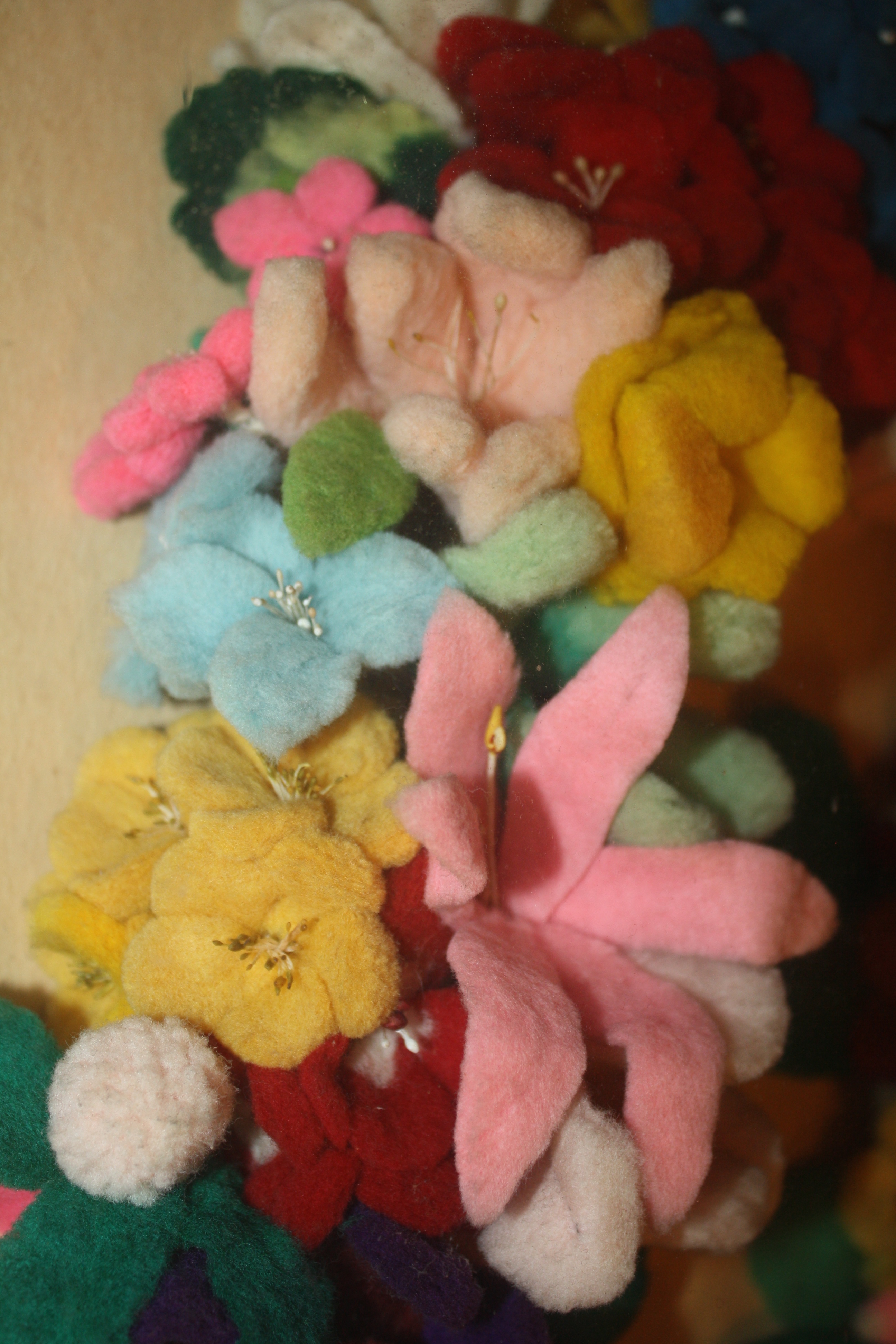
detail Floral Wreath in Shadow Box, 1880-1890, Schwenkfelder

detail Floral Wreath in Shadow Box, 1880-1890, Schwenkfelder

Wool Floral Wreath

The making of wool flowers and assembling them in shadow boxes or under glass domes was yet another form of needlework that captured the imagination of local women in the late 19th century. Sometimes – and probably inaccurately – called plushwork, these flowers were constructed by wrapping wire shapes with wool and then matting or felting them. Instructions to make the flowers were available in Godey’s Ladies’ Book, the popular periodical of the mid-19th century.


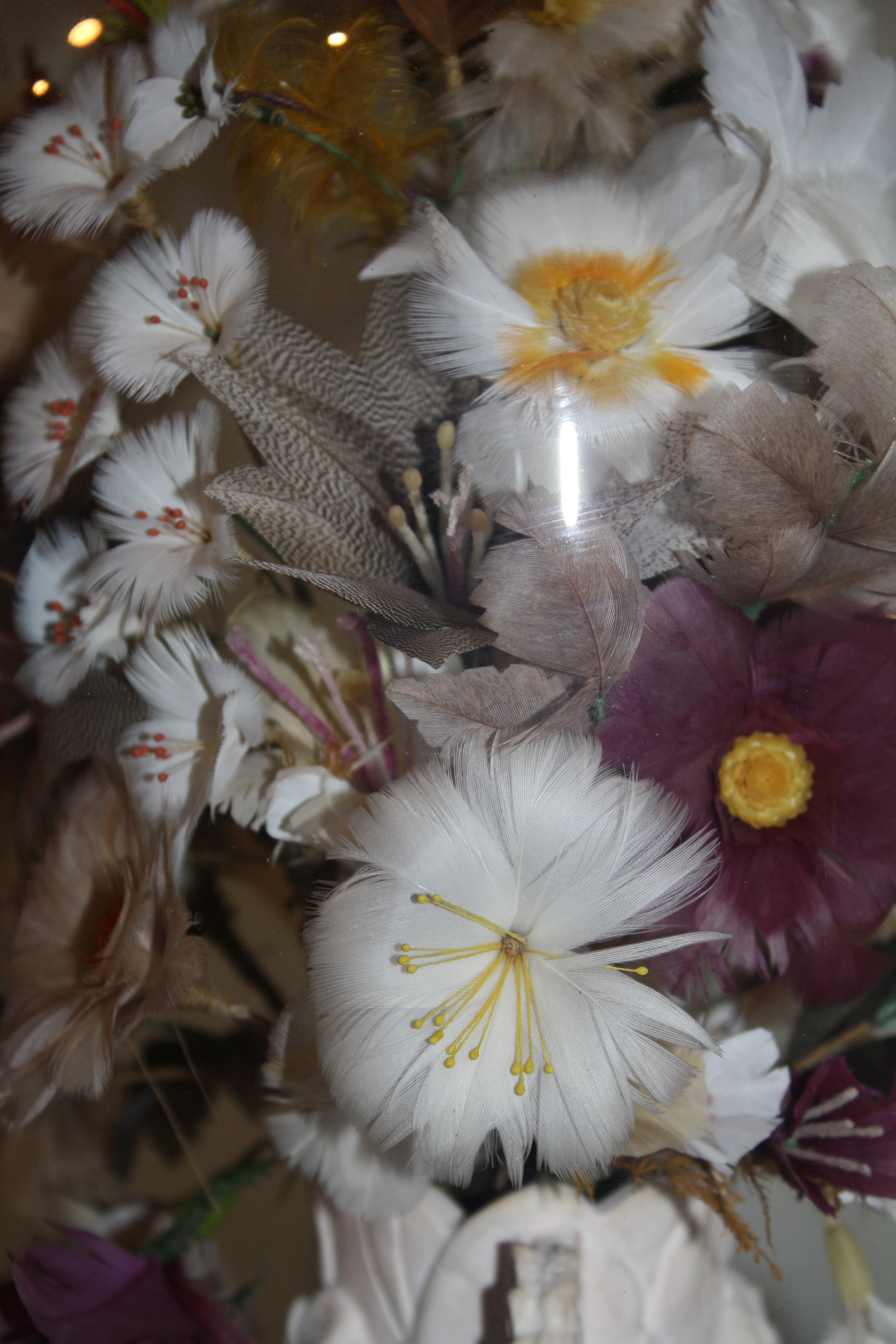
detail Feather Arrangement

detail Feather Arrangement

Domed Feather Arrangement
Making pictures, personal accessories, and arrangements such as this flower bouquet out of feathers became a popular craft for women in the mid-19th century. Exotic birds’ plumage would be used if available, but for the average American woman such as Lucina Schultz, chicken feathers would do quite well, and were sometimes painted and otherwise manipulated to achieve special effects.

Feather Arrangement credits: ca. 1870-1890
Made by Lucina Schultz
Douglass Township, Berks County
Gift of the Estate of Lucina Schultz
1938.11.35

detail Milkweed Wreath in Shadow Box  Maker Unknown ca. 1890-1905 Probably Berks or Montgomery County

detail Milkweed Wreath in Shadow Box
Maker Unknown
ca. 1890-1905
Probably Berks or Montgomery County

Milkweed Wreath

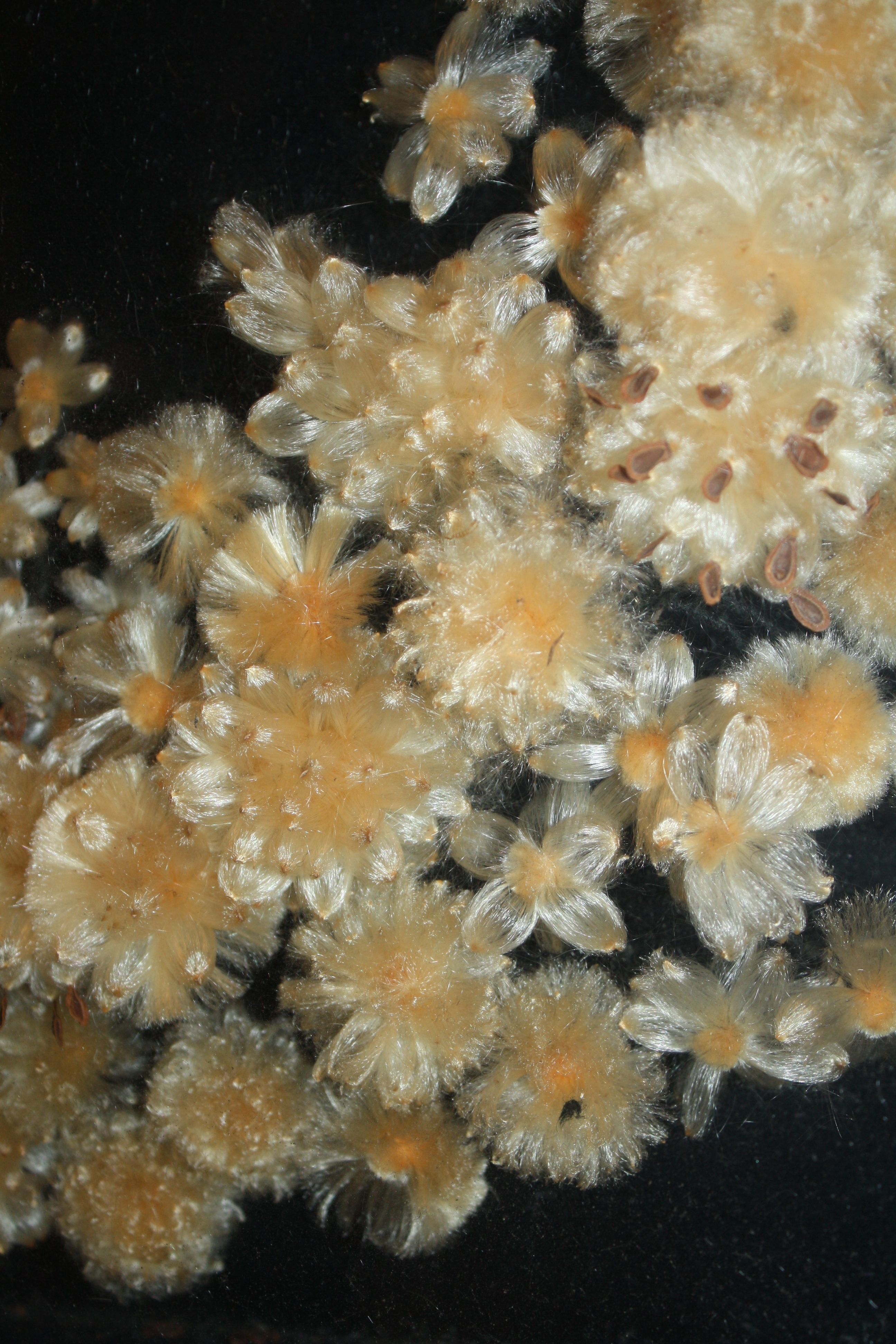
Nature’s seeds were used by the PA Germans creating wreaths for the Holidays and small ornaments.  This image is a detail of a wreath composed entirely using milkweed seeds shaped as small flowers. The tedious work involved to build the depth is hard to imagine but the work fools viewers into thinking they are actual dried flowers. Placing it behind glass in an ornate gold frame raises the craft to a decorative art form.

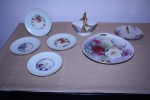
Hand Painted China collection

Hand Painted China collection

China Decorating

Amateur china painting became a popular Victorian ladies’ craft in the 1870s. Porcelain blanks made by Limoges in France and other factories in Europe were imported in huge numbers to supply the popular hobby. Some women even painted china to earn extra income.

Local china decorator Nora Krauss Schultz began creating her exquisite designs in the early 20th century and continued well into the 1950s, not only with her own work, but by passing on her knowledge to many local women in the communities of the Upper Perkiomen Valley. Nora Schultz’s talent for beautiful decoration can be seen in the group of plates decorated with berries on the left side of this case.


Still Life Painting by local

Still Life Painting by local

 Still Life Painting

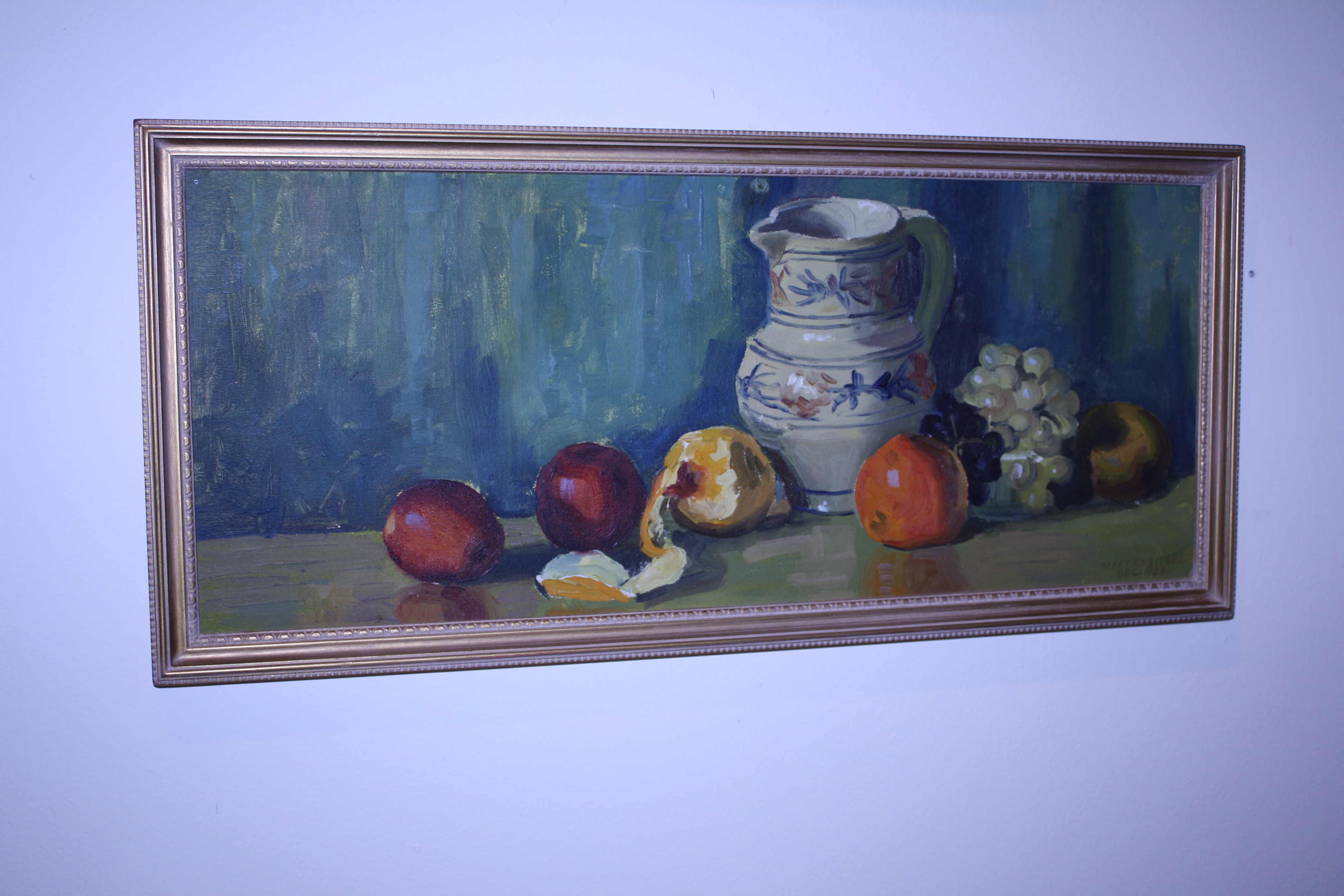
Sometimes china decorators applied their skills to the canvas, also; the paintings displayed above this case were painted by local women who also may have painted china.


Below are full views of the works detailed.

Setting up an Exhibit

Ever wonder how an exhibit comes together for opening day?  Here are some behind the scenes shots as we set up ‘Garden to Table: hooked rugs and art from the collection at the Schwenkfelder Library and Heritage Center, 105 Seminary Street, Pennsburg, PA.

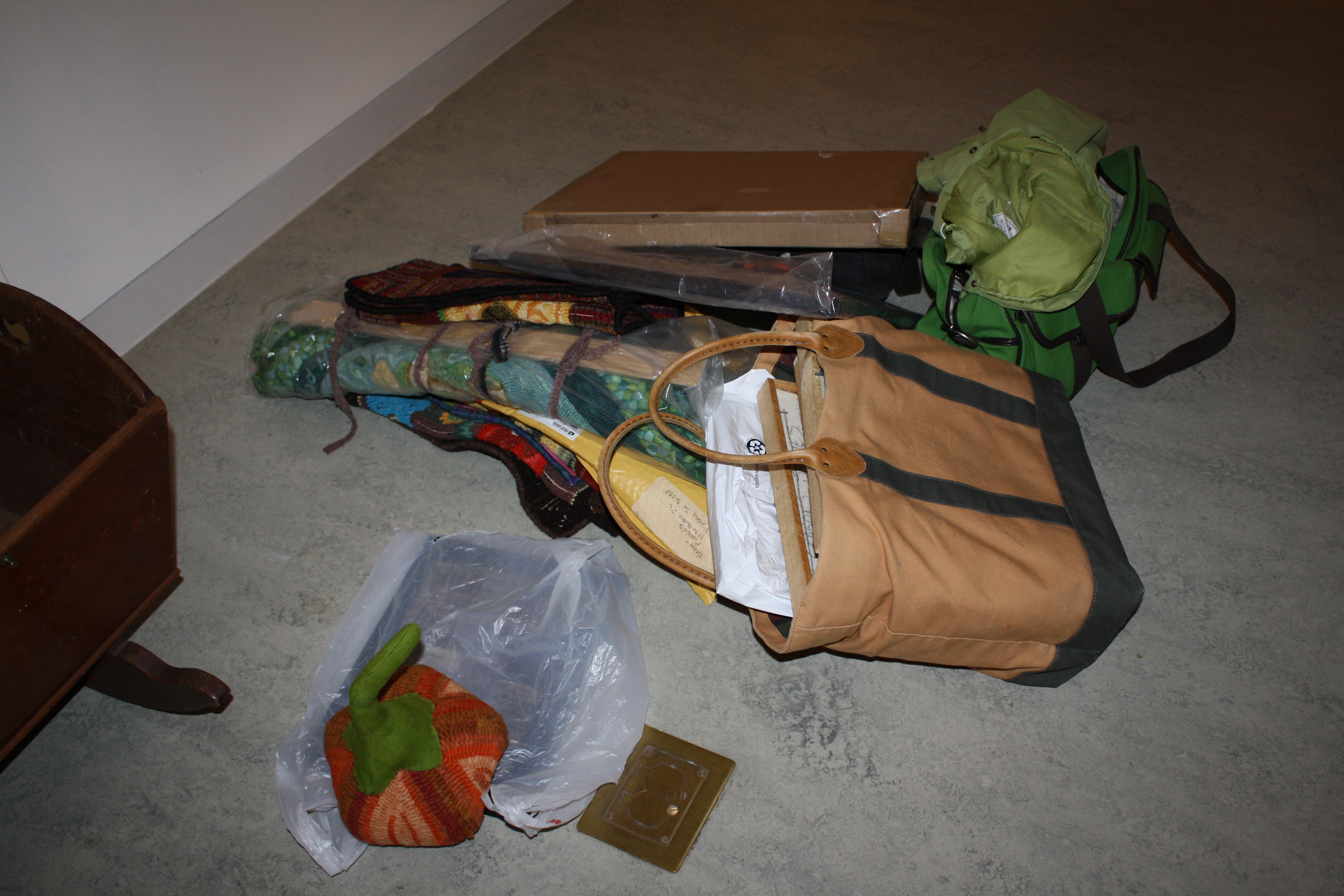
Delivery of hooked, sculpted and braided pieces

Delivery of hooked, sculpted and braided pieces

Works from Indiana, New Hampshire, Vermont, Virginia and West Virginia were collected by me complimenting the theme ‘Garden to Table’.  I brought them into the Fraktur Gallery at the Schwenkfelder on Thursday and the fun began.  The previous exhibit was off the walls but still in the room including a wooden cradle, cases and a cart filled with stuffing.

One exhibit down another going up

One exhibit down another going up

Candace Perry, Curator of Collections showed me items from their archives already on the walls including a flower wreath of feathers in a manner not known to her to be made in the 21st Century.  We discussed adding redware flower pots, hand painted china from early 20th C, an oil painting by Walter Baum, Berlin work and Frakturs representing the 19th and 18th Centuries.  Off she went into the archives and I began to intermingle the fiber work with the objects.

Why did one item end up next to another?  Sometimes it is color, could be shapes, maybe subject perhaps it is traffic flow.  All of these options came into play today.  The following two images show how moving an object slightly to the left and on an angle gives more space to the rug and flower arrangement.

Tomorrow we hang the rest of the work, bring in the large display case with four domed wax fruit compotes!, label the objects, sweep the floor and redirect the lighting just in time for the official opening on Saturday.  This exhibit will be up through March 1.  The Heritage Center is open Tuesday through Sunday visit www.Schwenkfelder.com for directions, exhibit descriptions, and hours.

Thanks to Darlene York Trout, Patsy Jones, Kris McDermet, Mary Jane Peabody, and Carolyn Boutilier for contributing hooked work to the collection.

Opening of ‘Hooked Art 2014’

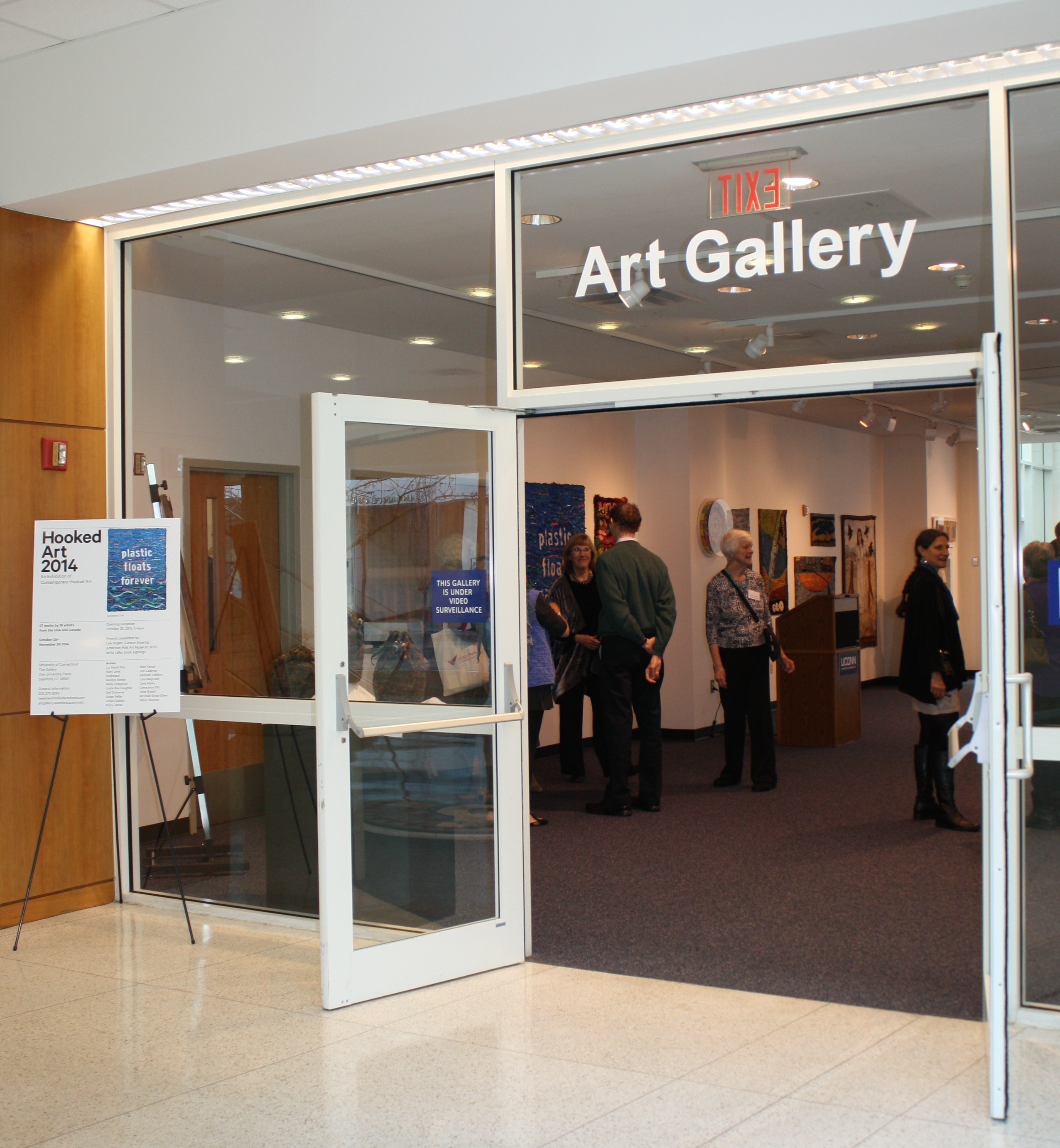
Entrance to UConn Gallery Hooked Art 2014

Entrance to UConn Gallery Hooked Art 2014

Opening Receptions are great opportunities to meet artists and view artwork and Saturday , October 25 was no exception.

Fifteen of the 18 artists were in attendance to discuss and enjoy the 55 contemporary textile works curated by Liz Alpert Fay in the 10th exhibit sponsored by Newtown Hooked Art Shows with Sherry Paisley.

Conversations between artists included topics on process, progress and future studio work while audience members were overheard saying their work would be influenced by the innovative directions they observed on the walls at the UConn Gallery on Stamford, CT campus.

Below are two images of work included in this exhibition of contemporary hooked art on view at UConn Gallery in Stamford, CT through November 29.  Visit if you can and enjoy the scale of each interacting with the others.

See www.NewtownHookedArtShows.com fora  link about hours and directions.  A review in Fiber Art Now magazine Fall 2014 issue includes an interview with Juror of Awards-Lee Kogan, Curator Emerita American Folk Art Museum, New York City.

I am happy to announce receipt of a travel grant from WV Div of Culture and History for my trip to the opening and a luncheon with fellow artists.  The grant allowed me to meet with my peers, view their work and discuss future fiber projects outside of the State of West Virginia.
Reflecting on a Portrait

Seems one is not enough these days. This post is how one portrait lead to another.

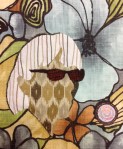
Inspired to simplify the design I hooked with such detail, I took one of the sketches and traced the outline, neck, hairline and glasses. Then out came the colored pencils and I played around with value and color.  That exercise was frustrating — wrong values, colors not quite right and I did not like “coloring”. But it did help me realize which values would communicate a face in side profile – (darker cheek behind full face, medium face and light hair); and that using color may not be how I wanted to create this work.
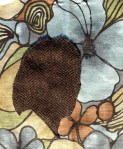
I had just picked up an armload of discontinued fabric samples from Dillon’s Furniture in Romney with intent to incorporate them into my work like the McDonald sisters of Gilmer County, WV who used scraps of fabric in their trapunto, embroidered, faux hooked tapestries circa 1964. (A post for the future).  It felt like I had hit GOLD when I looked at that pile!  Selecting a dark solid, medium texture and white lined fabric, I cut out patterns and began layering these on a MOD FLOWER pattern which said 1970’s to me. To hide the stitches I had to use threads matching the fabric.  These decisions lead me to dwell on my memory of embroidery skills.

It just happened the first layer was as dark as the lines of the pattern fabric. Noticing this, I positioned the next layers to expose the equivalent of the lines.  When in a creative session I try to remember to come out of the eagerness once in awhile and look at possibilities.  Being aware of happenstance and flexible enough to evolve is where artistic growth happens along with fun.

As you can see, the glasses were too important (and too dark), and gradually I trimmed them to just the actual frame which is enough for recognition. This piece will be finished in a thin black metal frame. Size is 14 x 11.

Although both faces are the exact same size, the positioning on background; detail in face; and scale of motifs in background mislead the viewer to think the appliquéd one is smaller.

Rug Hooking outdoors in Fall

FALL in West Virginia means breezes, sunshine, brittle leaves fluttering, COLOR and no bugs.  As a member of the Plein Air Hooking Artists it was time to get out and enjoy all of the above while creating.

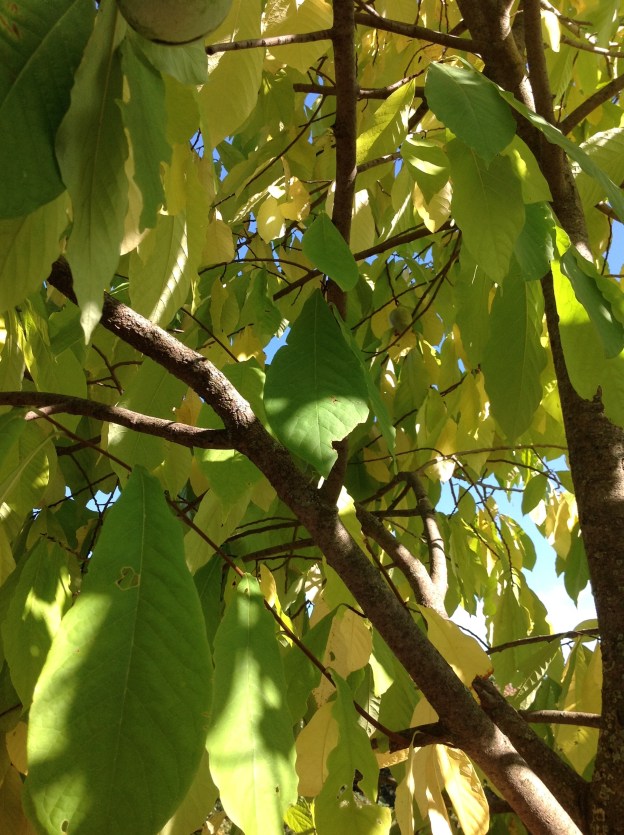
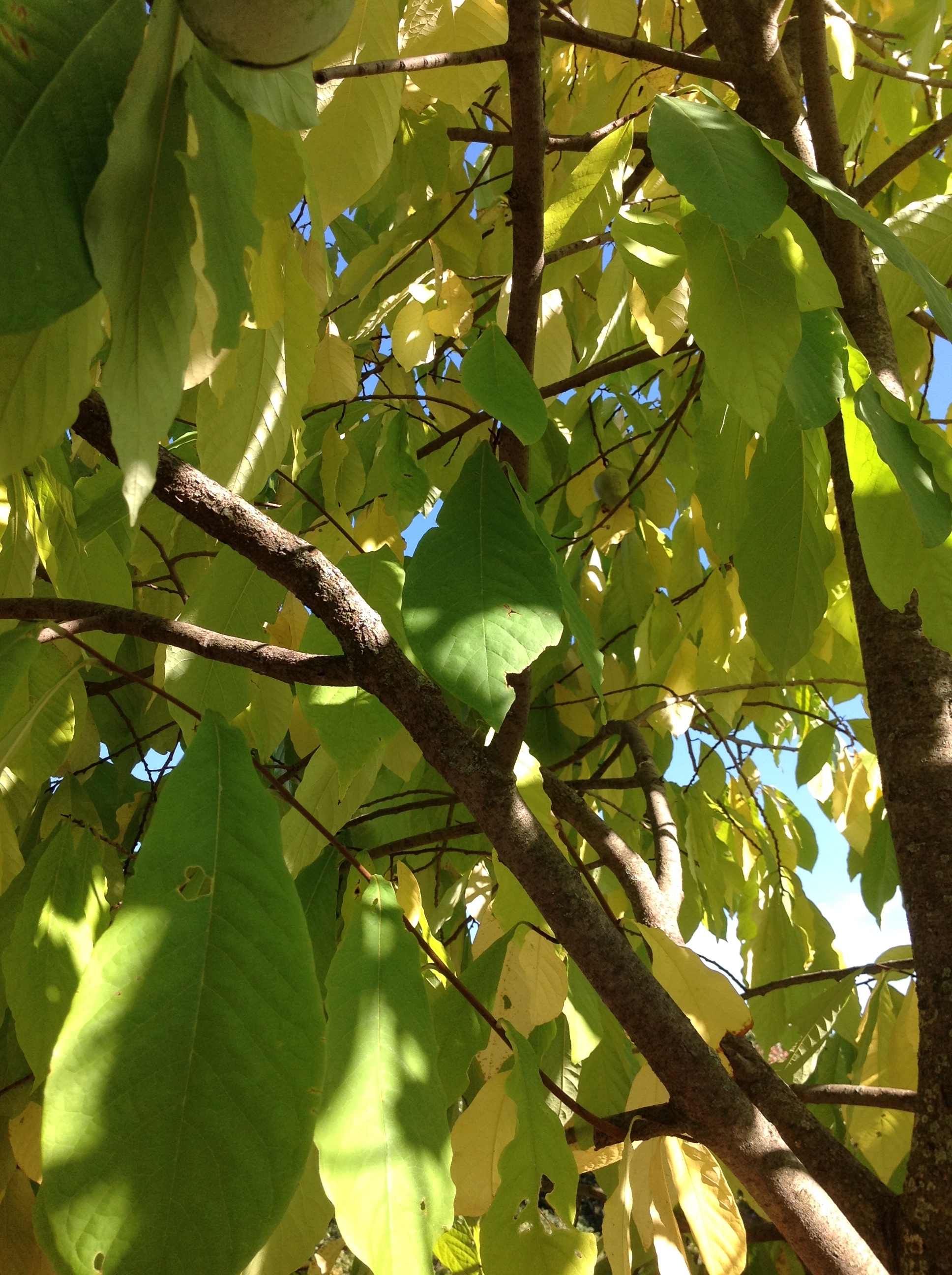
Paw Paw Tree in Fall

Paw Paw Tree in Fall

My attention was drawn to our Paw Paw tree.  The fruit is indescribable in taste subtle like  banana, custard, but something else.  Yet it is memorable and a native to the Appalachians.  There is even a Paw Paw Festival in early September held in Ohio.

Out came the chair, portable frame (Townsend model, Beeline is making a similar style); bags of yellow, green, purple and red wool strips; hook and linen.  I drew a design 7″ x 5″ on a strip of linen with three more of the same size.  One will be used as a Friendship Exchange Mat during the TIGHR Triennial 2015 (Back to Nature is the theme).

I enjoyed working with the elements, they influenced my mood and the work.  Starting with using the purple bag to depict the dark trunk, and limbs.  (The literalist said, “Oh darn I forgot the neutral bag”.  The artist said, “Use what you have and purple is the complement of yellow along with the darkest color”.)

I will admit the sun went in and breeze got colder so into the studio I went after two hours to finish the piece in a total of five hours.

I worked up a second design outside the next day.  This one I wanted to show the smooth leaves, vein colors and layers so hooked some, then cut out leaf shapes in wool and anchored them with pearl cotton embroidery stitching.  I pulled the two together with the same blue, similar purples and crisp yellow greens. Number three is drawn.  These leaves change daily now that the light and temperatures are changing.

Get out and look at nature daily.  You may be surprised what detail draws your attention and says “Capture me in your artwork.”


Portrait transformation

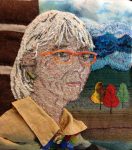
Realism is the quest in my current studies.  I decided to work a self-portrait close to life size using #3 strips (3/32″ wide) for detail.  A group in Harrisonburg, VA brought instructor Donna Hrkman in for three days and I took advantage of her expertise to start the project.   The lesson which stayed with me was to use line of pronounced value to infer shape, attitude, texture, form. Our brain will finish the picture based on its knowledge.

Susan L. Feller 2014

Susan L. Feller 2014

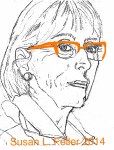
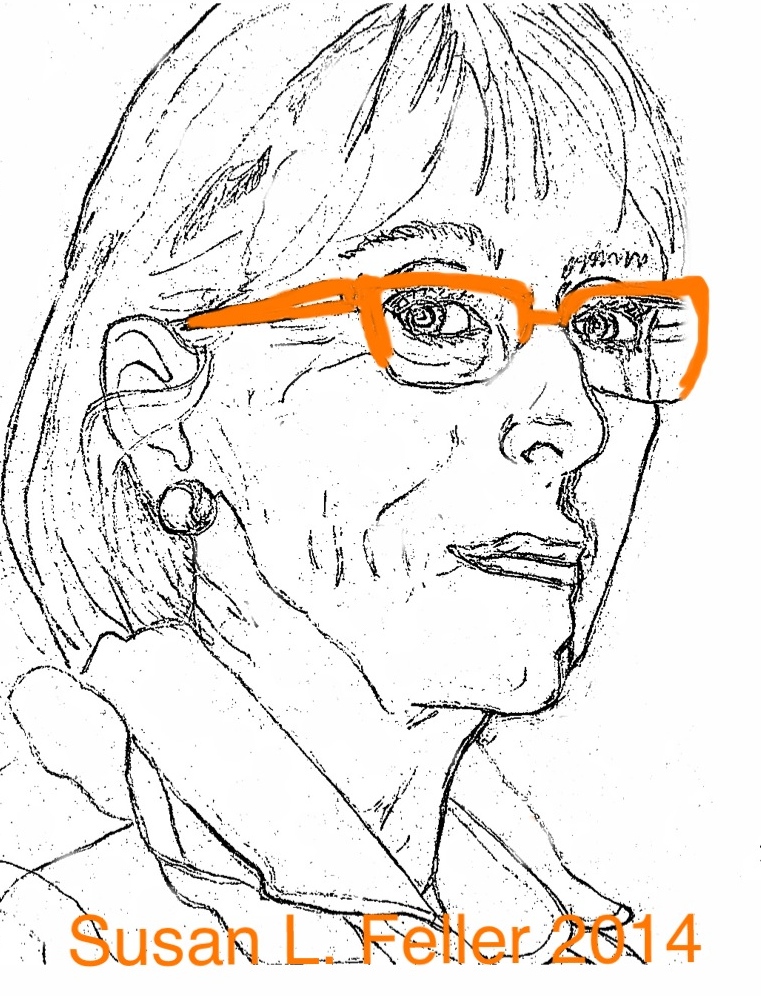
Lesson 1: PREPARE  I sent this photo to Donna who  created a pattern using a grid to enlarge the details.  I also ran the photo through an app for iPad called uSketch and selected a washed out version with strong main lines.

Sketch for self-portrait

Sketch for self-portrait

This image was enlarged to fit a 12 x 16 format and directly sketched  using a lightbox.  I then drew the portrait by eye (ending up with softer features than the direct sketch.) By drawing the pattern myself several times I was prepared to notice nuances and hook the shapes and lines.

Lesson 2: If the subject is close to you, draw the design yourself.  I used Donna’s pattern and my guides trying to replicate what I was seeing not my mind’s interpretation of the subject.  You will see the first image (worked on for two days) needs severe sculpting to become recognizable to my friends as me.

Day 2 Portrait Susan L. Feller, Donna Hrkman pattern

Day 2 Portrait Susan L. Feller, Donna Hrkman pattern

Lesson 3: Color can draw attention and lead the viewer to a conclusion.  Glasses, hair, and background elements are in strong recognizable colors depicting me in 2014. I had brought along the actual drapery fabric from the photo as background but Donna suggested I use symbols to highlight my rughooking journey.

Personality coming through

Personality coming through

I selected two award winning designs My Mountain State and Mountain Treeline. The abstract hooked blue/purple skyline reproduces the first and the appliquéd colored tree shapes infer the latter and my favorite season. One more element that describes me is living in a log home here in West Virginia.  I decided to take the right third behind the face to show that structure. Simple horizontal lines of dark texture and natural linen became the logs.

Lesson 4: Simplify but complete the story. I almost forgot a major element in Ruckman Mill Farm’s pattern line is FRAKTUR designs. What motifs could I insert into this natural setting that would read PA German folk art? Of course! The circle from Baptism Certificate which has my birth date, parents and my name was printed and laminated to become a pin on the shirt.  I signed the piece and added one more symbol all in one.

Symbols tell story Susan L. Feller

Symbols tell story Susan L. Feller

Lesson 5: If it is not right, fix it.  All along you will notice I got closer to a recognizable rendition of Susan Feller except for the LIPS. Donna said the lower lip usually is lighter because it protrudes slightly.  She suggested using one size larger cut for the lower lip and both larger than the #3 cuts for the face.  I looked at the photo and convinced myself the reverse would be true in my case.  Extreme light and dark values were chosen, wide cuts, narrower, slightly up turned, straight across all not quite right.  I pulled out Anne-Marie Littenberg’s book Hooked Rug Portraits by Stackpole Books and read through it.  There was one image similar to mine that used several different values to portray the light on lips.  Posted that version on Facebook and received accolades.  But it was not until I asked Roslyn Logsdon to critique the lips that I heard the answer: AGAIN—“the lower lip needs to be lighter!!!!!!”

Lesson 6: Use the right tools from your tool box.  My life has involved textiles since childhood. Hand sewing, embroidery, dying fabric and using found objects often shows up in the wall art I create.  No reason to restrict this historical portrait to just rughooking. I added my favorite linen shirt, sea glass jewelry, embroidery and appliqué to enhance the hooked features and intend to finish the piece with a tramp art frame. What fun!


Class topics in 2014

I just reviewed photos from workshops this year.  Many lessons were taught, dozens of lessons learned, and plans were made for next year ….  all reasons why I teach.  See the calendar for workshop sites in 2015.

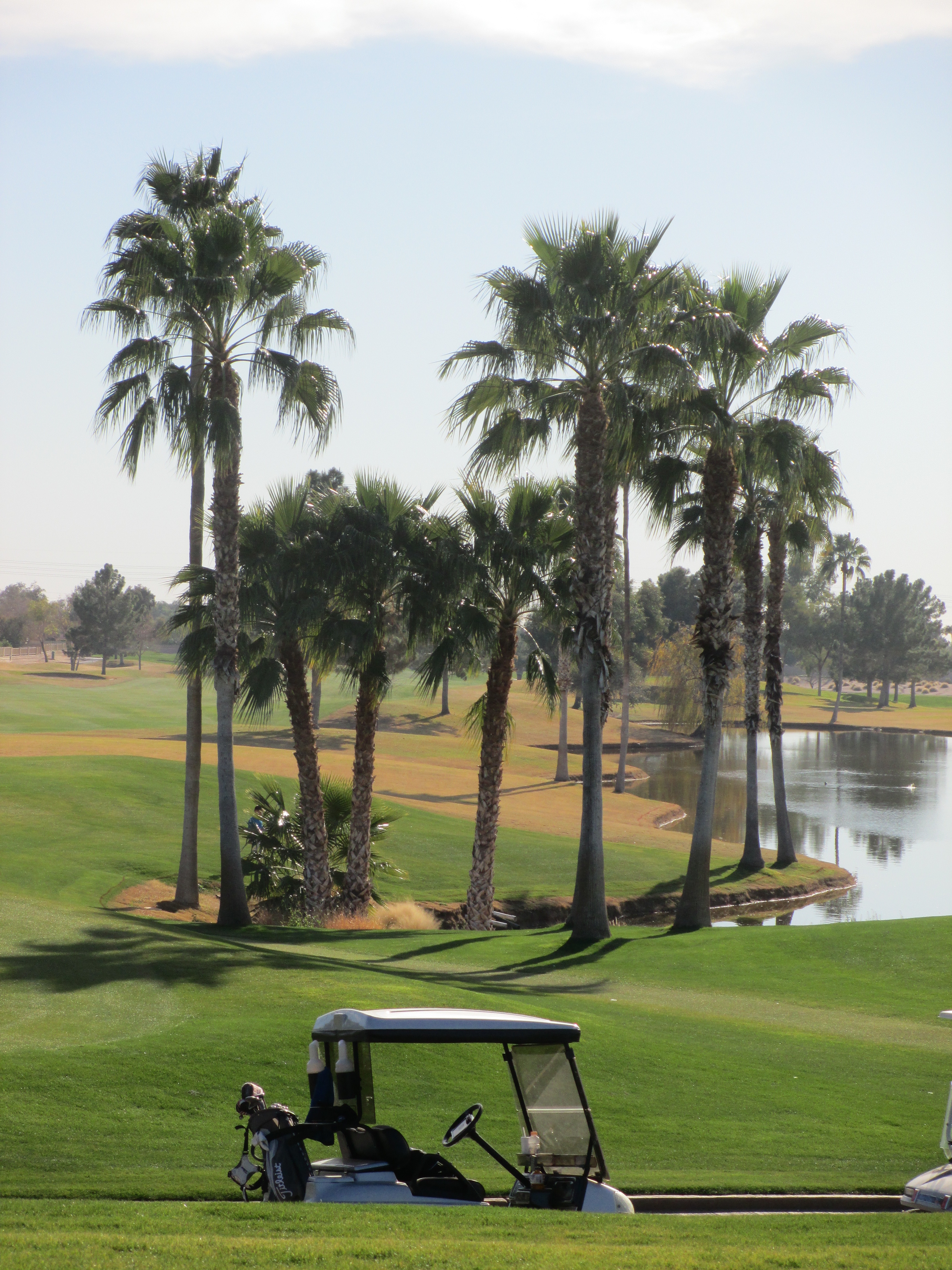
Alta Vista Golf Course, site of workshop

Alta Vista Golf Course, site of workshop


I flew to Mesa Arizona in January right in-between the coldest spells in West Virginia.  People came down from South Dakota to escape the cold and others ‘wintered’ in sunny Arizona.  The projects were colorful and three days went too quickly.


The class at Cedar Lakes Rug School was filled with sixteen eager students.  Some had finally signed up with me after a few years of seeing work by other students and others repeated with new projects and goals.  At the end of the week, I complimented them all, referring to this session as a Masters Class.  I was challenged, they contributed and every project was well on its way to being a great piece.  I am teaching here again next year, email Nancy Blair at  thhkrugs@altelco.net   for details.

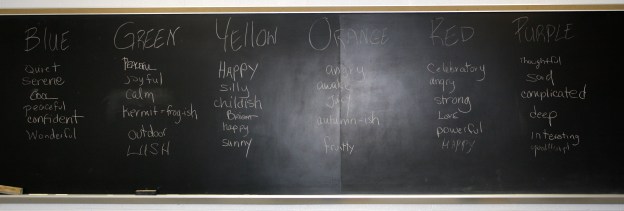
The topic at Green Mountain Rug Hooking School in Vermont was the Moods of Color.  We did get to hooking designs based on a mood the participants brought  but began the three days with several exercises.  On the blackboard each posted a word under one of six colors.  Before looking farther what would you say about Red, Orange, Yellow, Green, Blue and Purple?

Manistee Rug School in Onekama, MI is coordinated by a guild rather than a business.  Volunteers for every job join together bringing in the new members and adapting each year to the needs of all.  This was a repeat for me, the first time was in 2011.  I made a point to dine with a different instructor each evening, making new friends and delving deeper into old friendships.  The class included beginners, pattern designers, experimenters, folk painters and abstract artists.  Diverse and challenging, their projects evolved well over the week.

Sauder Village Rug Week is in Archbold, OH is in its 18th year.  Ruckman Mill Farm vended again right next to Dorr Mill Store in the Exhibit Hall where we enjoyed the Celebration rugs and special collection of Esther and Judy Knipe.  The workshop I taught covered a wide variety of ways for Finishing Hooked Rugs, (title of new book by experts in each technique… including a chapter on finishing work for gallery exhibits by me).  We used the exhibit to explore finishes, talked about the appropriate new technique for students work and using a small sample “learned” three techniques.  Response from the students was to offer this again.  Look for class schedules at SauderVillage.org in early November.  I will be teaching several different classes all week.

Susan L. Feller, Ruckman Mill Farm

Susan L. Feller, Ruckman Mill Farm