Category Archives: elements and design in art

A Leaf Falls

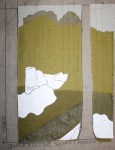
One day in high school English class Mrs. Bowen assigned us an EE Cummings poem. Minutes went by as I stared at the letters and then….. I read it!

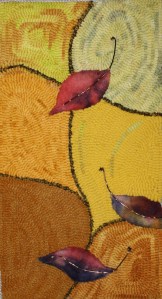
Decades later I honored this experience with “A Leaf Falls”.

Welcome to my favorite season.


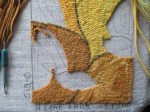
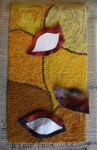
The design evolved from a sketch of migrating birds gathering seeds outside of our home one October day. The Carolina Wren’s tiny body with tail sticking up and beak down looked like a leaf. Gathering yellows and muted gold wools, I organically filled in defined shapes keeping three openings for my leaves. Two leaf shapes are stuffed and stitched onto the linen backing. Their veins and stems are copper wire anchored by  gold threads. The third is partially stuffed but its edge flutters because of a layer of iron-on interfacing with wire inserted between two pieces of wool and bent to shape.

I sent off a card with the image and poem as a thank you note to Mrs. Bowen and received a lovely note back. It felt nice to have been able to send my appreciation after all these years.

The finish makes the piece

Attending the 20th Annual Rug Hooking Week at Sauder Village I studied the 700+ works looking for different, effective finishing techniques.

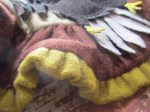
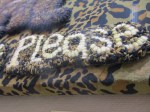
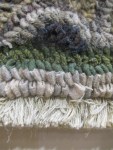
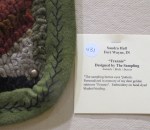
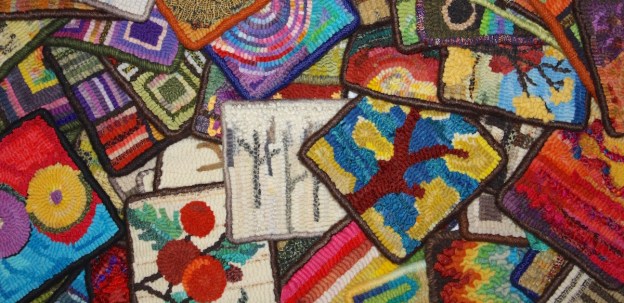
The border of a rug design, fringe on an oriental pattern, embroidered fabric edge on a primitive composition all enhanced the time-consuming handwork rughooking entails. Here are some highlights. I realize my focus was on the details and not capturing the completed image for comparison……all the better for inspiration I hope.

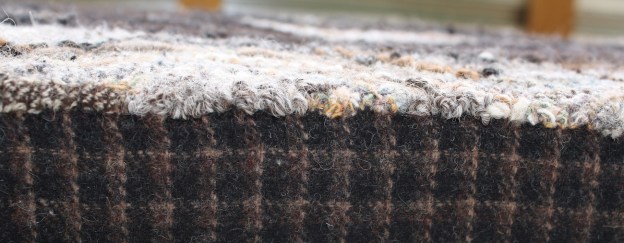
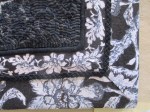
The purpose of a “frame” is to enhance the subject and introduce it to the environment. These techniques completed each design, emphasizing the style (steam punk), drawing attention to the subject (bulky natural linen fringe on colonial design), providing interest (the rippled tail of eagle by Meetinghouse Hill Design).

Learn to select the right finishing technique and your work will rise beyond completed. See Finishing Hooked Rugs for step-by-step lessons from experts and select the right technique so your work will be more than just done.

by Rug Hooking Magazine

by Rug Hooking Magazine

Inspiration explored 50 years later

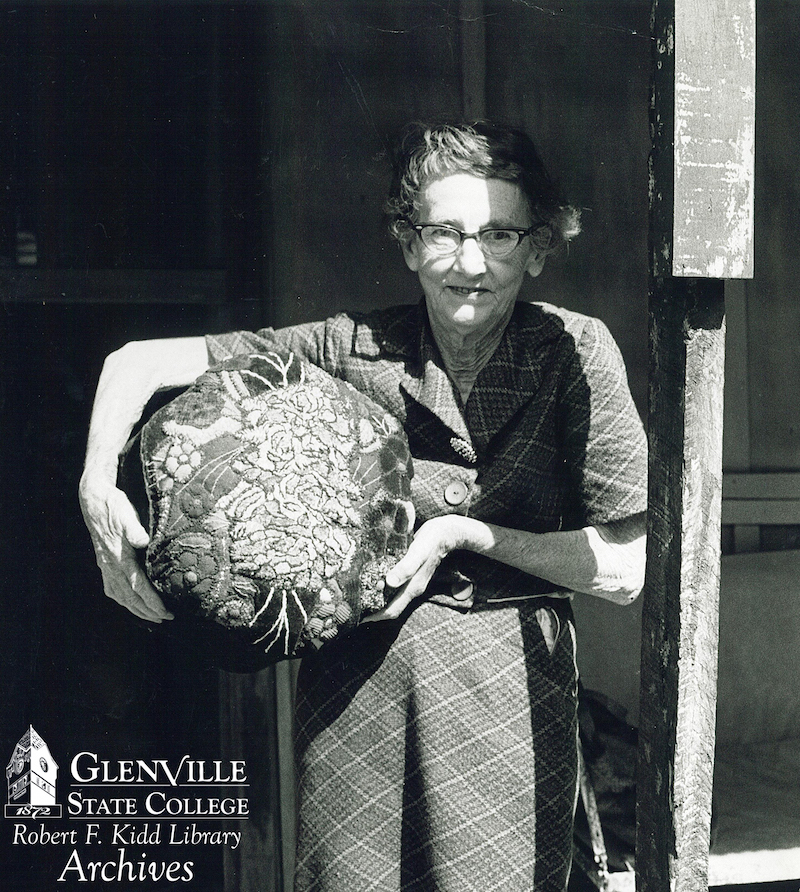
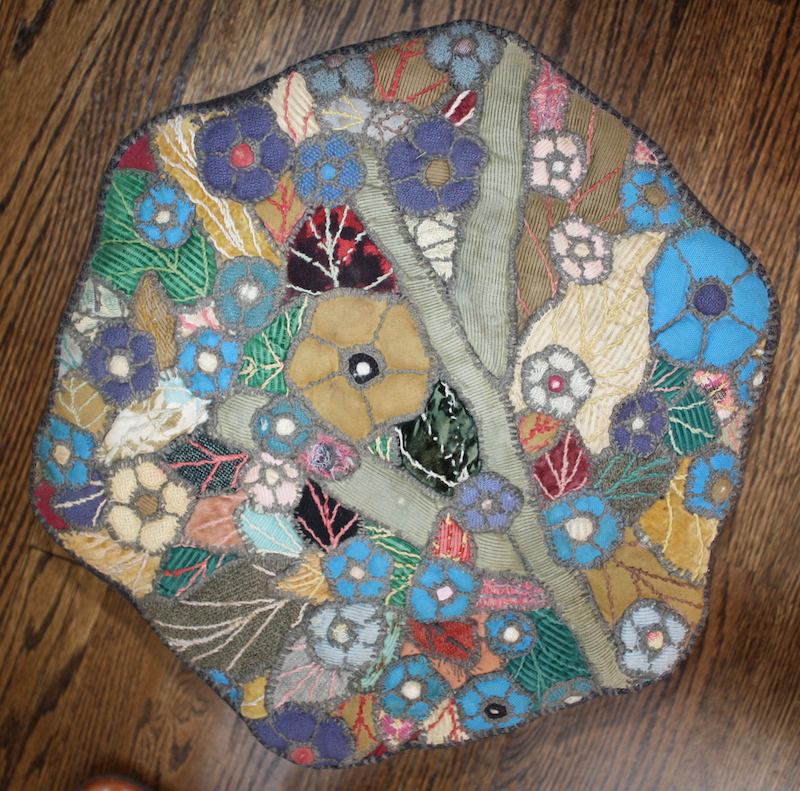
Blanche McDonald, Letter Gap, WV circa 1965 with mixed media footstool

Blanche McDonald, Letter Gap, WV circa 1965 with mixed media footstool

In a five year research project gathering personal background about Otha and Blanche McDonald from Letter Gap, WV I have been inspired by their textile work. Incorporating collage, embroidery, trapunto and stitching the ladies work embodies traditions, make-do, and balanced composition = art.  This post will describe my approach to making a footstool as they did in the 1960’s.
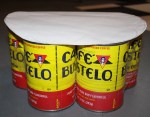
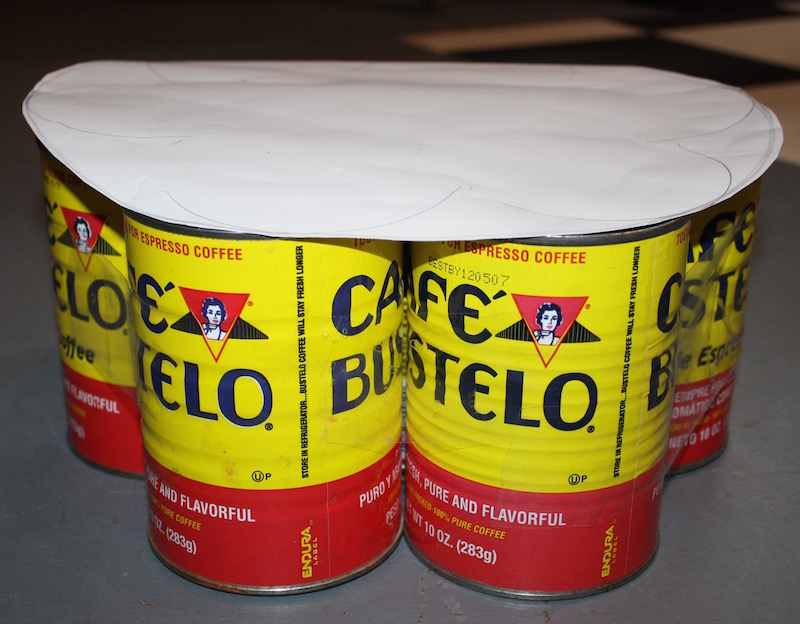
seven cans for the base of footstool

seven cans for the base of footstool

Materials needed: seven same sized empty cans (I used one pound coffee cans)
batting used in quilting
fabric to wrap the circumference of cans assembled into circle
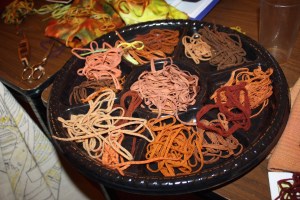
embroidery threads your choice of colors
variety of heavy weight fabrics or upholstery fabric sample
fabric strips to hook (usually wool but your choice)
foundation backing open weave for hooking and stitching
needles, hook, scissors
mat board cut the shape of circle (two pieces)

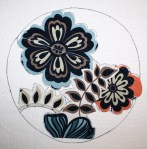
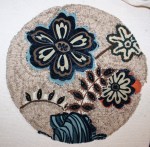
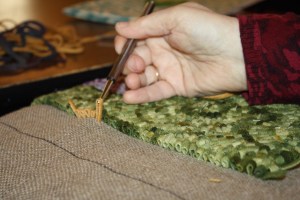
Tape the cans together, six around one in center. Trace this shape on paper and use as template for pattern. Draw onto backing and gather your fabrics, threads, tools. This is the time to play. The McDonald Sisters’ compositions all conjure up gardens and nature. They collaged scraps of velvet, brocades and drapery fabric common in the 1960’s in central West Virginia and any rural community in the United States. The shapes were defined with yarns unevenly anchoring the edges of each petal or stem. Some other materials used to embellish were unraveled copper threads from a Brillo pad which have tarnished over the years but still have a twinkle hint of metal.

top of footstool in private collection

top of footstool in private collection

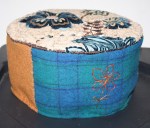
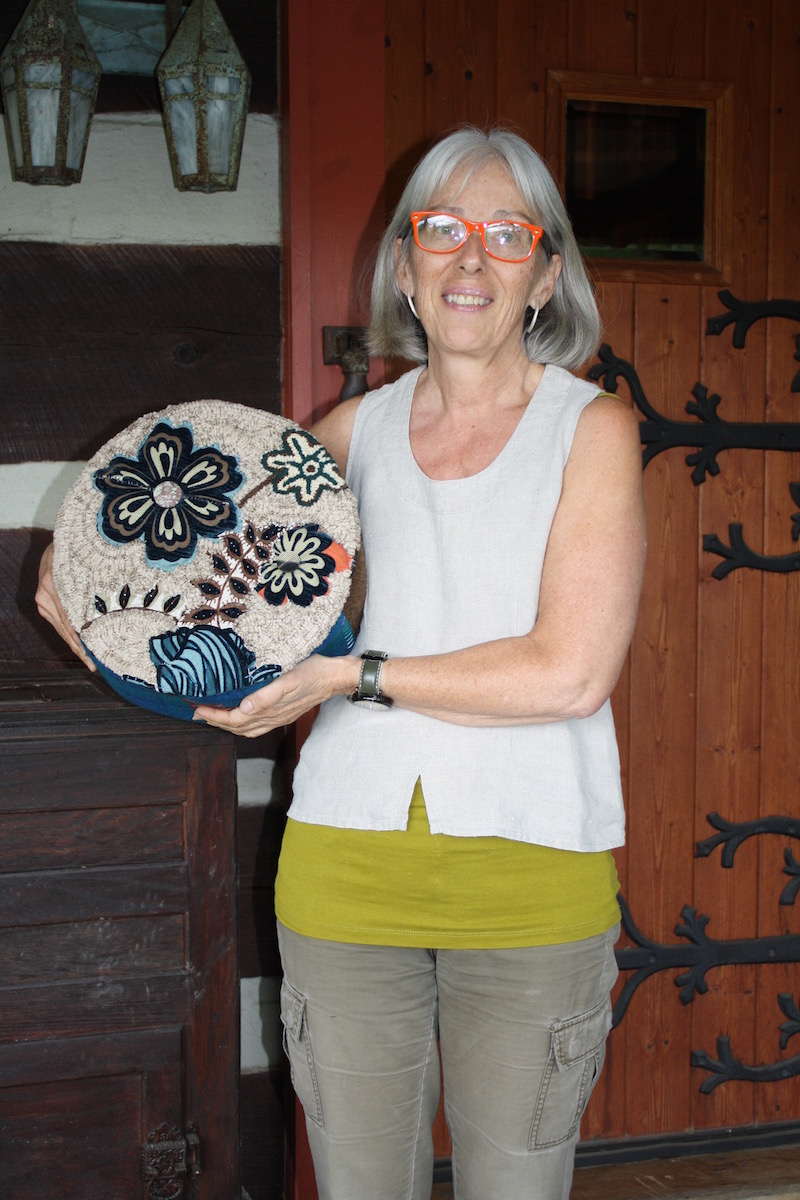
I do not want to replicate their designs for a couple of reasons. One the copyright has not expired, the ladies passed away in 1975 and 1976. Two as an artist I prefer to react and respond. Using a supply of discontinued samples of upholstery fabric acquired from Dillon’s Furniture in Romney (eliminating their dumping them into the landfill), cutting up and rearranging the pieces into a pleasing composition then filling in the spaces with hooked wool fabric and stuffing some of the fabric shapes this footstool cover evolved.

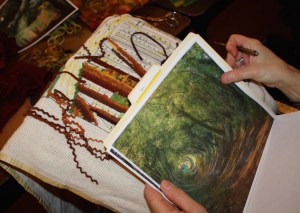
Piecing three colors of wool to wrap the cans, I attached the top and put on a bottom of corduroy with mat board buffering the cans and fabric. The sides were embroidered with simple flowers.  I stuffed the two main flowers on the top but stitched the stems with embroidery threads anchoring them lower than the hooked loops.

This footstool will be part of an exhibit at Sauder Village August 17-20, 2016focusing on Otha and Blanche McDonald’s life and their exposure to economic opportunities thanks to President Johnson signing the Economic Opportunity Act in 1964. They and many craftspeople have been honored in exhibits, purchase awards, and sales for the past fifty years.

Susan L Feller with mixed media hassock

Susan L Feller with mixed media hassock

Fifty years later another footstool and craftsman outside of her log home… me.

Stymied with process

I have a good design, pile of materials in a variety of values, and know the techniques I want to use why is this process not enjoyable?

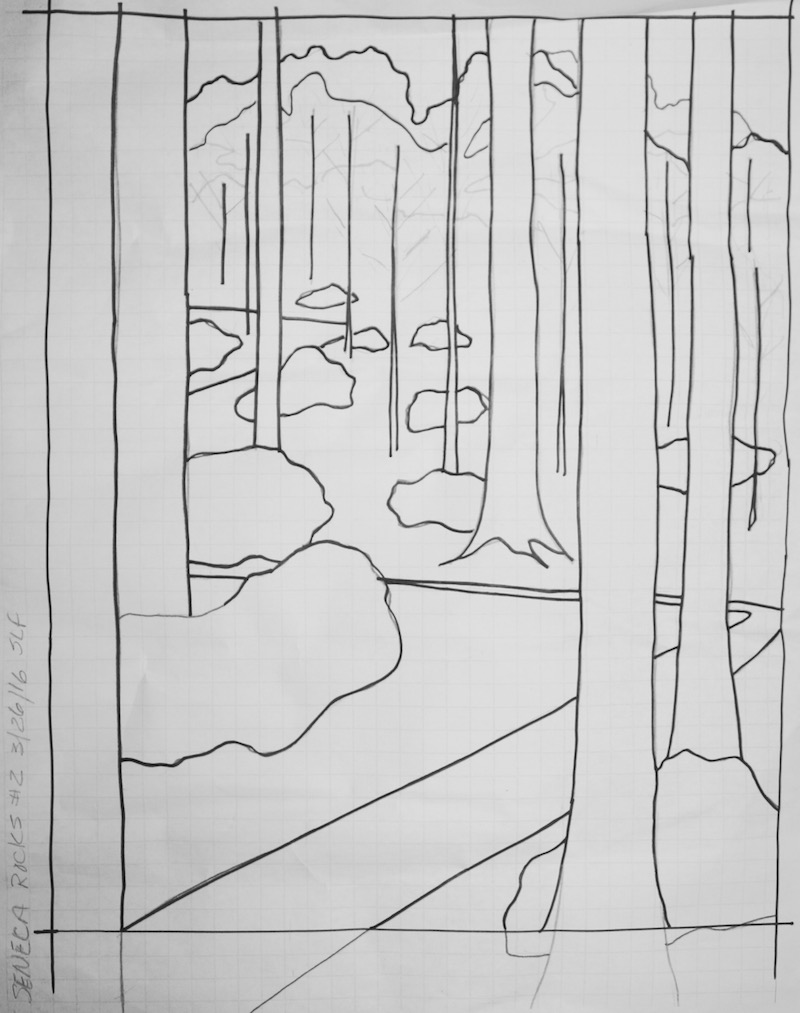
Sketch of Seneca Rocks #2 Susan L Feller

Sketch of Seneca Rocks #2 Susan L Feller

I think the last two ingredients are lacking something….but what?

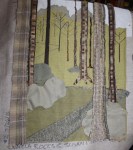
Check out my decision process so far:  layering fabric, working trees in different values embroidered, hooked and appliquéd, embroidery of leaves and then the rocks.

Decided I need to set this aside and work on another project while researching skills and shopping for supplies.

Came back to the piece and kept going. By selecting the upholstery material for rocks in value and different textures the piece seemed to come together. Turned it over to my partner, Jim Lilly who created a custom frame continuing the layers of forest. Seneca Rocks #2 is complete.

Traveling to Vermont

What designs could come out of a June week in the capitol city of Vermont with friends?

Plenty of ideas for artwork and many personal memories were gathered while enjoying Montpelier, VT and the Green Mountain Hooked Rug School.  Looking forward to returning in 2017 teaching “Working in Abstract Expressionism”. Registration is open at GreenMountainHookedRugs.com

A change of season

Here is one day in May where color, shapes and sounds announced new life in West Virginia. The natural cycle continues. As of the end of the month, with the squeaking song in early morning of the Indigo, all of the migratory birds have returned.  We are ready for summer.

My artist eye  looks for shadows, highlights and textures to exaggerate. When you look around what catches your eye and how will you show us the results?

Ninth Retreat Whitened

Early in April for the past nine years fiber enthusiasts have traveled to Hampshire County, WV for a weekend at Peterkin Camp and Conference Center. Anticipation of renewing friendships, flashes of pinks from native redbuds along Route 50, and pulling loops until midnight energize us.

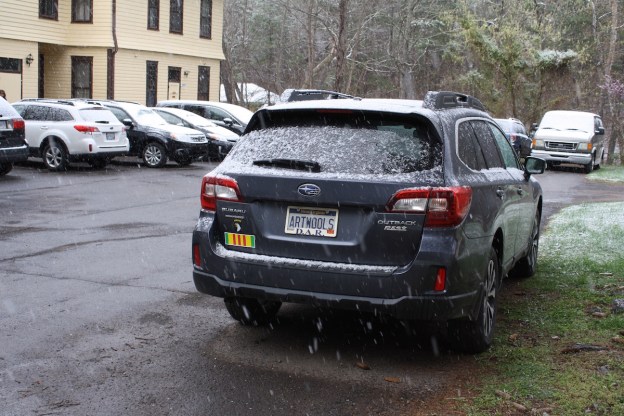
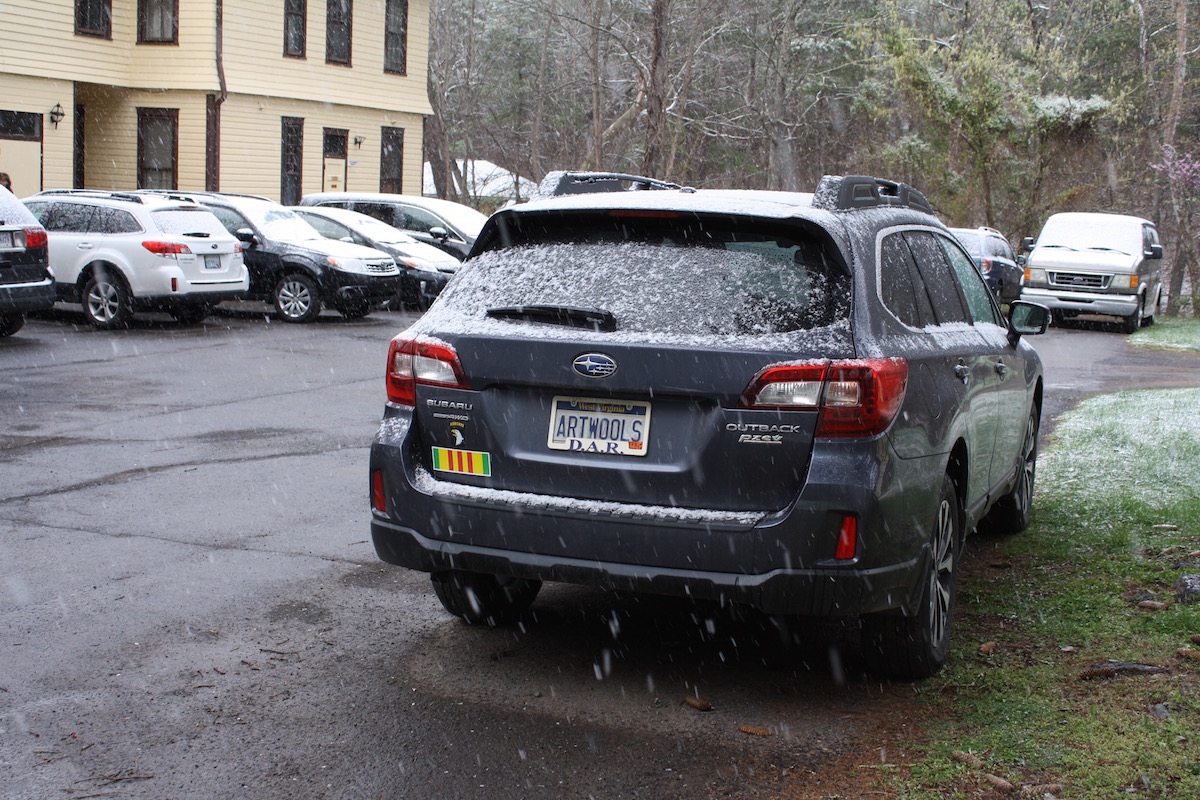
Snow but no travel on Saturday

Snow but no travel on Saturday

This year the weather included snow! We also had rain on Friday and bright sun on Sunday to travel home. In past years there has been hurricanes, tornadoes, and a full weekend of very warm sunny weather. Mother Nature is fickle in April in West Virginia.

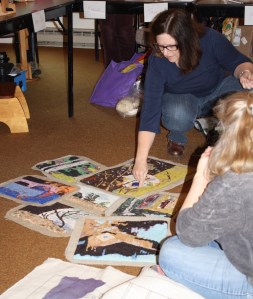
We worked away on a wide variety of rughooking projects. Many of which will be works in progress next year too – they are quite intricate.

Too quickly the packing began and vehicles headed north, south, east and west filled with memories of conversations and visual fun.

Join with a friend or two and pull some loops soon, your mind and work will benefit.

Travel Sketches-Seattle

Beginning a new series based on my travels. The challenge is to simplify the experience.

I decided a journal approach will help develop style and studies for larger art. Less pressure to “nail it” the first time and as you will see, the exercise leads to my goal… concise yet informative designs. Techniques and materials are not clarified yet, although my new supply of cotton fabric and threads will be tapped into.

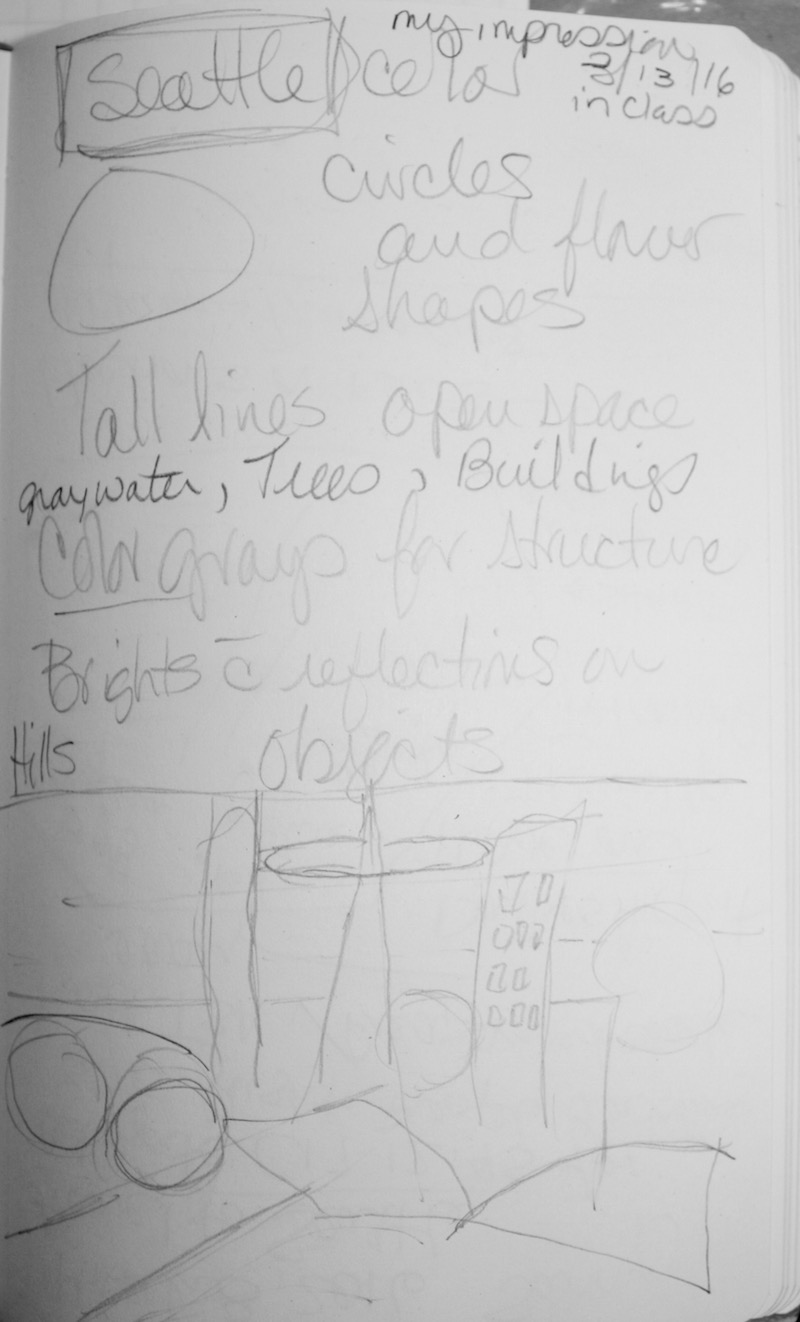
Thanks go to the students in my design class at Puget Sound Rug School, who energized my own creativity. The first sketch is a result of one of the exercises. List a topic, describe it in words and motifs.

Initial Sketch

Initial Sketch

Over the past week I have developed three separate designs inspired by the trip to Seattle. The City View has seen 6 versions so far.  Next steps to decide size, techniques, materials and begin with my favorite tools-my hands. Slowly I will communicate.


Exploring Seattle

Two days ahead of Puget Sound Rug School I have immersed myself in Seattle visually and physically. Who knew you could “hike” five miles in a city?  Camera in pocket and rain gear on here are some inspiring compositions.

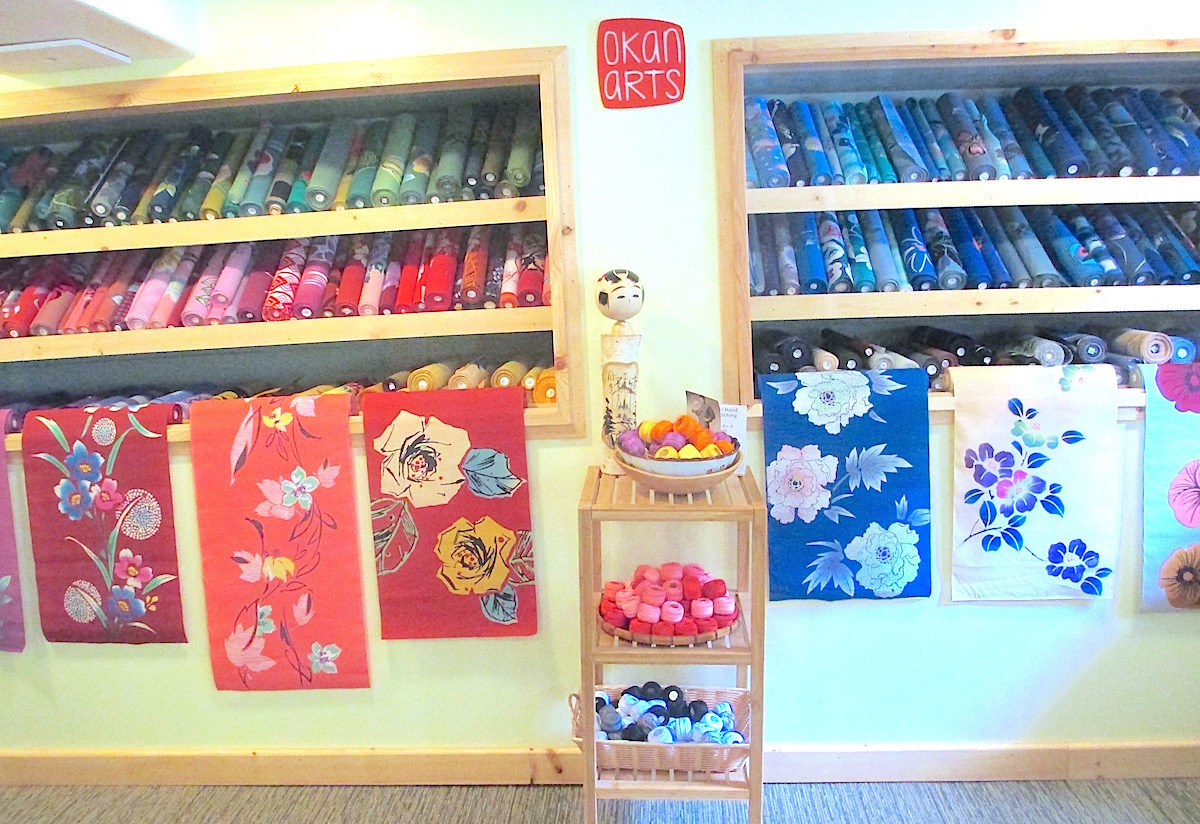
Okan Arts Japanese cottons

Okan Arts Japanese cottons

First stop was a fiber mecca for me. Patricia Belyea has amassed an amazing collection of Japanese yukata cottons available for  US quilting and fiber artists from her shop in Seattle or online at OkanArts.com.  I selected bold patterns and intimate repeats of lines to be combined into my art.
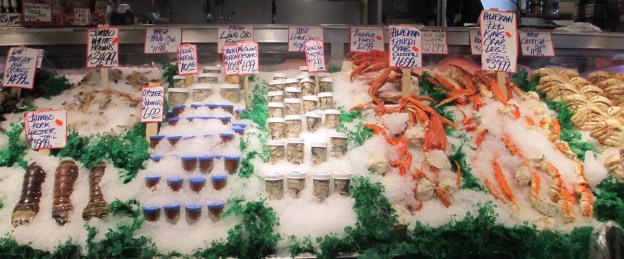
Pikes Market produce

Pikes Market produce

Vendors carrying produce, flowers, artisan products, and baked goods entice the tourists at Pikes Market down along the waterfront. The blast of color and natural shapes caught my attention.

The city is filled with contrasting shapes, lines of different strengths, and shots of color in the structures, everyone vying  for attention.

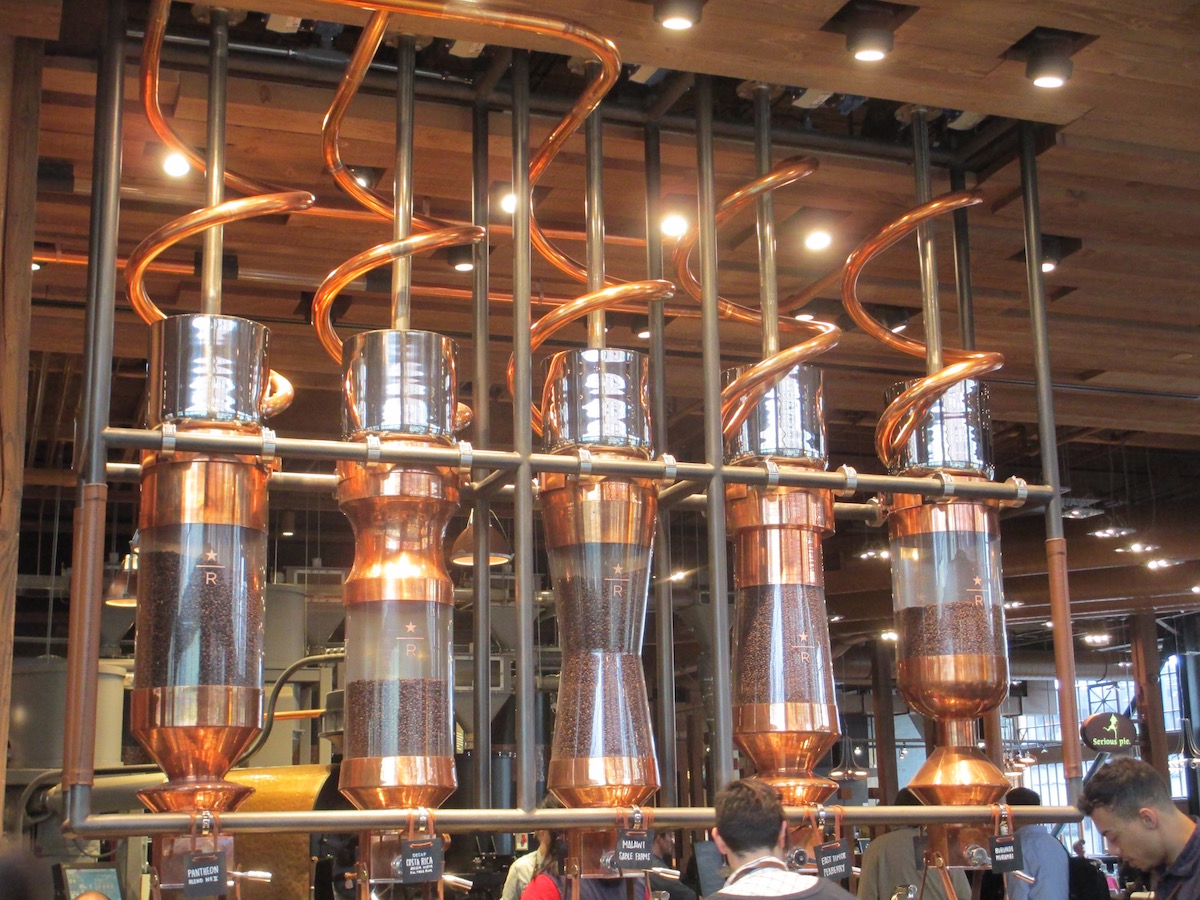
Coffee Beans

Coffee Beans

And then there was the sensual allure of roasting coffee at THE Starbucks Reserve Roastery and Tasting Room.   Notice the gentle curves of the copper tubes and the warm color of the roasted beans awaiting the personal selection.

All of my senses were heightened. I am sure to end up with some visual artwork from these hours spent in the Emerald City.  Traveling from the West Virginia mountains to a metropolitan area increases the awareness of structure.

What am I learning?

Sketches and small studies reveal patterns, address color nuances and encourage decisions.
What will be explored again, how large, using what materials, techniques, how many times?