Tag Archives: hooked rugs

Retreating in the Mountains 2015

The 8th Retreat into the Mountains weekend is over with resounding “YES let’s do this again” from all.  Coming in over the mountains fog slowed the progress into Peterkin Camp and Conference Center on Friday.  Gathering with friends, settling into our nests, sharing the projects we wanted to spend our time on, and learning a variety of finishing techniques were how Friday was spent.  Of course there was food in the dining hall and in-between, all with a healthy approach. Last person left the workroom at 12:30 Saturday morning….

Keri Sue Brunk lead two yoga sessions on Saturday.  The first before breakfast and the second one introducing the practice just before lunch.  She also loosened up the neck, hands and back muscles while we sat in our seats.

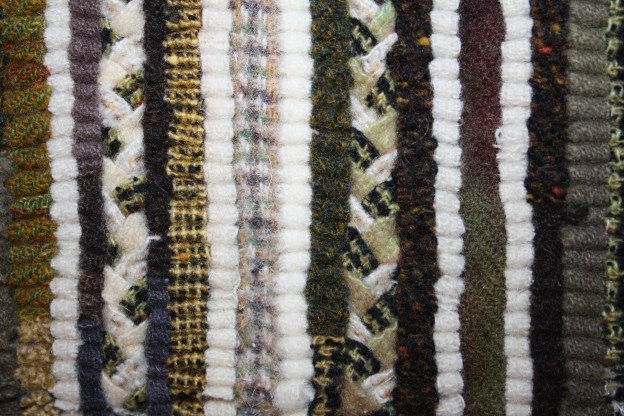
The finishing techniques we covered were triple whipping with cording conducted as a hands-on session by Nancy Parcels. Stumbles, success, and appreciation were the compliments we shared with our samples.  Lori LaBerge showed the layering involved to present her work for gallery sales by stitching the hooked work to gray herringbone, stretched onto art board with clean wrapped corners, cloth covering the back all of which is then inserted into a gold rimmed shadowbox frame. A whipped mitered corner was demonstrated from handout by Germaine James of Canada. Debra Smith showed how a picot crocheted edge enhances a whimsical design.
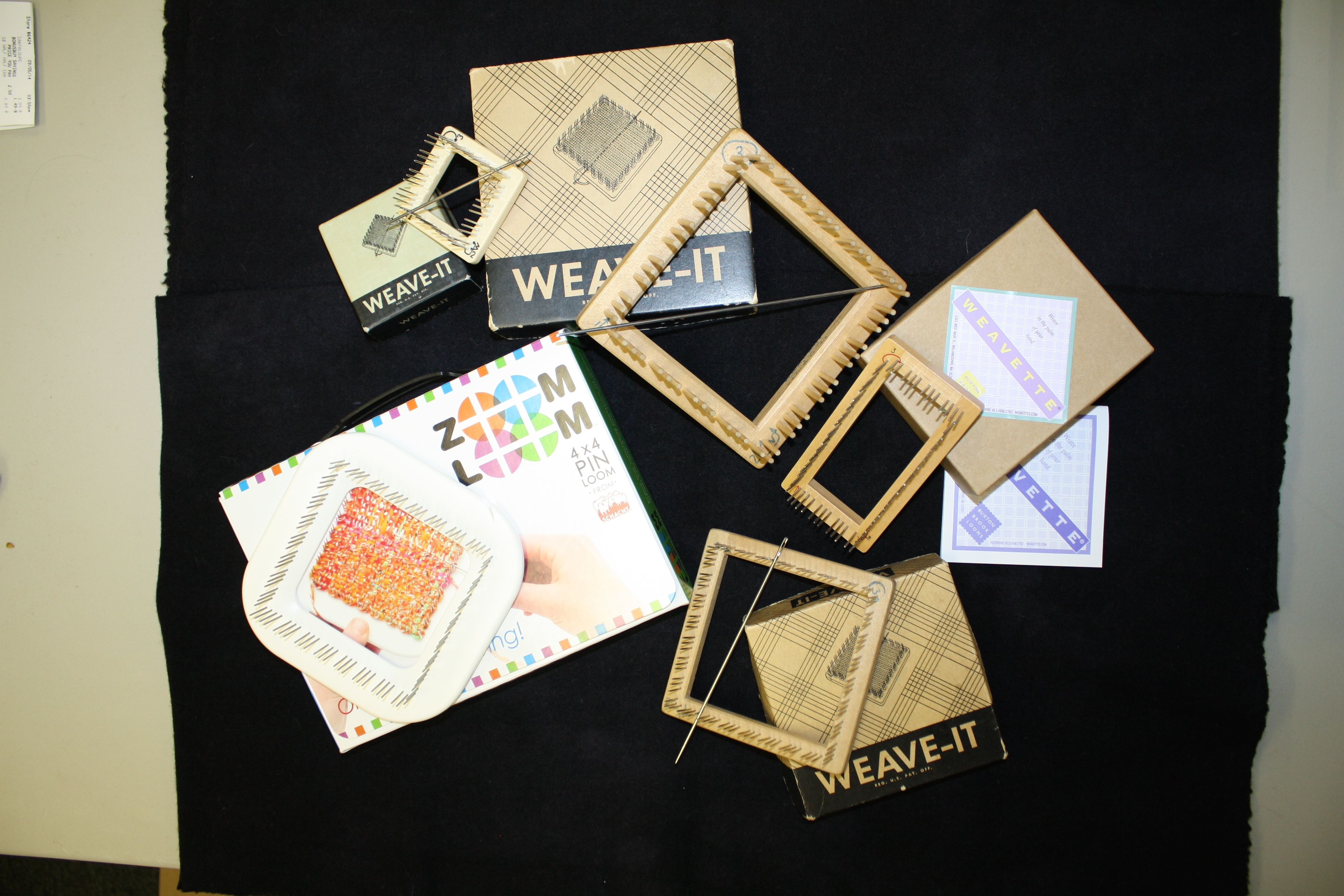
Collection of pin looms

Collection of pin looms

The Falls

The Falls

We played with pin looms ranging in sizes from 2 inch square to 4″ x 6″ and using a variety of yarns and ribbons.  The March/April/May 2015 issue of Rug Hooking Magazine includes an article about continuous weaving incorporating pieces into hooked art. The annual hike to the glen with waterfall and hemlock grove introduced the property at Peterkin to the new attendees on Saturday afternoon.

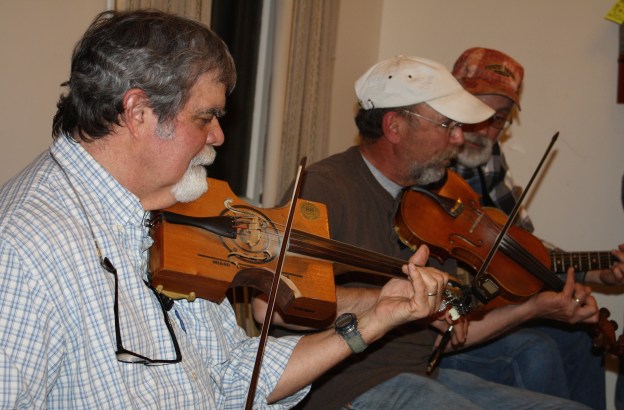
Jim, Paul, Andy, Rick and Joe

Jim, Paul, Andy, Rick and Joe

Saturday evening we stayed at Peterkin and all of our senses were exposed to a new experience.  Within Hampshire County there are dozens of musicians who jam weekly playing old-time music. I called Paul Roomsburg and he networked with four others. Jim Morris brought instruments made from common objects telling us the history of music. Joe Hypes and Andy Agnew brought along their Rebel Union CDs and played guitar, fiddle and banjo during the evening.  Rick Pegg played the entire three hours standing up with the bass. To say we had a good time would be far from enough compliments to this group of talent.  By the end wooden spoons were tapping away on body parts, our clapping and stomping added to their strings. We all joined in with a rendition of John Denver’s ‘Country Roads‘ and ‘Amazing Grace‘.

Taking photos, studying

Taking photos, studying

2015 attendees

2015 attendees

Sunday was filled with conversations including critiques; suggestions for equipment, material and other workshops; and several successful completed projects.  We “throw down” works onto the wide porch each year and then get together for a group portrait.  Lunch and packing up came too quickly but the dates are set for 2016 and cyberspace will keep us connected until then.
 

Finishing up the Study

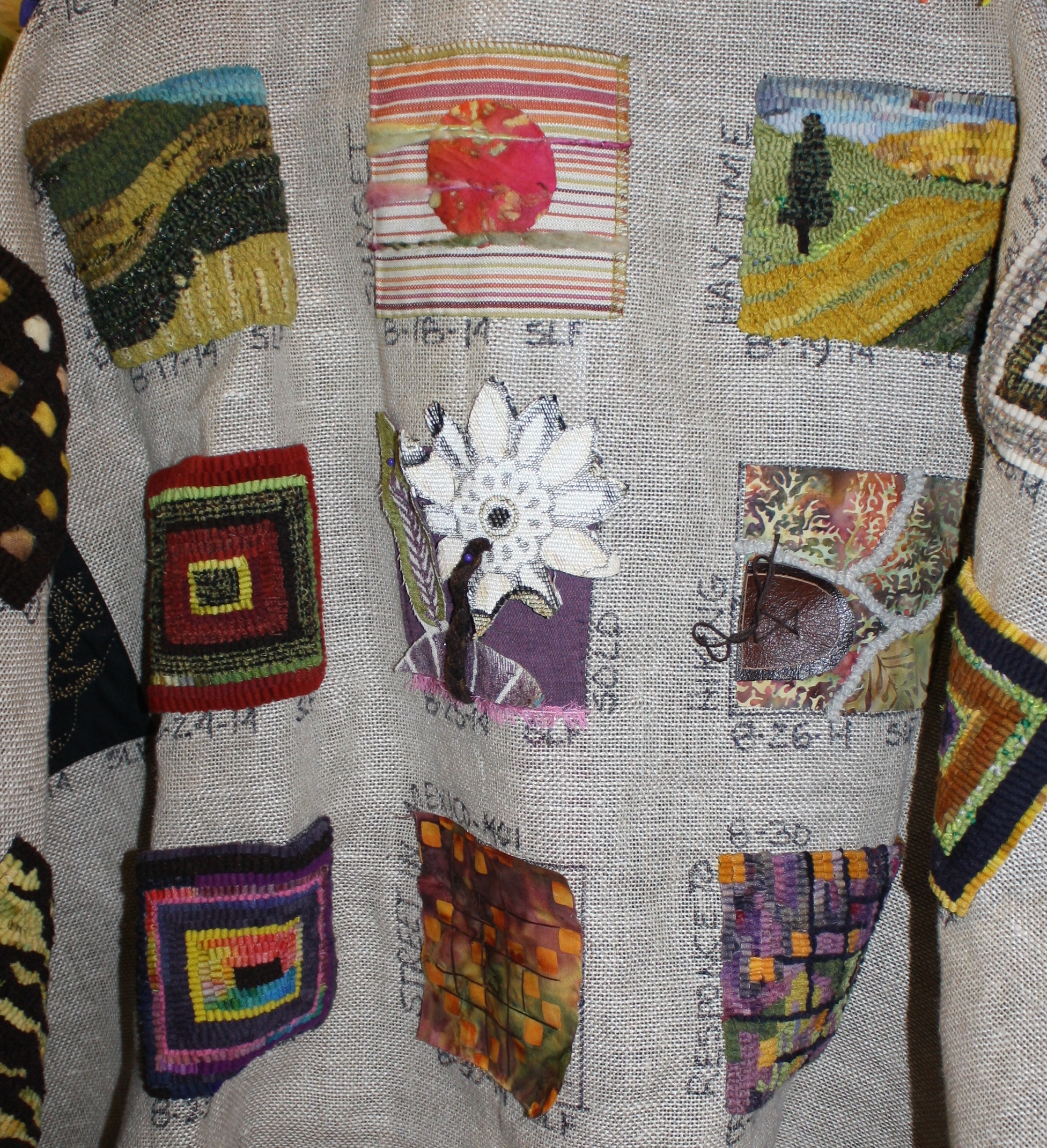
March 23 I finished the last month in the Year Study.  That is not to mean every single square is completed but I can say there is an end in sight and the twelve panels will be ready for Sauder Village Rug Hooking Week August 11-15 in Archbold, OH.

Visit Year Study – Collection Gallery to see the months and individual squares.  Over time the full project will be uploaded.

August 2014 nine squares

August 2014 nine squares

Lessons learned? Sketch and complete each subject at least within the month.  I jumped around and when busy with teaching stopped working on the pieces until months later.  The creative momentum was lost for a particular design or a techniqueI had suggested did not interest me when it came around to doing that square. So I changed it.

I still procrastinate.  Although deadlines are met, I prioritize the projects and decide whether a commitment is worth pursuing or can be shelved.  This one will be completed because I told many people, it has been accepted as an exhibit, I am happy with the results, the documentation will be useful in future articles, workshops and the direction of my artwork practices.

Color studies

Color studies

Solution:  Independent study with one person as student and advisor means goals or methods can be changed to meet the situation.  Stay positive do not chastise, evolve. I changed some designs from original sketch.  There were days with no sketches which I used to explore a series with pleasure.  I got through by breaking the 365+pieces  down into segments of a each month.

Results: When the project began I thought it would be rewarding to explore new techniques in surface design.  Now 18 months later and counting, that goal was met and I have set another one: to educate. During the year photographs were taken when changes were made to a piece.  I will write a series of articles describing the process, challenges and solutions.  In future posts and the pages on the site under Year Study, mini courses will develop and a dialog with viewers.  I found using social media helpful for encouragement, directed critique and developing an interested audience.

Progress in the Mountains, Susan L. Feller 2014

Progress in the Mountains, Susan L. Feller 2014

There is an urge to work on larger pieces finally.  Abstract, geometric, simplified palettes, and environmental stories are the styles and subjects which will be developed.


To be continued. I am glad to be on this creative journey with you.

Virtual Studio Visit – Susan L. Feller

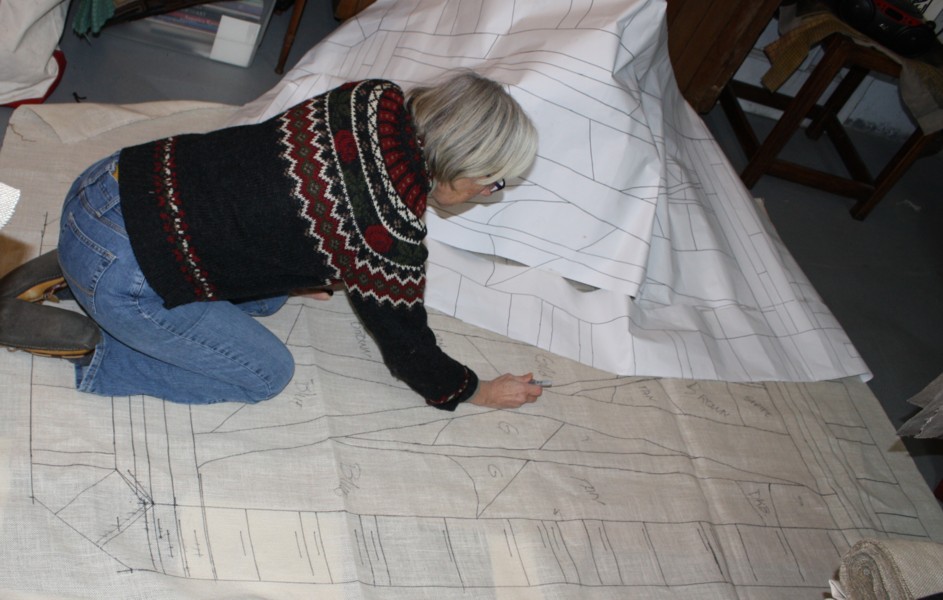
Transfer design to linen backing

Transfer design to linen backing

As a creative person I would love to stay in the studio and work, but no one sees the results unless they visit. These days a virtual visit can be arranged if some of that creative time is put into developing websites, blogs and social media avenues.

Here are ways you can view, learn about, and purchase some of that artwork:

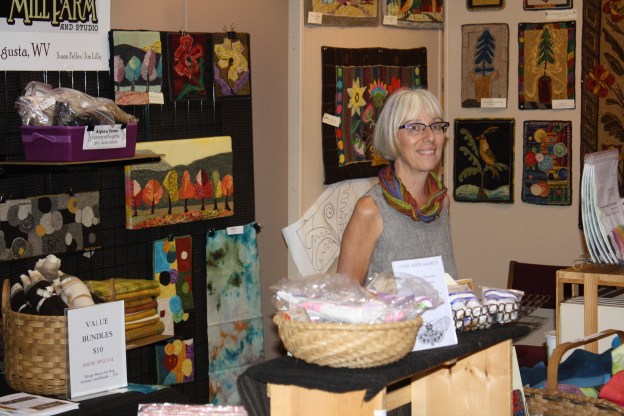
Ruckman Mill Farm color logo  We are revamping the website www.RuckmanMillFarm.com It is back up now. Hope you check it out regularly to see new and favorite rug hooking patterns, supplies, and my teaching schedule.  Use the coupon FaceShip when checking out to receive free shipping until March 31.  And please send me comments on the navigation and order process, we can improve with input. Here in the hills of West Virginia it is loading SLOWLY……

The site you are on now,  www.ArtWools.com serves as my identity as an artist and also acts as a blog. If you are new to it, I invite you to look on the right sidebar and sign up for automatic posts . Search the pages to view Galleries and biographical details.

We are now on Facebook on two pages Ruckman Mill FarmSusan L. Feller, Artwools , LIKE them for news feeds.

And I have several boards on Pinterest at Susan Feller at Artwools

Hoping to hear from you after “visiting” 24-7.

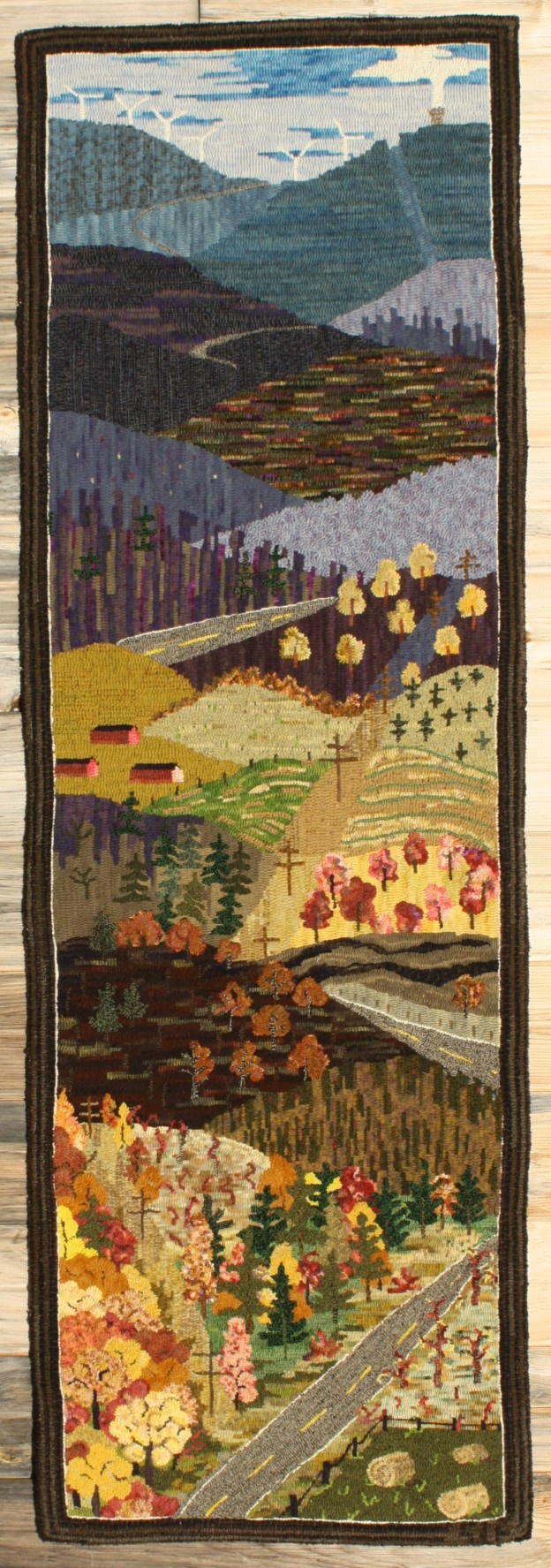
Progress in the Mountains

Progress in the Mountains, Susan L. Feller 2015

Progress in the Mountains, Susan L. Feller 2015

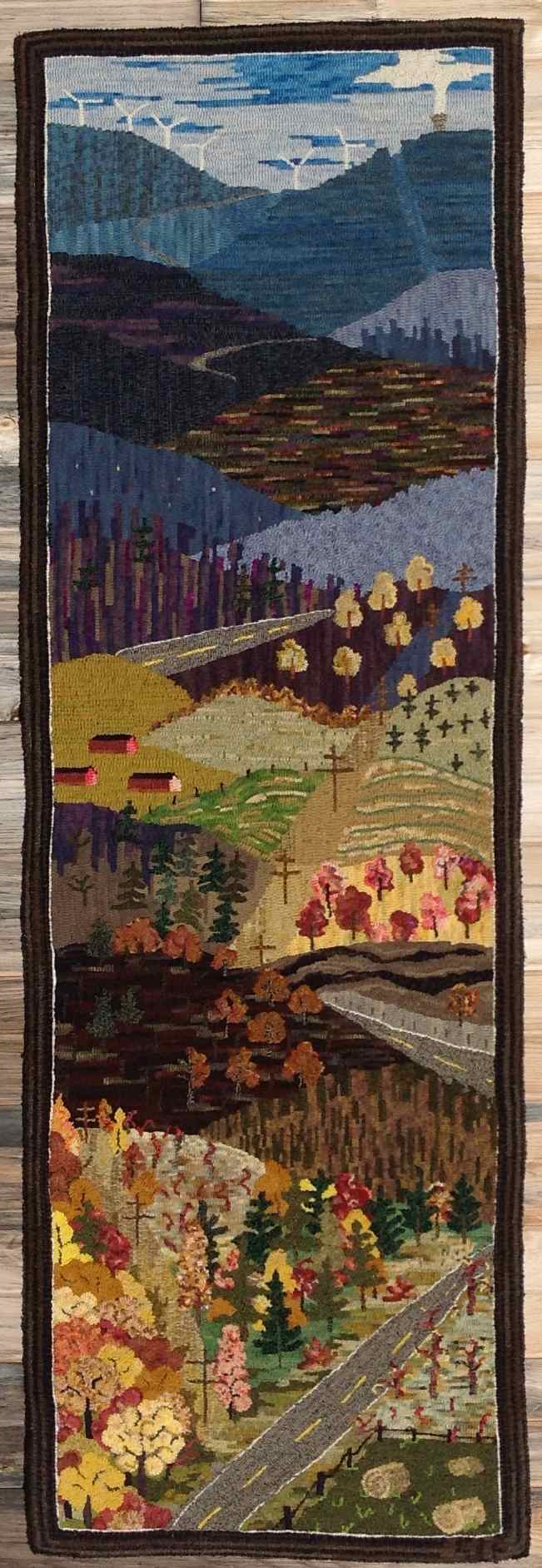
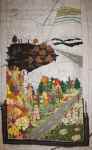
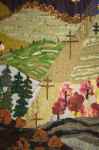
After three years of muddling over this topic I created “Progress in the Mountains“, a seven foot by 27 inch hand hooked runner.

Envision the impact on geography, environment, culture and community the human drive for progress has had on the natural resources of West Virginia (a micro example of the globe).

1. Major interstate highways create jobs for the construction industry, allow quicker access to towns and destinations for tourism and commerce but disturb migration paths, feeding and lodging habitat for fauna and flora.

2. Corporate farming in the form of one breed of cattle, poultry buildings for thousands, and processing plants for each creates excess of waste which needs to be distributed by vehicles to wider destinations or processed into a stable by-product.

3. Lumbering of the forests, many of which were contract planted for the pulp or board feet affects the terrain.  The undergrowth is necessary to keep erosion from happening, contributing to pollutants in the rivers.  Slow traffic from lumber trucks is alleviated with the new highway system.

4. Coal mining strips the tops of mountains to find the veins, moving the waste often into headwaters of small streams which will run into the major river systems.  But the coal is used to create electricity for the metropolitan population’s requirements to communicate, work, entertain.  The power lines to distribute the energy create wide cuts in direct paths economical for the corporations taking years of negotiating with landowners, environmentalists, historians and politicians but eventually “for the good of the majority” being implemented.

5. Wind turbines line the highest ridge lines feeding the energy generated into those power lines again going out of our state to the metropolitan region.  Although a regenerable resource (wind) the effect on birds’ migratory paths is being studied.

I find it interesting to use a traditional hands-on process of pulling one loop at a time, manipulating the fabric into shapes and directions (rug hooking) to depict these issues of the 21st Century.  For months this design was drawn horizontally spreading the seven feet with layers of hills, roads and power lines intersecting the organic shapes.  It did not seem to be the right format. Finally in my daily journal on June 27 I tried a vertical format and could see more layers allowing a longer trail to be able to tell more stories.  The piece evolved easily from there.

Study for Progress in the Mountains

Study for Progress in the Mountains

Working this runner was like reading a great book, each chapter and character held my interest. They built on previous sections with shapes, colors and values evolving along the path, progressing to the top and end.  Imagine walking along, following the flow of road and hills then turning around and coming back down the mountain in your hallway.

Following are subjects taken along the Robert C. Byrd Highway system in Hardy County, WV and the rug in stages of completion.


UPDATE: I wrote an article about the making of this rug for Rug Hooking Magazine Nov/Dec 2015.
After looking at the completed runner hanging in my studio for months I changed the perspective of one part of the highway and was satisfied enough to enter into the 2017 WV Bi-Annual Juried Exhibition. It received a purchase award and now resides in the archives of the State Museum, Culture Center, Charleston, WV.

Rug Hooking outdoors in Fall

FALL in West Virginia means breezes, sunshine, brittle leaves fluttering, COLOR and no bugs.  As a member of the Plein Air Hooking Artists it was time to get out and enjoy all of the above while creating.

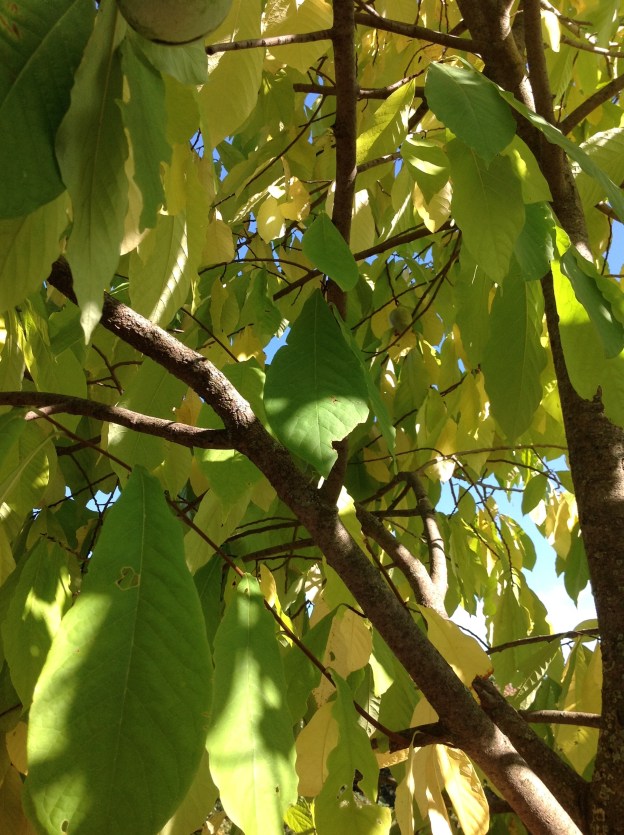
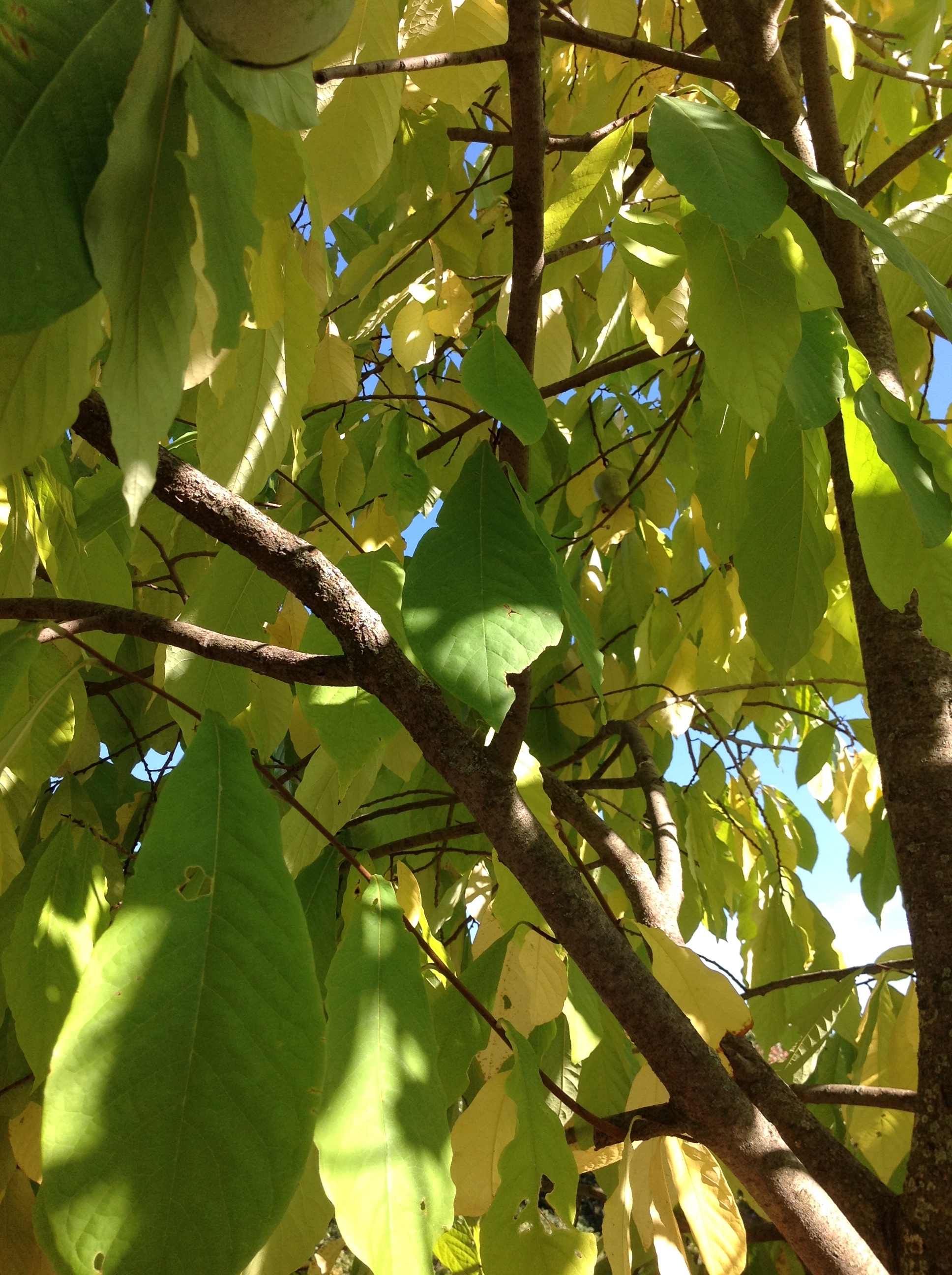
Paw Paw Tree in Fall

Paw Paw Tree in Fall

My attention was drawn to our Paw Paw tree.  The fruit is indescribable in taste subtle like  banana, custard, but something else.  Yet it is memorable and a native to the Appalachians.  There is even a Paw Paw Festival in early September held in Ohio.

Out came the chair, portable frame (Townsend model, Beeline is making a similar style); bags of yellow, green, purple and red wool strips; hook and linen.  I drew a design 7″ x 5″ on a strip of linen with three more of the same size.  One will be used as a Friendship Exchange Mat during the TIGHR Triennial 2015 (Back to Nature is the theme).
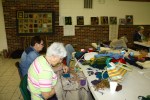
I enjoyed working with the elements, they influenced my mood and the work.  Starting with using the purple bag to depict the dark trunk, and limbs.  (The literalist said, “Oh darn I forgot the neutral bag”.  The artist said, “Use what you have and purple is the complement of yellow along with the darkest color”.)

I will admit the sun went in and breeze got colder so into the studio I went after two hours to finish the piece in a total of five hours.

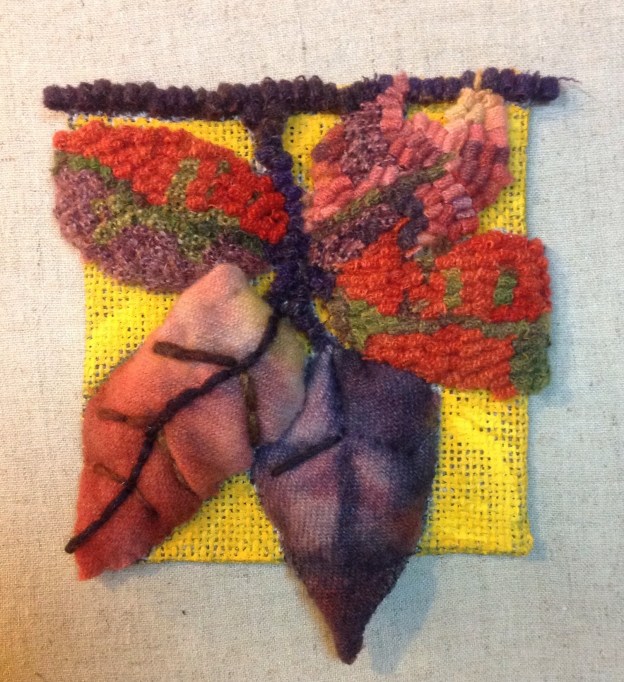
I worked up a second design outside the next day.  This one I wanted to show the smooth leaves, vein colors and layers so hooked some, then cut out leaf shapes in wool and anchored them with pearl cotton embroidery stitching.  I pulled the two together with the same blue, similar purples and crisp yellow greens. Number three is drawn.  These leaves change daily now that the light and temperatures are changing.
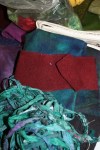
Get out and look at nature daily.  You may be surprised what detail draws your attention and says “Capture me in your artwork.”


Portrait transformation

Realism is the quest in my current studies.  I decided to work a self-portrait close to life size using #3 strips (3/32″ wide) for detail.  A group in Harrisonburg, VA brought instructor Donna Hrkman in for three days and I took advantage of her expertise to start the project.   The lesson which stayed with me was to use line of pronounced value to infer shape, attitude, texture, form. Our brain will finish the picture based on its knowledge.

Susan L. Feller 2014

Susan L. Feller 2014

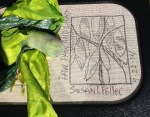
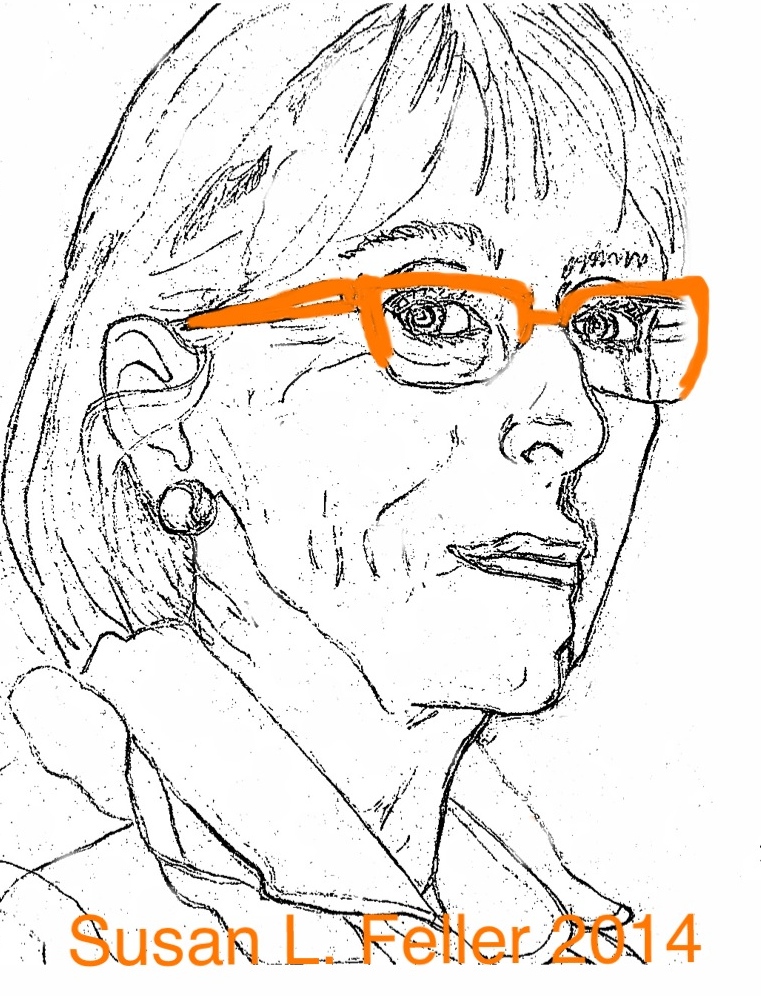
Lesson 1: PREPARE  I sent this photo to Donna who  created a pattern using a grid to enlarge the details.  I also ran the photo through an app for iPad called uSketch and selected a washed out version with strong main lines.

Sketch for self-portrait

Sketch for self-portrait

This image was enlarged to fit a 12 x 16 format and directly sketched  using a lightbox.  I then drew the portrait by eye (ending up with softer features than the direct sketch.) By drawing the pattern myself several times I was prepared to notice nuances and hook the shapes and lines.

Lesson 2: If the subject is close to you, draw the design yourself.  I used Donna’s pattern and my guides trying to replicate what I was seeing not my mind’s interpretation of the subject.  You will see the first image (worked on for two days) needs severe sculpting to become recognizable to my friends as me.

Day 2 Portrait Susan L. Feller, Donna Hrkman pattern

Day 2 Portrait Susan L. Feller, Donna Hrkman pattern

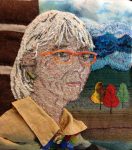
Lesson 3: Color can draw attention and lead the viewer to a conclusion.  Glasses, hair, and background elements are in strong recognizable colors depicting me in 2014. I had brought along the actual drapery fabric from the photo as background but Donna suggested I use symbols to highlight my rughooking journey.

Personality coming through

Personality coming through

I selected two award winning designs My Mountain State and Mountain Treeline. The abstract hooked blue/purple skyline reproduces the first and the appliquéd colored tree shapes infer the latter and my favorite season. One more element that describes me is living in a log home here in West Virginia.  I decided to take the right third behind the face to show that structure. Simple horizontal lines of dark texture and natural linen became the logs.

Lesson 4: Simplify but complete the story. I almost forgot a major element in Ruckman Mill Farm’s pattern line is FRAKTUR designs. What motifs could I insert into this natural setting that would read PA German folk art? Of course! The circle from Baptism Certificate which has my birth date, parents and my name was printed and laminated to become a pin on the shirt.  I signed the piece and added one more symbol all in one.

Symbols tell story Susan L. Feller

Symbols tell story Susan L. Feller

Lesson 5: If it is not right, fix it.  All along you will notice I got closer to a recognizable rendition of Susan Feller except for the LIPS. Donna said the lower lip usually is lighter because it protrudes slightly.  She suggested using one size larger cut for the lower lip and both larger than the #3 cuts for the face.  I looked at the photo and convinced myself the reverse would be true in my case.  Extreme light and dark values were chosen, wide cuts, narrower, slightly up turned, straight across all not quite right.  I pulled out Anne-Marie Littenberg’s book Hooked Rug Portraits by Stackpole Books and read through it.  There was one image similar to mine that used several different values to portray the light on lips.  Posted that version on Facebook and received accolades.  But it was not until I asked Roslyn Logsdon to critique the lips that I heard the answer: AGAIN—“the lower lip needs to be lighter!!!!!!”

Lesson 6: Use the right tools from your tool box.  My life has involved textiles since childhood. Hand sewing, embroidery, dying fabric and using found objects often shows up in the wall art I create.  No reason to restrict this historical portrait to just rughooking. I added my favorite linen shirt, sea glass jewelry, embroidery and appliqué to enhance the hooked features and intend to finish the piece with a tramp art frame. What fun!


Class topics in 2014

I just reviewed photos from workshops this year.  Many lessons were taught, dozens of lessons learned, and plans were made for next year ….  all reasons why I teach.  See the calendar for workshop sites in 2015.

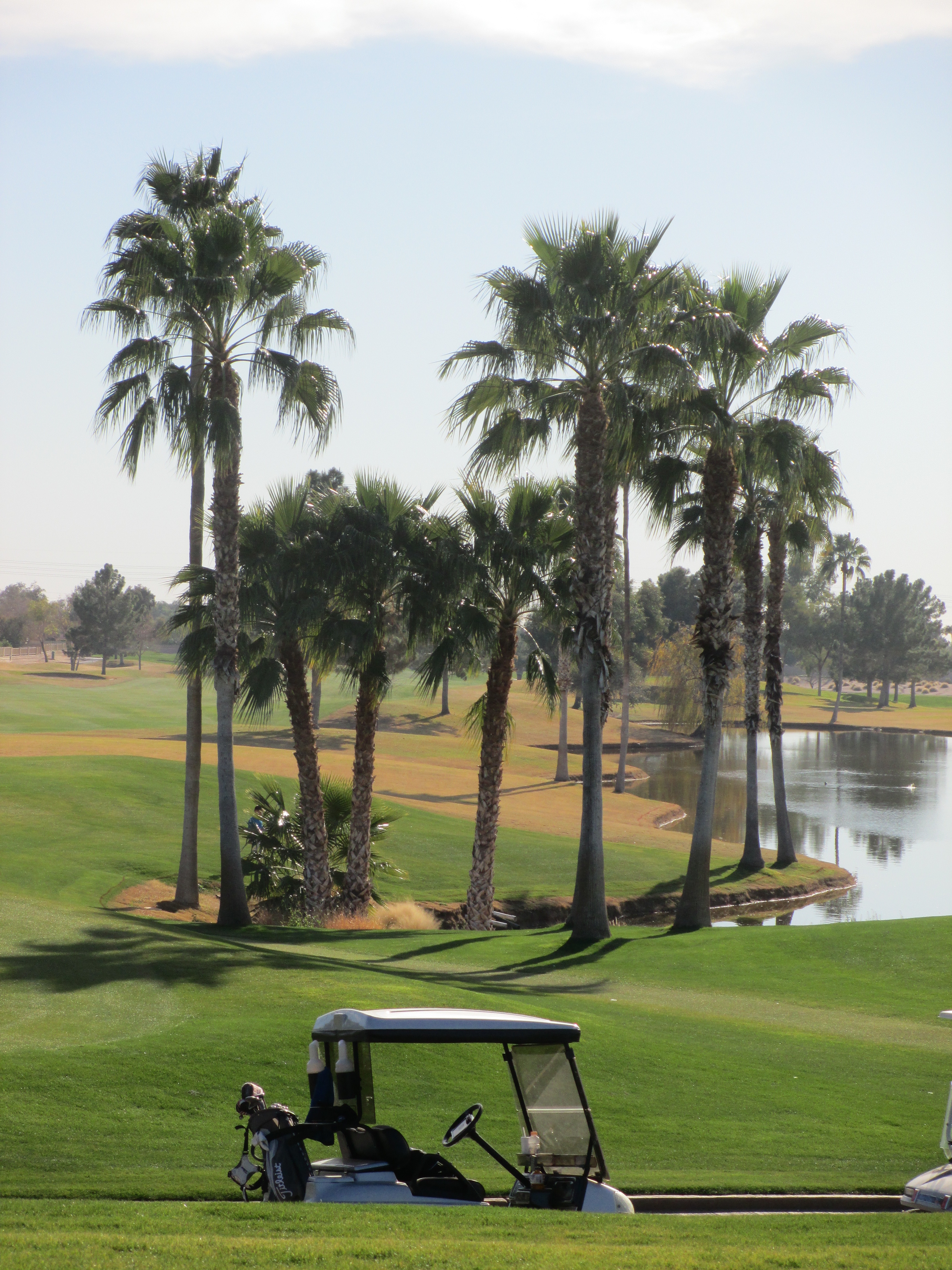
Alta Vista Golf Course, site of workshop

Alta Vista Golf Course, site of workshop


I flew to Mesa Arizona in January right in-between the coldest spells in West Virginia.  People came down from South Dakota to escape the cold and others ‘wintered’ in sunny Arizona.  The projects were colorful and three days went too quickly.


The class at Cedar Lakes Rug School was filled with sixteen eager students.  Some had finally signed up with me after a few years of seeing work by other students and others repeated with new projects and goals.  At the end of the week, I complimented them all, referring to this session as a Masters Class.  I was challenged, they contributed and every project was well on its way to being a great piece.  I am teaching here again next year, email Nancy Blair at  thhkrugs@altelco.net   for details.

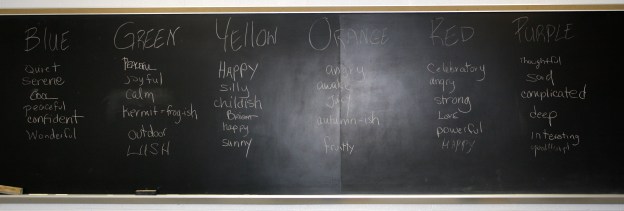
The topic at Green Mountain Rug Hooking School in Vermont was the Moods of Color.  We did get to hooking designs based on a mood the participants brought  but began the three days with several exercises.  On the blackboard each posted a word under one of six colors.  Before looking farther what would you say about Red, Orange, Yellow, Green, Blue and Purple?

Manistee Rug School in Onekama, MI is coordinated by a guild rather than a business.  Volunteers for every job join together bringing in the new members and adapting each year to the needs of all.  This was a repeat for me, the first time was in 2011.  I made a point to dine with a different instructor each evening, making new friends and delving deeper into old friendships.  The class included beginners, pattern designers, experimenters, folk painters and abstract artists.  Diverse and challenging, their projects evolved well over the week.

Sauder Village Rug Week is in Archbold, OH is in its 18th year.  Ruckman Mill Farm vended again right next to Dorr Mill Store in the Exhibit Hall where we enjoyed the Celebration rugs and special collection of Esther and Judy Knipe.  The workshop I taught covered a wide variety of ways for Finishing Hooked Rugs, (title of new book by experts in each technique… including a chapter on finishing work for gallery exhibits by me).  We used the exhibit to explore finishes, talked about the appropriate new technique for students work and using a small sample “learned” three techniques.  Response from the students was to offer this again.  Look for class schedules at SauderVillage.org in early November.  I will be teaching several different classes all week.

Susan L. Feller, Ruckman Mill Farm

Susan L. Feller, Ruckman Mill Farm


Nature Lessons in Color Planning

When I wanted to illustrate complementary partners in the book ‘Design Basics for Rug Hookers’, Stackpole Books 2011; I chose PURPLE asters and GOLDENrod along the highway near Albany, NY and ORANGE sassafras and a crystal BLUE sky here in WV.

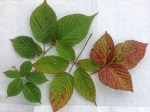
Late summer brings on the subtle changes we glorify as Fall.  These images are good studies in how amount of color and placement affect the motif . They represent RED with its complement GREEN.


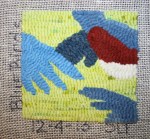
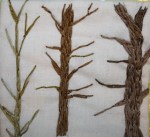
This is is a ‘Daily Square’ from late October 2013 depicting a blackberry branch. These photos taken today will inspire several squares.

Look around your environment and select a new color plan.

Blackberry Branch, Susan L. Feller painted linen, hooked, embroidered, quilted

Blackberry Branch, Susan L. Feller painted linen, hooked, embroidered, quilted

December Studies

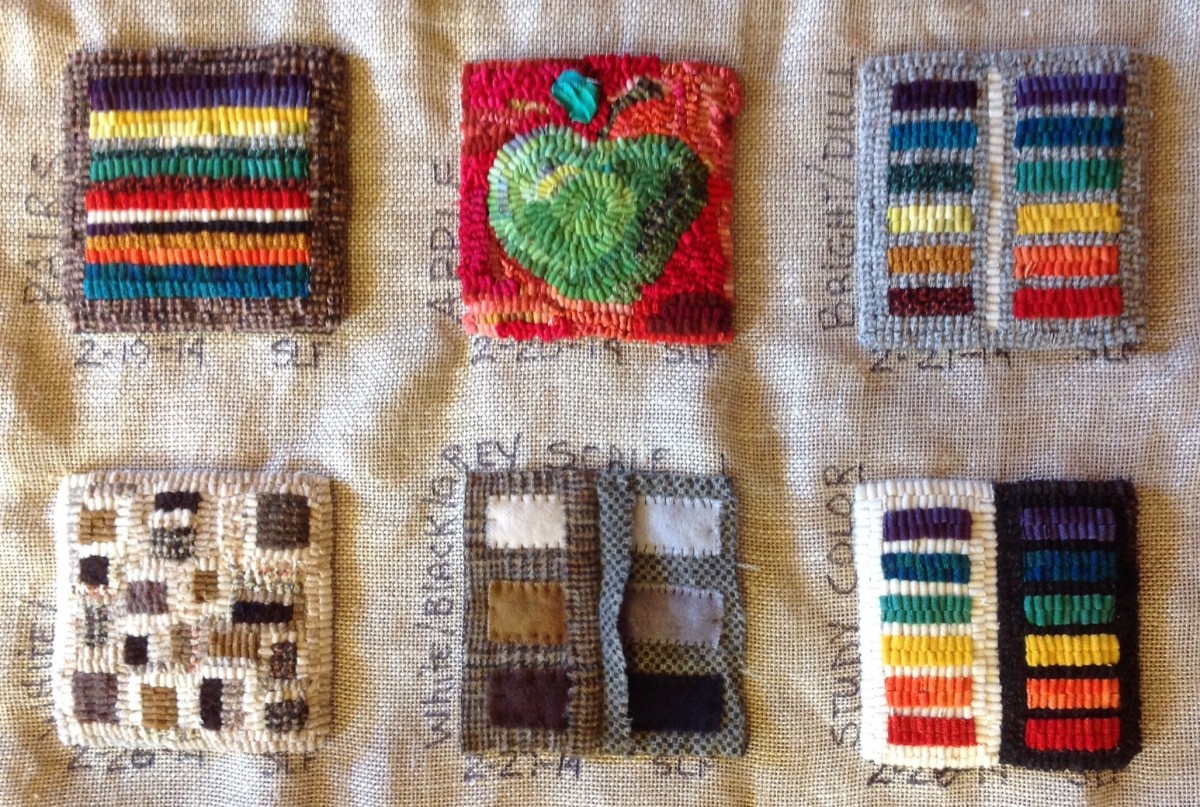
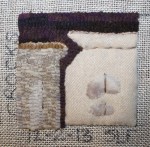
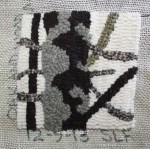
It was exciting to put out two months of squares and see the variety of techniques, materials, subjects and color/values.  I have found it challenging to keep coming up with new images and then decided I do not have to.  Revisiting a composition and changing some element involves experimenting.  The landscape subjects are especially good to look at again, weather and seasons change the details.  SNOW brings out high contrast and changes shapes along with visual focus.

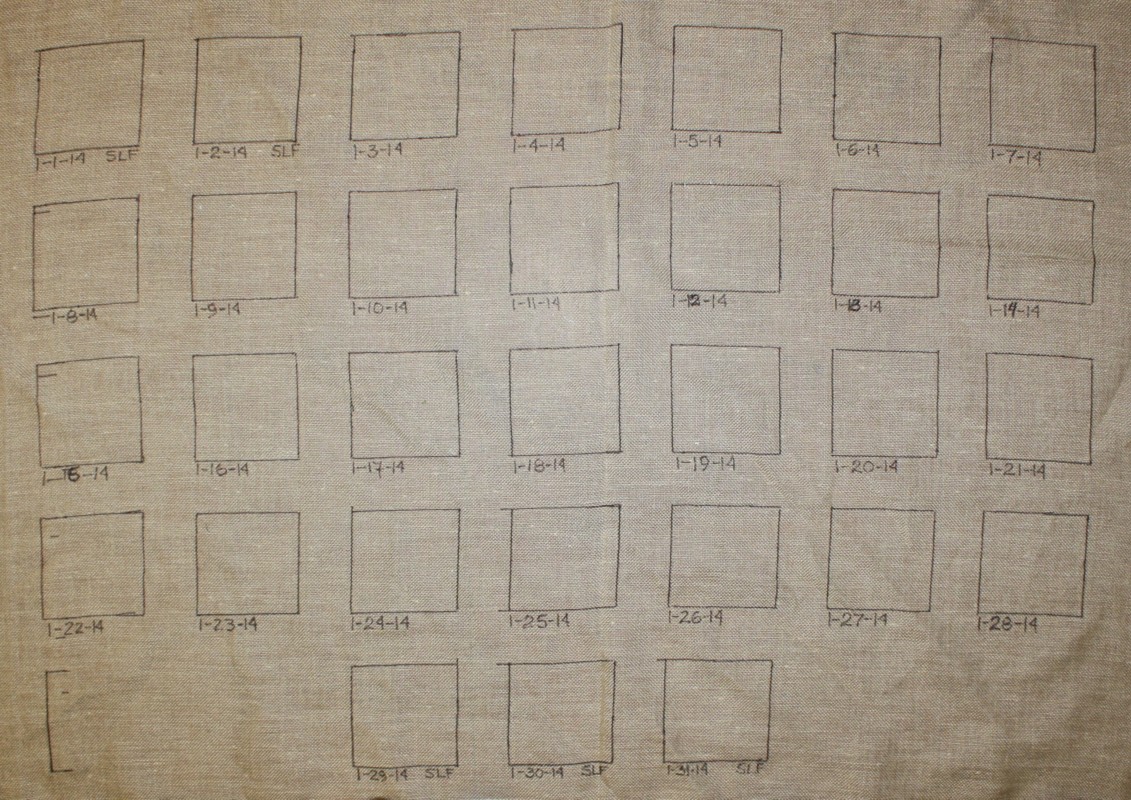
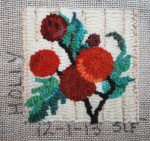
Not surprising, the December squares are filled with white and neutrals.  Color still abounds, but like spring in the Arizona Desert you need to look closely.  Bluebirds flitting, holly berries, sky blue, the warmth of our wooden buildings are all examples represented this month.  Enjoy a sampling including some subjects photographed but sketched from memory.  First a blank slate staring at me on January first:

January 2014

January 2014


Year Long Study

Beginning the study, working outside

Beginning the study, working outside

I have decided to dedicate the year leading up to my 60th birthday to studio work. Each day a sketch and five inch square design will be worked up in techniques I want to explore.  The series began ahead of time on October 18th with a plein air landscape outside of the studio.

This does not mean I won’t  teach and travel, but right now there is a long stretch of time off the road and a routine was necessary.  The short term goal is a sketch for each day.  Several larger works have evolved from these exercises already.  It has been a productive and meditative time.

Lori LaBerge’s Plein Air Hooking Artists concept helped formulate the process.  Although I am religiously sketching my subject into a journal, and working from the image for color and values, most of the subjects are also photographed as documentation.  I am also documenting changes made anticipating compiling a text to accompany an exhibit.

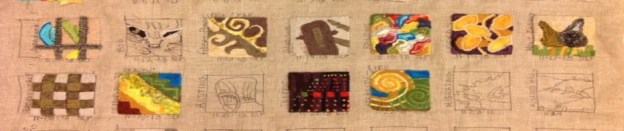
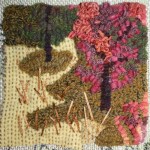
So far skills from a wire jewelry workshop have been incorporated into several pieces; acrylic paints; quilting; embroidery; and coiling have augmented traditional rug hooking.Monthly there will be a progress report showing the seasonal palette; design evolution; and techniques explored.  Below is a gallery of some early subjects and works.