Tag Archives: fiber artists

Garden to Table Treasures

The third exhibit co-curated by myself and Candace Perry, Director of Collections at the Schwenkfelder Library and Heritage Center titled: “Garden to Table” will be displayed through March 1, 2015.  As I alluded to in the post Setting up an exhibit, the artifacts from the collection are a special glimpse into decorative skills the Schwenkfelders and their neighbors perfected.

There will be another post with the hooked and braided work intermingled with these pieces but I thought to show you creativity in making flowers and fruit from wax, wool, yarns, feathers, milkweed seeds, painted china, and paintings.
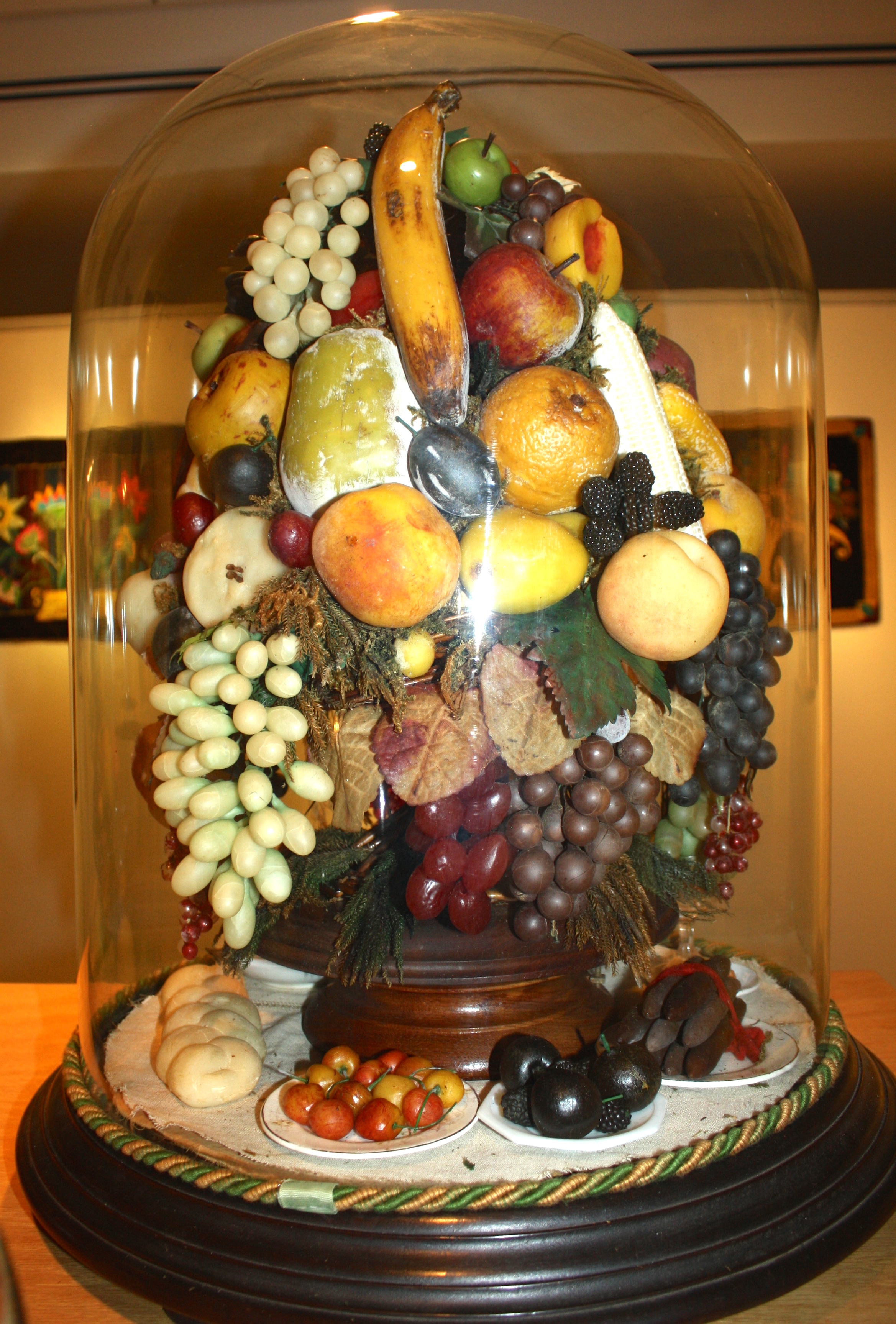
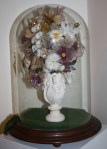
Elements made by hand using wax and sometimes molds by women as glass domed centerpiece in homeMaker unknown. Gift of John Whitenight and Fred LaValley.

Maker unknown, circa 1880’s Gift of John Whitenight and Fred LaValley.

Wax Fruit Arrangements

A popular craft for many women in Montgomery County in late 19th century was the making of wax fruit, and arranging the pieces under glass domes for parlor decorations. The Schwenkfelder Heritage Center has several of these arrangements including three that are from Schwenkfelder families, and one from the greater Philadelphia area.

The arrangements often contained vegetables, and sometimes other types of desserts and delicacies.
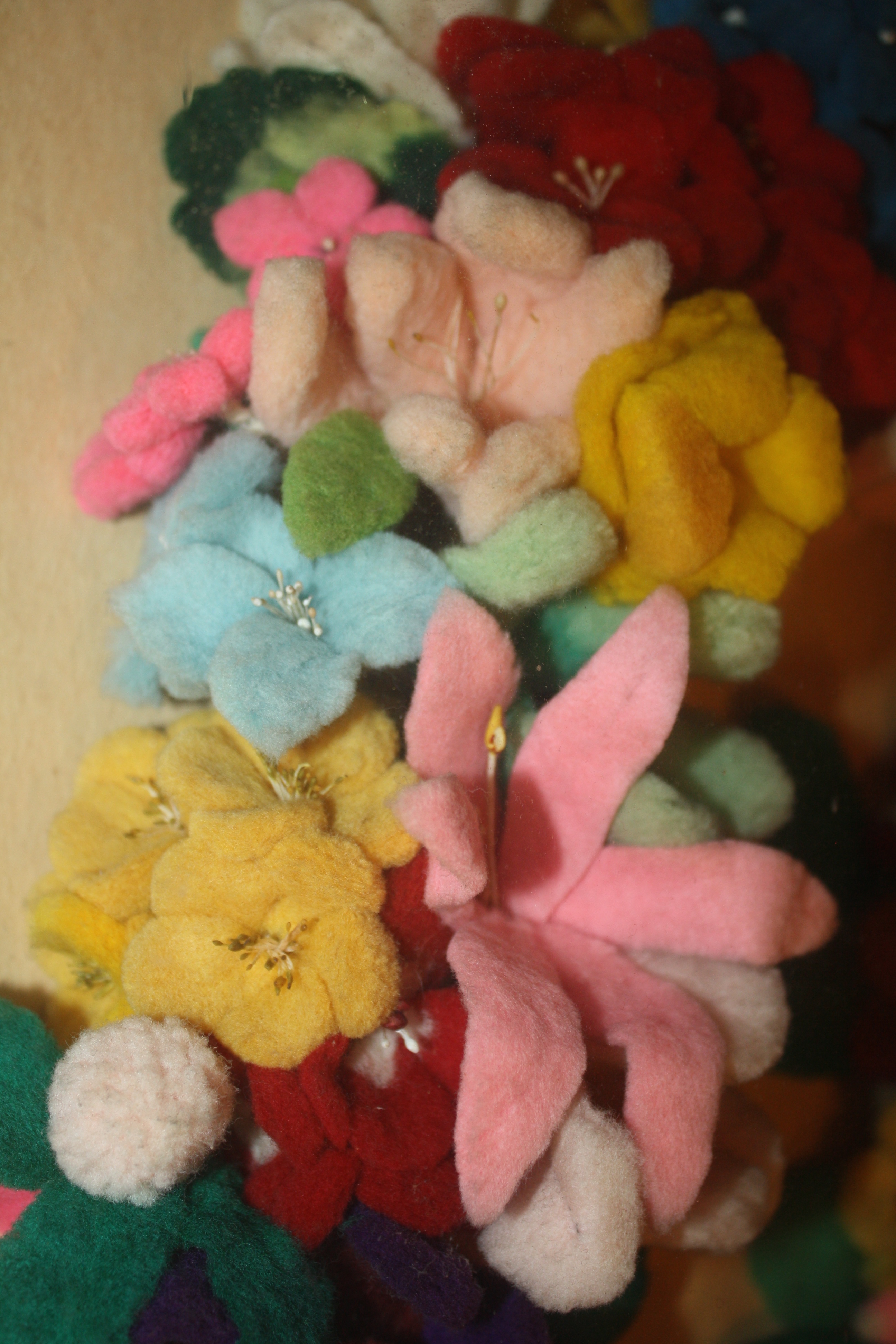


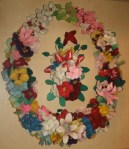
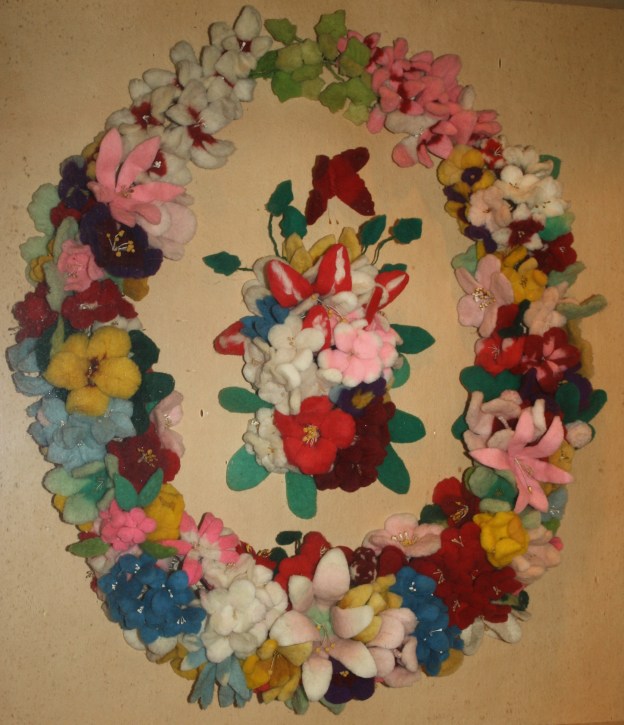
detail Floral Wreath in Shadow Box, 1880-1890, Schwenkfelder

detail Floral Wreath in Shadow Box, 1880-1890, Schwenkfelder

Wool Floral Wreath

The making of wool flowers and assembling them in shadow boxes or under glass domes was yet another form of needlework that captured the imagination of local women in the late 19th century. Sometimes – and probably inaccurately – called plushwork, these flowers were constructed by wrapping wire shapes with wool and then matting or felting them. Instructions to make the flowers were available in Godey’s Ladies’ Book, the popular periodical of the mid-19th century.
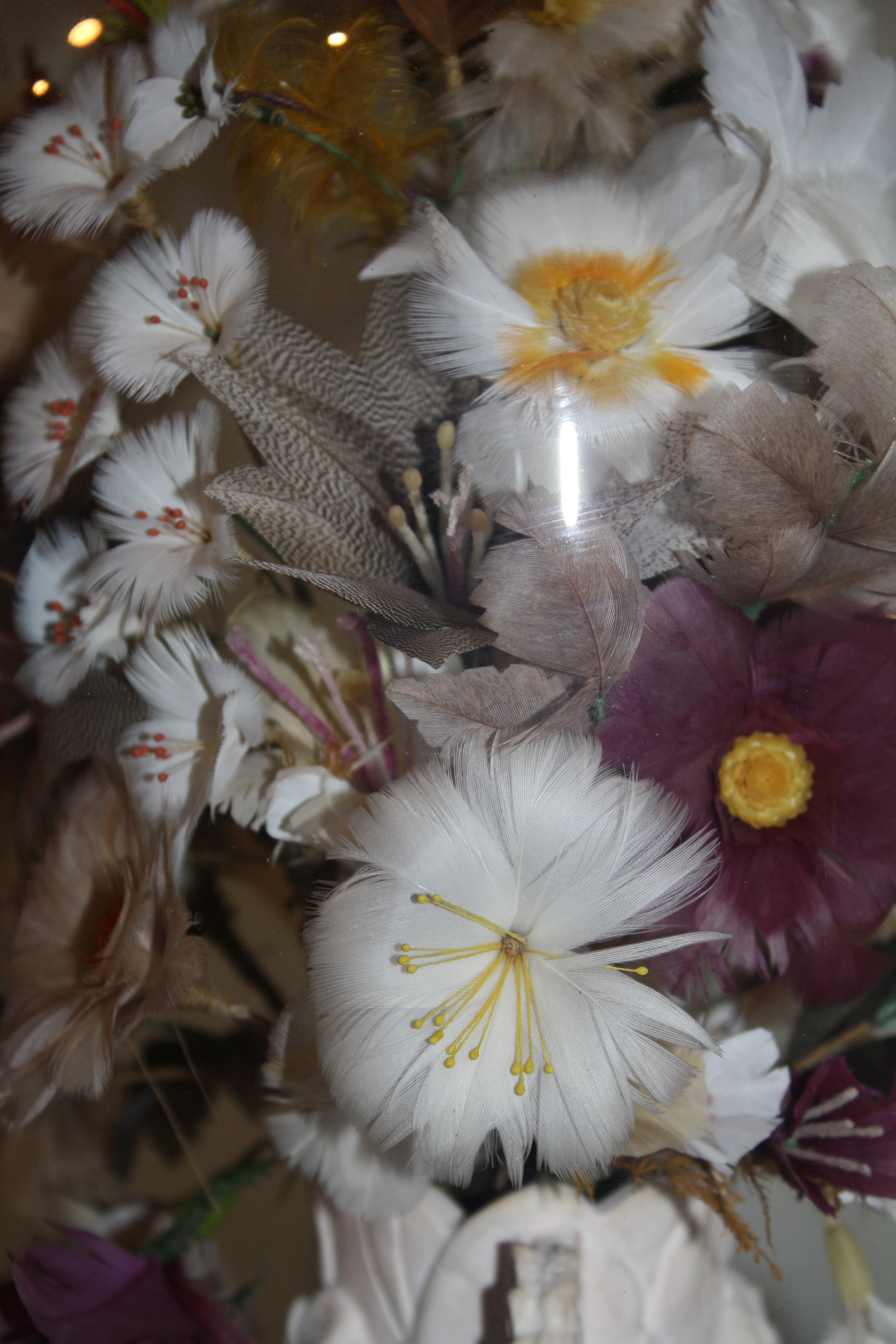


detail Feather Arrangement

detail Feather Arrangement

Domed Feather Arrangement
Making pictures, personal accessories, and arrangements such as this flower bouquet out of feathers became a popular craft for women in the mid-19th century. Exotic birds’ plumage would be used if available, but for the average American woman such as Lucina Schultz, chicken feathers would do quite well, and were sometimes painted and otherwise manipulated to achieve special effects.

Feather Arrangement credits: ca. 1870-1890
Made by Lucina Schultz
Douglass Township, Berks County
Gift of the Estate of Lucina Schultz
1938.11.35
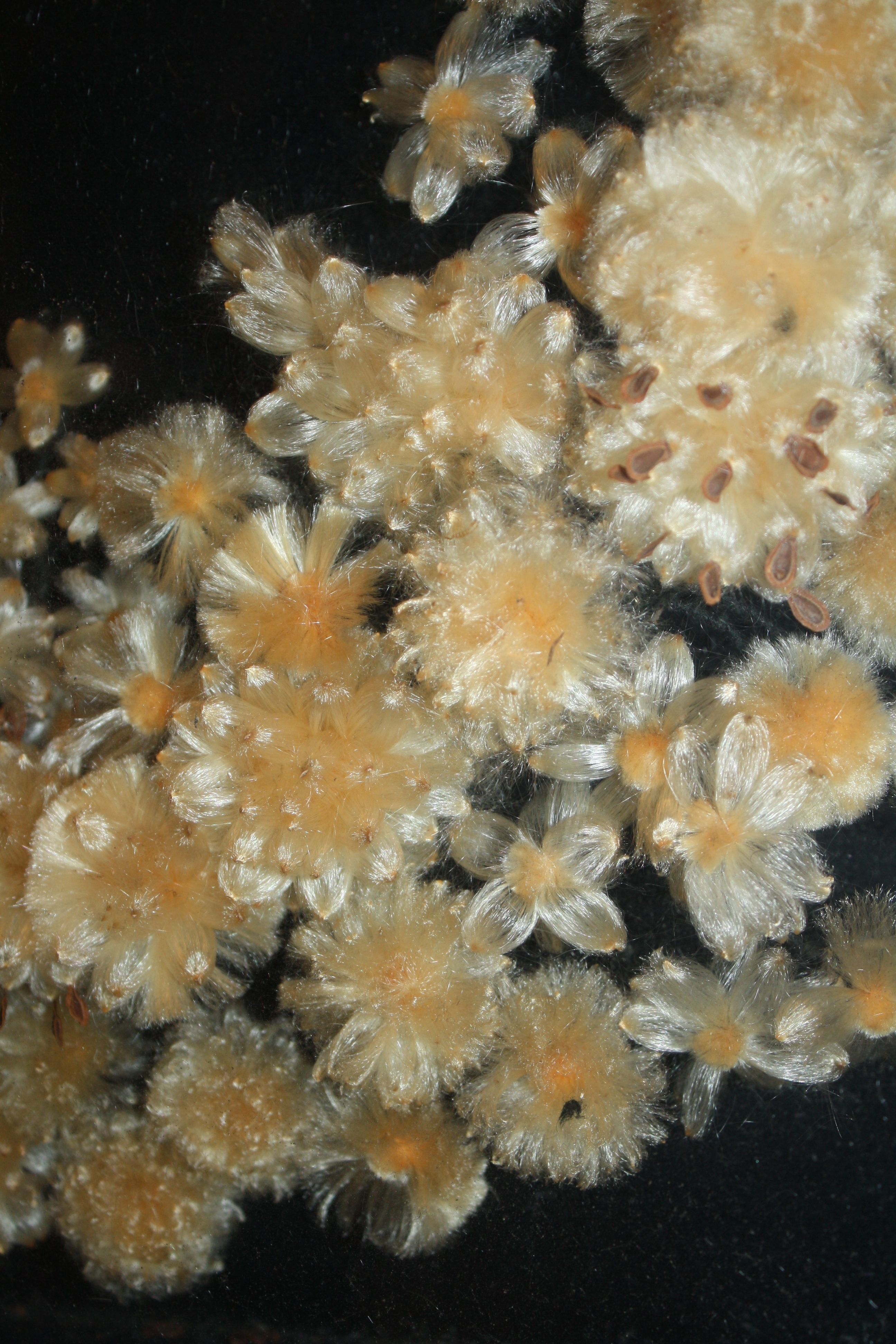
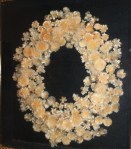
detail Milkweed Wreath in Shadow Box  Maker Unknown ca. 1890-1905 Probably Berks or Montgomery County

detail Milkweed Wreath in Shadow Box
Maker Unknown
ca. 1890-1905
Probably Berks or Montgomery County

Milkweed Wreath

Nature’s seeds were used by the PA Germans creating wreaths for the Holidays and small ornaments.  This image is a detail of a wreath composed entirely using milkweed seeds shaped as small flowers. The tedious work involved to build the depth is hard to imagine but the work fools viewers into thinking they are actual dried flowers. Placing it behind glass in an ornate gold frame raises the craft to a decorative art form.

Hand Painted China collection

Hand Painted China collection

China Decorating

Amateur china painting became a popular Victorian ladies’ craft in the 1870s. Porcelain blanks made by Limoges in France and other factories in Europe were imported in huge numbers to supply the popular hobby. Some women even painted china to earn extra income.

Local china decorator Nora Krauss Schultz began creating her exquisite designs in the early 20th century and continued well into the 1950s, not only with her own work, but by passing on her knowledge to many local women in the communities of the Upper Perkiomen Valley. Nora Schultz’s talent for beautiful decoration can be seen in the group of plates decorated with berries on the left side of this case.
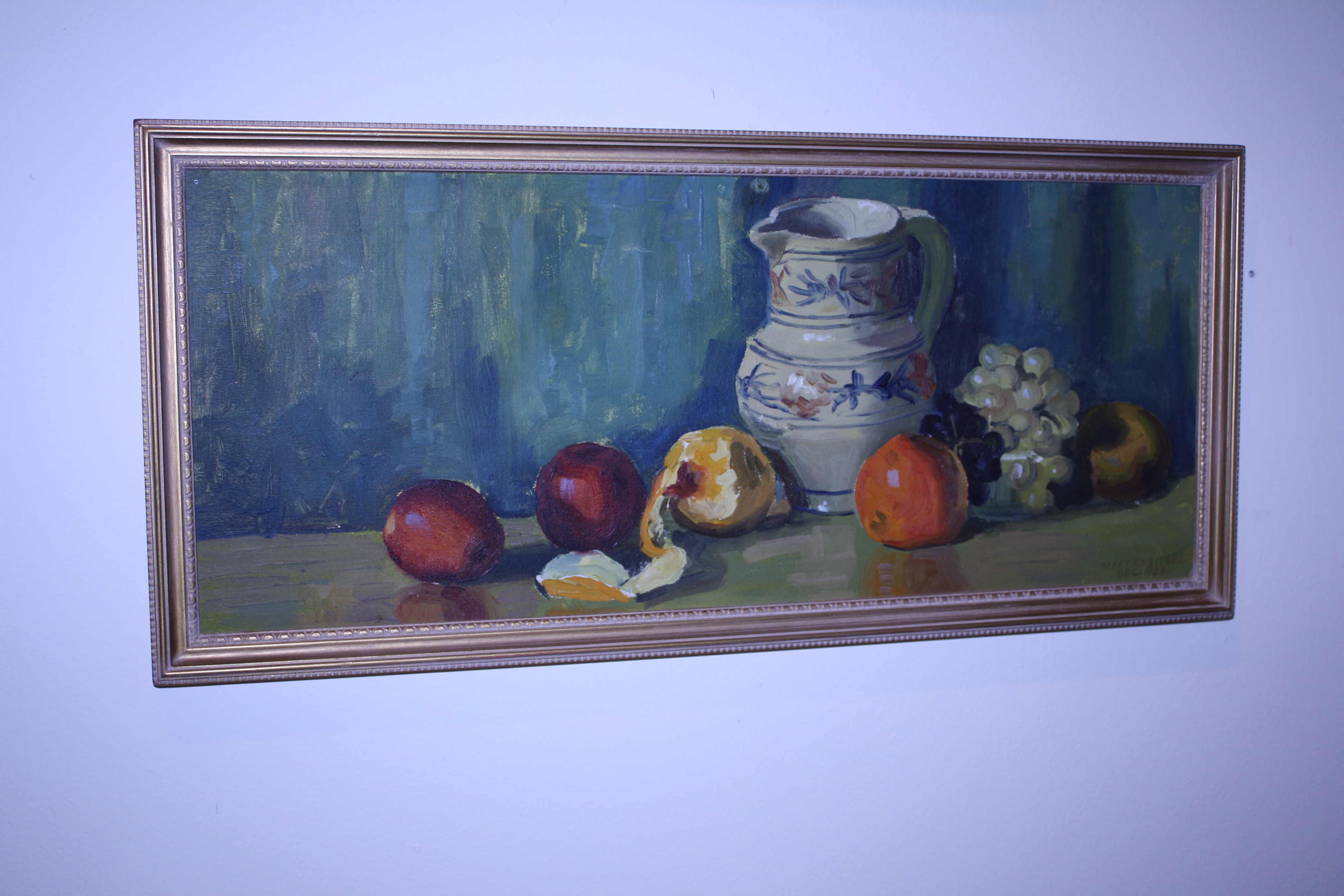


Still Life Painting by local

Still Life Painting by local

 Still Life Painting

Sometimes china decorators applied their skills to the canvas, also; the paintings displayed above this case were painted by local women who also may have painted china.


Below are full views of the works detailed.

Opening of ‘Hooked Art 2014’

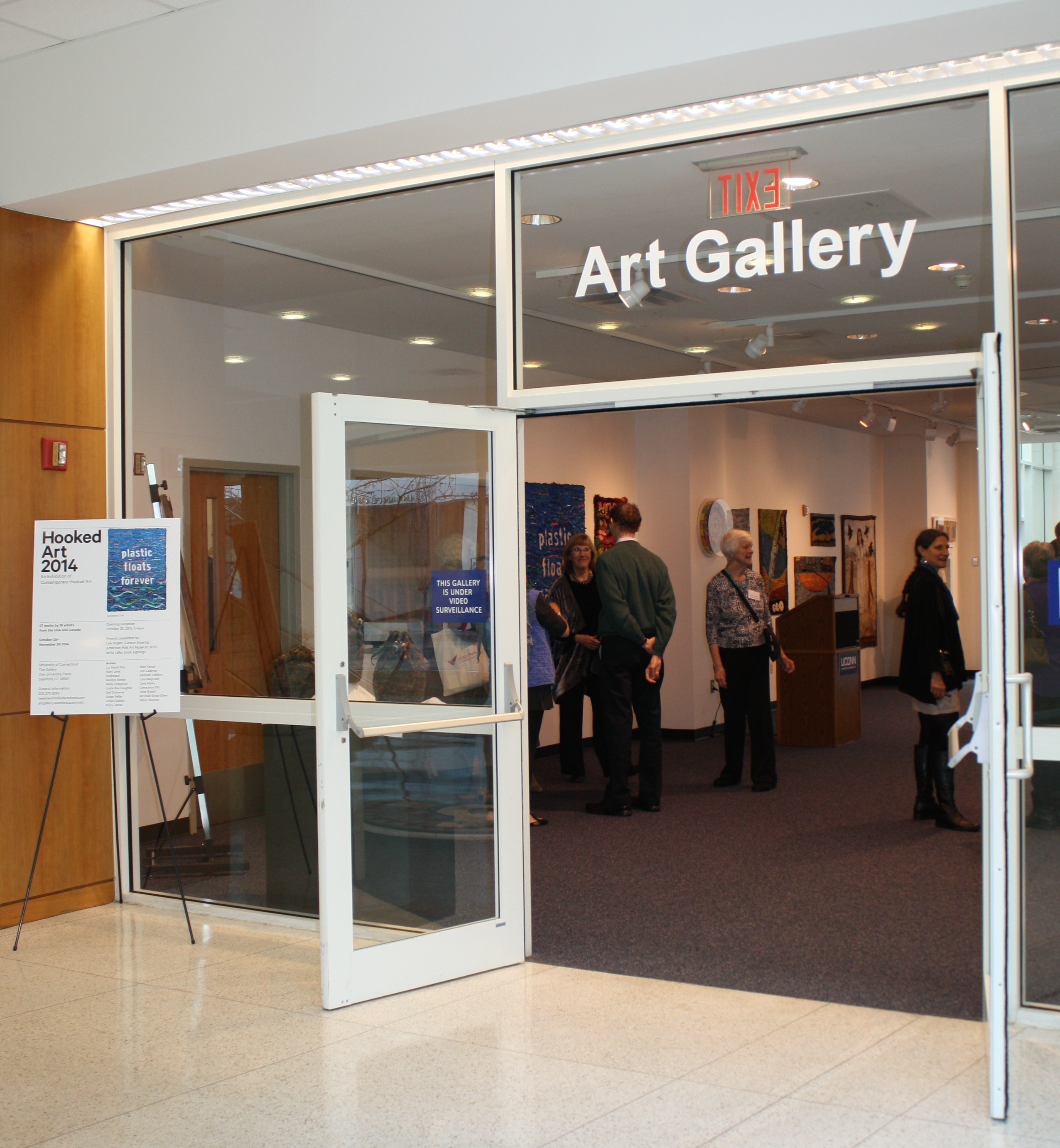
Entrance to UConn Gallery Hooked Art 2014

Entrance to UConn Gallery Hooked Art 2014

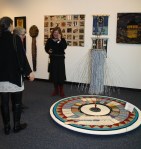
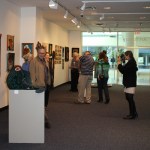
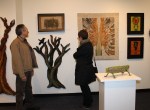
Opening Receptions are great opportunities to meet artists and view artwork and Saturday , October 25 was no exception.

Fifteen of the 18 artists were in attendance to discuss and enjoy the 55 contemporary textile works curated by Liz Alpert Fay in the 10th exhibit sponsored by Newtown Hooked Art Shows with Sherry Paisley.

Conversations between artists included topics on process, progress and future studio work while audience members were overheard saying their work would be influenced by the innovative directions they observed on the walls at the UConn Gallery on Stamford, CT campus.

Below are two images of work included in this exhibition of contemporary hooked art on view at UConn Gallery in Stamford, CT through November 29.  Visit if you can and enjoy the scale of each interacting with the others.

See www.NewtownHookedArtShows.com fora  link about hours and directions.  A review in Fiber Art Now magazine Fall 2014 issue includes an interview with Juror of Awards-Lee Kogan, Curator Emerita American Folk Art Museum, New York City.

I am happy to announce receipt of a travel grant from WV Div of Culture and History for my trip to the opening and a luncheon with fellow artists.  The grant allowed me to meet with my peers, view their work and discuss future fiber projects outside of the State of West Virginia.

Reflecting on a Portrait

Seems one is not enough these days. This post is how one portrait lead to another.

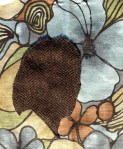
Inspired to simplify the design I hooked with such detail, I took one of the sketches and traced the outline, neck, hairline and glasses. Then out came the colored pencils and I played around with value and color.  That exercise was frustrating — wrong values, colors not quite right and I did not like “coloring”. But it did help me realize which values would communicate a face in side profile – (darker cheek behind full face, medium face and light hair); and that using color may not be how I wanted to create this work.

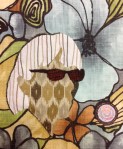
I had just picked up an armload of discontinued fabric samples from Dillon’s Furniture in Romney with intent to incorporate them into my work like the McDonald sisters of Gilmer County, WV who used scraps of fabric in their trapunto, embroidered, faux hooked tapestries circa 1964. (A post for the future).  It felt like I had hit GOLD when I looked at that pile!  Selecting a dark solid, medium texture and white lined fabric, I cut out patterns and began layering these on a MOD FLOWER pattern which said 1970’s to me. To hide the stitches I had to use threads matching the fabric.  These decisions lead me to dwell on my memory of embroidery skills.

It just happened the first layer was as dark as the lines of the pattern fabric. Noticing this, I positioned the next layers to expose the equivalent of the lines.  When in a creative session I try to remember to come out of the eagerness once in awhile and look at possibilities.  Being aware of happenstance and flexible enough to evolve is where artistic growth happens along with fun.

As you can see, the glasses were too important (and too dark), and gradually I trimmed them to just the actual frame which is enough for recognition. This piece will be finished in a thin black metal frame. Size is 14 x 11.

Although both faces are the exact same size, the positioning on background; detail in face; and scale of motifs in background mislead the viewer to think the appliquéd one is smaller.

Rug Hooking outdoors in Fall

FALL in West Virginia means breezes, sunshine, brittle leaves fluttering, COLOR and no bugs.  As a member of the Plein Air Hooking Artists it was time to get out and enjoy all of the above while creating.

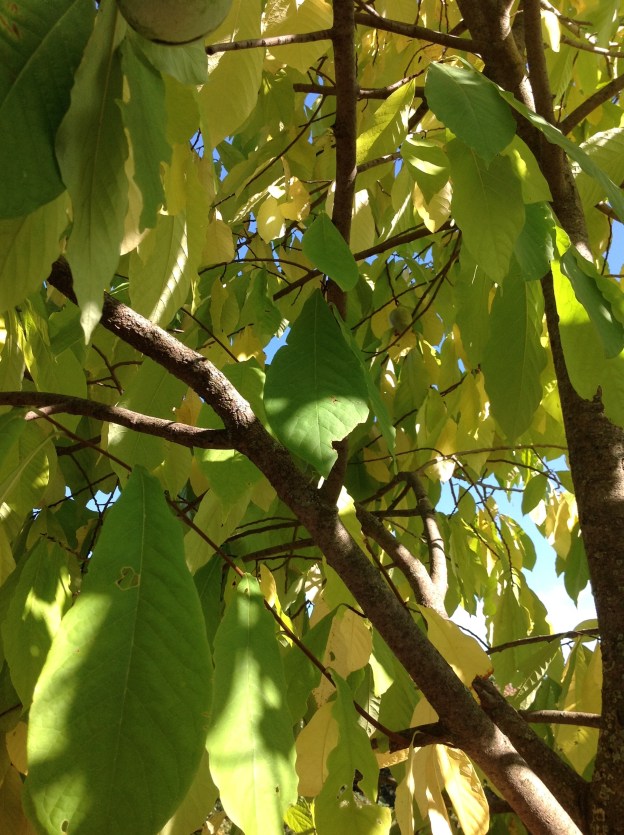
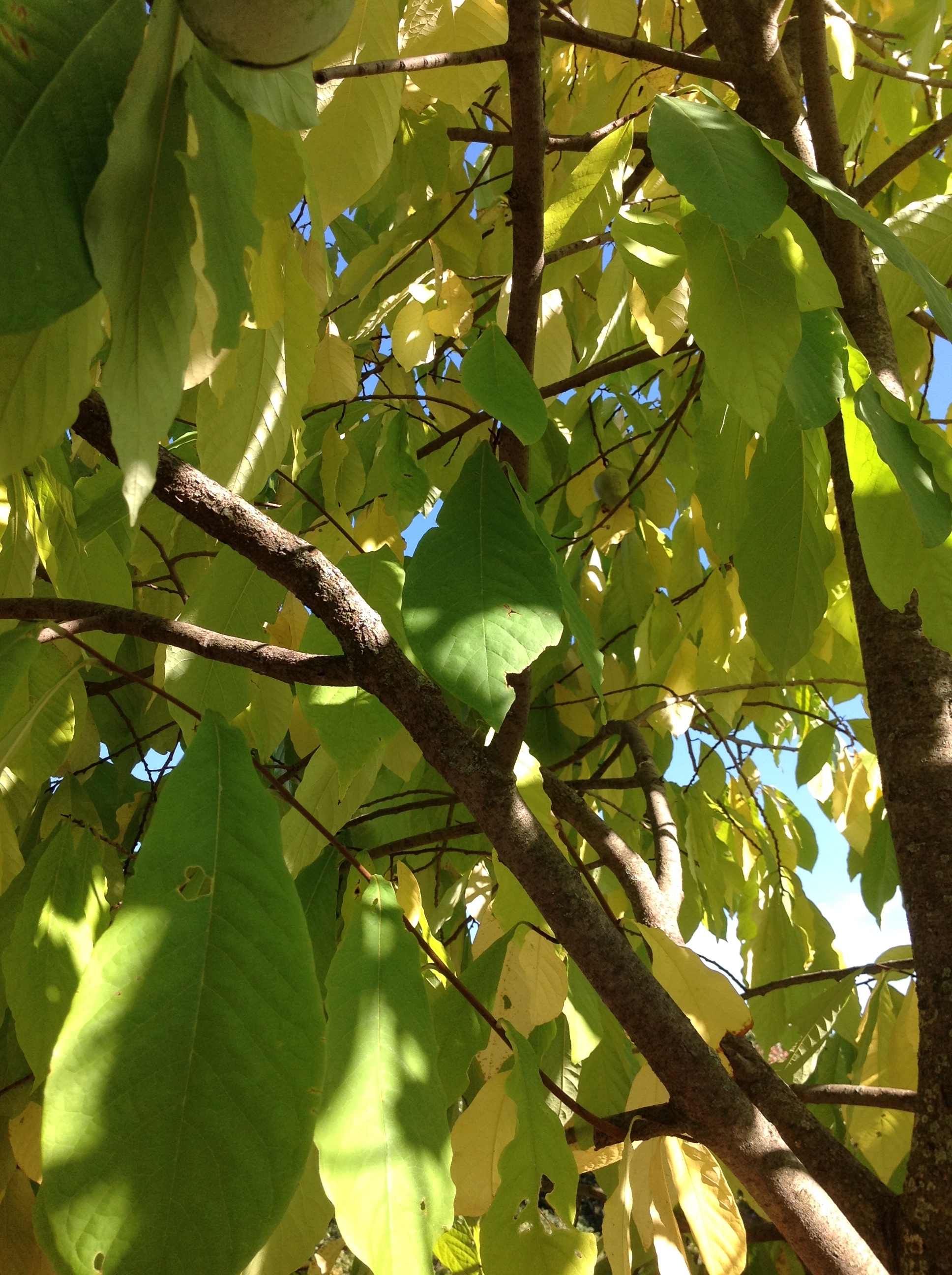
Paw Paw Tree in Fall

Paw Paw Tree in Fall

My attention was drawn to our Paw Paw tree.  The fruit is indescribable in taste subtle like  banana, custard, but something else.  Yet it is memorable and a native to the Appalachians.  There is even a Paw Paw Festival in early September held in Ohio.

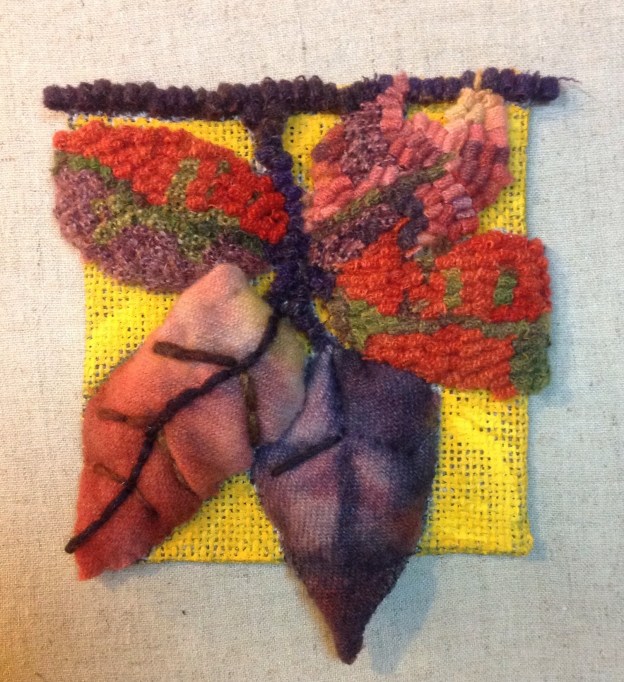
Out came the chair, portable frame (Townsend model, Beeline is making a similar style); bags of yellow, green, purple and red wool strips; hook and linen.  I drew a design 7″ x 5″ on a strip of linen with three more of the same size.  One will be used as a Friendship Exchange Mat during the TIGHR Triennial 2015 (Back to Nature is the theme).

I enjoyed working with the elements, they influenced my mood and the work.  Starting with using the purple bag to depict the dark trunk, and limbs.  (The literalist said, “Oh darn I forgot the neutral bag”.  The artist said, “Use what you have and purple is the complement of yellow along with the darkest color”.)

I will admit the sun went in and breeze got colder so into the studio I went after two hours to finish the piece in a total of five hours.

I worked up a second design outside the next day.  This one I wanted to show the smooth leaves, vein colors and layers so hooked some, then cut out leaf shapes in wool and anchored them with pearl cotton embroidery stitching.  I pulled the two together with the same blue, similar purples and crisp yellow greens. Number three is drawn.  These leaves change daily now that the light and temperatures are changing.

Get out and look at nature daily.  You may be surprised what detail draws your attention and says “Capture me in your artwork.”


Portrait transformation

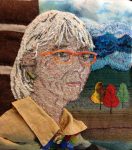
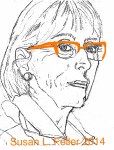
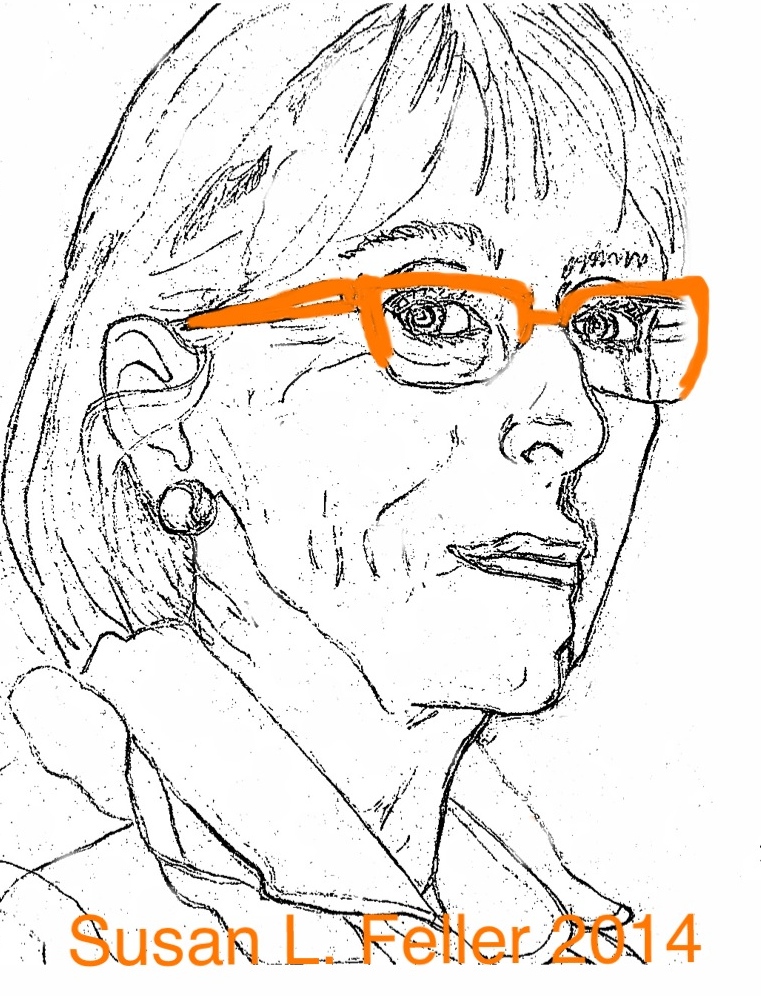
Realism is the quest in my current studies.  I decided to work a self-portrait close to life size using #3 strips (3/32″ wide) for detail.  A group in Harrisonburg, VA brought instructor Donna Hrkman in for three days and I took advantage of her expertise to start the project.   The lesson which stayed with me was to use line of pronounced value to infer shape, attitude, texture, form. Our brain will finish the picture based on its knowledge.

Susan L. Feller 2014

Susan L. Feller 2014

Lesson 1: PREPARE  I sent this photo to Donna who  created a pattern using a grid to enlarge the details.  I also ran the photo through an app for iPad called uSketch and selected a washed out version with strong main lines.

Sketch for self-portrait

Sketch for self-portrait

This image was enlarged to fit a 12 x 16 format and directly sketched  using a lightbox.  I then drew the portrait by eye (ending up with softer features than the direct sketch.) By drawing the pattern myself several times I was prepared to notice nuances and hook the shapes and lines.

Lesson 2: If the subject is close to you, draw the design yourself.  I used Donna’s pattern and my guides trying to replicate what I was seeing not my mind’s interpretation of the subject.  You will see the first image (worked on for two days) needs severe sculpting to become recognizable to my friends as me.

Day 2 Portrait Susan L. Feller, Donna Hrkman pattern

Day 2 Portrait Susan L. Feller, Donna Hrkman pattern

Lesson 3: Color can draw attention and lead the viewer to a conclusion.  Glasses, hair, and background elements are in strong recognizable colors depicting me in 2014. I had brought along the actual drapery fabric from the photo as background but Donna suggested I use symbols to highlight my rughooking journey.

Personality coming through

Personality coming through

I selected two award winning designs My Mountain State and Mountain Treeline. The abstract hooked blue/purple skyline reproduces the first and the appliquéd colored tree shapes infer the latter and my favorite season. One more element that describes me is living in a log home here in West Virginia.  I decided to take the right third behind the face to show that structure. Simple horizontal lines of dark texture and natural linen became the logs.

Lesson 4: Simplify but complete the story. I almost forgot a major element in Ruckman Mill Farm’s pattern line is FRAKTUR designs. What motifs could I insert into this natural setting that would read PA German folk art? Of course! The circle from Baptism Certificate which has my birth date, parents and my name was printed and laminated to become a pin on the shirt.  I signed the piece and added one more symbol all in one.

Symbols tell story Susan L. Feller

Symbols tell story Susan L. Feller

Lesson 5: If it is not right, fix it.  All along you will notice I got closer to a recognizable rendition of Susan Feller except for the LIPS. Donna said the lower lip usually is lighter because it protrudes slightly.  She suggested using one size larger cut for the lower lip and both larger than the #3 cuts for the face.  I looked at the photo and convinced myself the reverse would be true in my case.  Extreme light and dark values were chosen, wide cuts, narrower, slightly up turned, straight across all not quite right.  I pulled out Anne-Marie Littenberg’s book Hooked Rug Portraits by Stackpole Books and read through it.  There was one image similar to mine that used several different values to portray the light on lips.  Posted that version on Facebook and received accolades.  But it was not until I asked Roslyn Logsdon to critique the lips that I heard the answer: AGAIN—“the lower lip needs to be lighter!!!!!!”

Lesson 6: Use the right tools from your tool box.  My life has involved textiles since childhood. Hand sewing, embroidery, dying fabric and using found objects often shows up in the wall art I create.  No reason to restrict this historical portrait to just rughooking. I added my favorite linen shirt, sea glass jewelry, embroidery and appliqué to enhance the hooked features and intend to finish the piece with a tramp art frame. What fun!


Nature Lessons in Color Planning

When I wanted to illustrate complementary partners in the book ‘Design Basics for Rug Hookers’, Stackpole Books 2011; I chose PURPLE asters and GOLDENrod along the highway near Albany, NY and ORANGE sassafras and a crystal BLUE sky here in WV.

Late summer brings on the subtle changes we glorify as Fall.  These images are good studies in how amount of color and placement affect the motif . They represent RED with its complement GREEN.


This is is a ‘Daily Square’ from late October 2013 depicting a blackberry branch. These photos taken today will inspire several squares.

Look around your environment and select a new color plan.

Blackberry Branch, Susan L. Feller painted linen, hooked, embroidered, quilted

Blackberry Branch, Susan L. Feller painted linen, hooked, embroidered, quilted

Graphic Realism

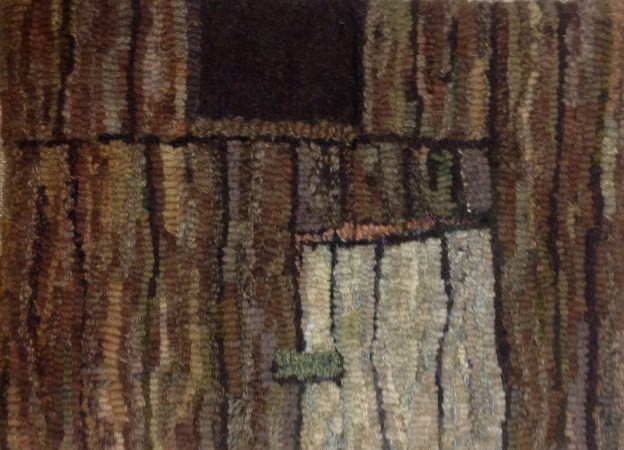
I indicated in REALISM INTERPRETED there was a second piece using the same subject. Here is the process and results.  The first work, “Neighbor’s Barn”, used the subject and evokes the natural nuances of 100 year old chestnut boards.  This piece, “Neighboring Barn”, I challenged myself to simplify using straight lines; evoke more drama with higher contrast; and in the end incorporate hardware to emphasize the design origin.

Originally I drew out a runner (18 x54), as you will see the concept morphed into a square.  Why?  As the length increased I began to ask myself what was I trying to say?  When “I do not know” came back to me I re-evaluated.  I took out the light line in lower right, inserted a dark copper wire and ended the composition at the base of the door.  This way with the hardware the viewer probably sees a weathered structure and my piece has a story to tell.

Realism Interpreted

I have described the technique of rughooking to artists as “painting with fibers”. We use a hook pushing it down through a loose weave backing (usually linen) to make a hole through which we pull up the strip of fabric or yarn held underneath creating a loop.  Then we go back down through a hole close by and pull on the strip again.  Depending on the VALUE, COLOR, TEXTURE AND THICKNESS OF STRIPS  the design evolves similarly to a painter’s brush strokes.
Most of my work has been with strips a bit smaller than 1/4 inch wide.  Since 2014 is the YEAR OF EXPERIMENT AND CHALLENGE, I jumped at an opportunity to spend a weekend in a class led by Roslyn Logsdon in Laurel, MD and use much thinner strips allowing for more changes within the space.  The theme was architecture and I took photos of the barn  across from our lane which I have depicted in several daily squares already.  Time for a larger piece…. 9″ x 12″!  Wow!

Roslyn encourages artists to study a photo, sketch the shapes onto the backing then put the visual away.  Select your fibers (in my case three bundles of brown, green, grays sorted into light, medium and dark) and begin to CREATE the subject you envision.  An artistic interpretation will be the results.  This advice is difficult to follow when the photo is someone close to you, or you THINK too much.  Become the child again and create.

I took her advice to heart only returning to the photo the second day to see where I could add depth by showing light behind the door.  See what you think.   I was so inspired that a second piece was worked up over the last ten days.  But that is for another post.

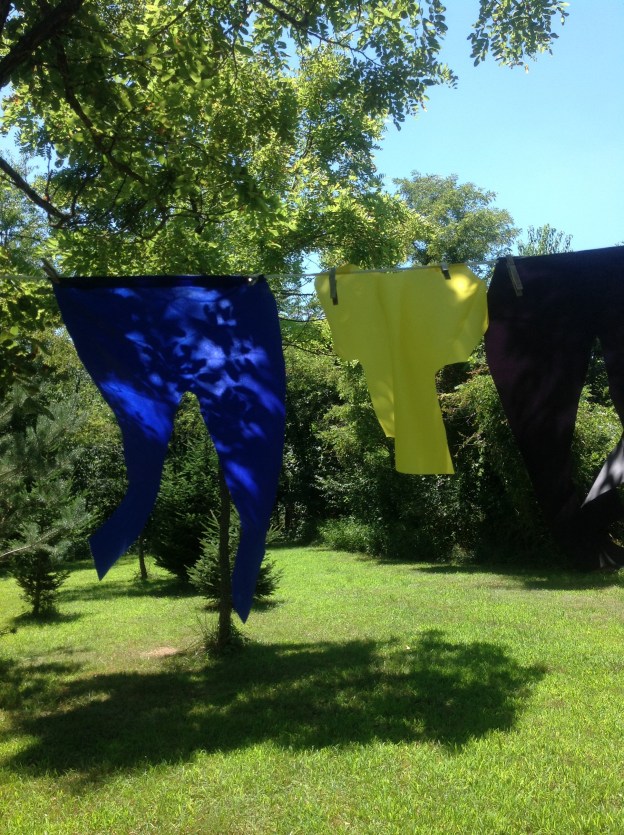
Jim’s newest installation

There are two artists in this home Jim and Susan.  We bounce inspirations off of each other, asking for critiques or just to think out loud.  The conversation recently went something like :

J  I have all of that colored nylon fabric sitting in the bag, when are you going to cut it into clothing shapes for me?

S  I have been waiting for you to tell me what you want?  and why?

J  Well I am not sure why or where I want to hang the “clothes”.  Maybe on the front porch.

S (too quickly) Oh NO.  (then) Well ok, but why?  That is pretty stereotypical. Is that the statement you are looking for?

J  No I want people to say WHY? and I want to create another installation which you and I will enjoy looking at and smile.   How about those locust trees way down in the grove?  We can see it from the kitchen windows and people will wonder who hangs laundry 100 yards from the house.

S  GREAT!  I will get some of my clothes as patterns and cut a pile for you.


Inspirations Everywhere

Fabric Studies

Fabric Studies in month of February 2014, Susan L. Feller

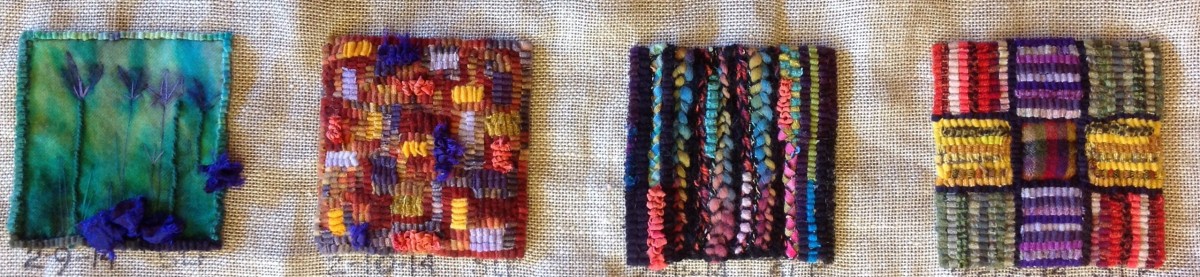
These four blocks were inspired by fabric.  The embroidered and embellished moody blue green I dyed and spoke of irises.  Next the colors from the piece used as overall background set the palette. I will line the back of this square when finished with the wool as an example.  The center panel of the striped piece is a wide, loose trim which I hooked an aqua and pink line through to anchor the fabric to backing.  Then I hooked through the edges and mimicked the patterning by hooking and braiding.  The last one was designed based on the striped fabric in center square.  I used high contrast to reproduce the stripes.

On to May journaling, the trees are bursting into bud and each migrating bird upon arrival is adding their music to the orchestra.  Sounds, sights and memories emerging as subjects.

What is new in your neighborhood? How can you record, document, or reinterpret these experiences?  Tap into your creative space and show others your thoughts.