Tag Archives: Susan Feller

History at Penn Dry Goods

As one of 11 national speakers this year at Penn Dry Goods Market at the Schwenkfelder Library & Heritage Center, Pennsburg, PA my topic of rughooking was well represented in the antique dealers’ collections.  The lecture presented an overview timeline of rughooking techniques from sailors using their tools to pull yarns through canvas for riggings, handsewn coverings to creations that evolved into rugs as an open weave material in burlap became available in the mid 1860’s. Here is the handout listing the resources I used to create this historical background. History of Rughooking from an Artist’s Frame

Spreading through the Maritime Provinces of Canada and New England where winters were long and wool fabric available, I mentioned the people along this journey from pattern makers, authors, collectors, teachers and the artists in every home.  The talk encouraged all to think of the individuals pulling or poking fabric into designs which pleased the maker and now are purchased (or made) to decorate our own homes. This list is just the beginning referring to fine artists who use the technique of rughooking History People who used technique as art

Look at the variety of rugs, mats, framed work the dealers brought.  Interested in one contact the vendor directly, see this list.   I would recommend this event  May 19-20, 2017 with another lineup of presenters and dealers. Exhibits in the museum are interesting anytime. Featured now is Within and Without: the Art of the Book in the Fraktur Gallery

Ani DiFazio Antiques

Ani DiFazio Antiques – hooked on linen pillowcase novelty yarns early 1900’s

Rug published in Hooked Rug Treasury, by Jessie Turbayne now available

Rug published in Hooked Rug Treasury, by Jessie Turbayne now available

David Tuttle  sold

David Tuttle
sold

Gatchellville Store

Gatchellville Store – Madonna hooked in PA early 1900’s

Cat Lady Antiques

Cat Lady Antiques – Mother and children Esther, Philip probably from New England

Nailor Antiques half of a runner, black is heart design

Nailor Antiques
half of a runner, black is heart design

Neverbird Antiques

Neverbird Antiques – Hannah L Hale, Newburyport, MA 1845-1849 sheered yarn

Rose B. Berry

Rose B. Berry


Travel Sketches-Seattle

Beginning a new series based on my travels. The challenge is to simplify the experience.

I decided a journal approach will help develop style and studies for larger art. Less pressure to “nail it” the first time and as you will see, the exercise leads to my goal… concise yet informative designs. Techniques and materials are not clarified yet, although my new supply of cotton fabric and threads will be tapped into.

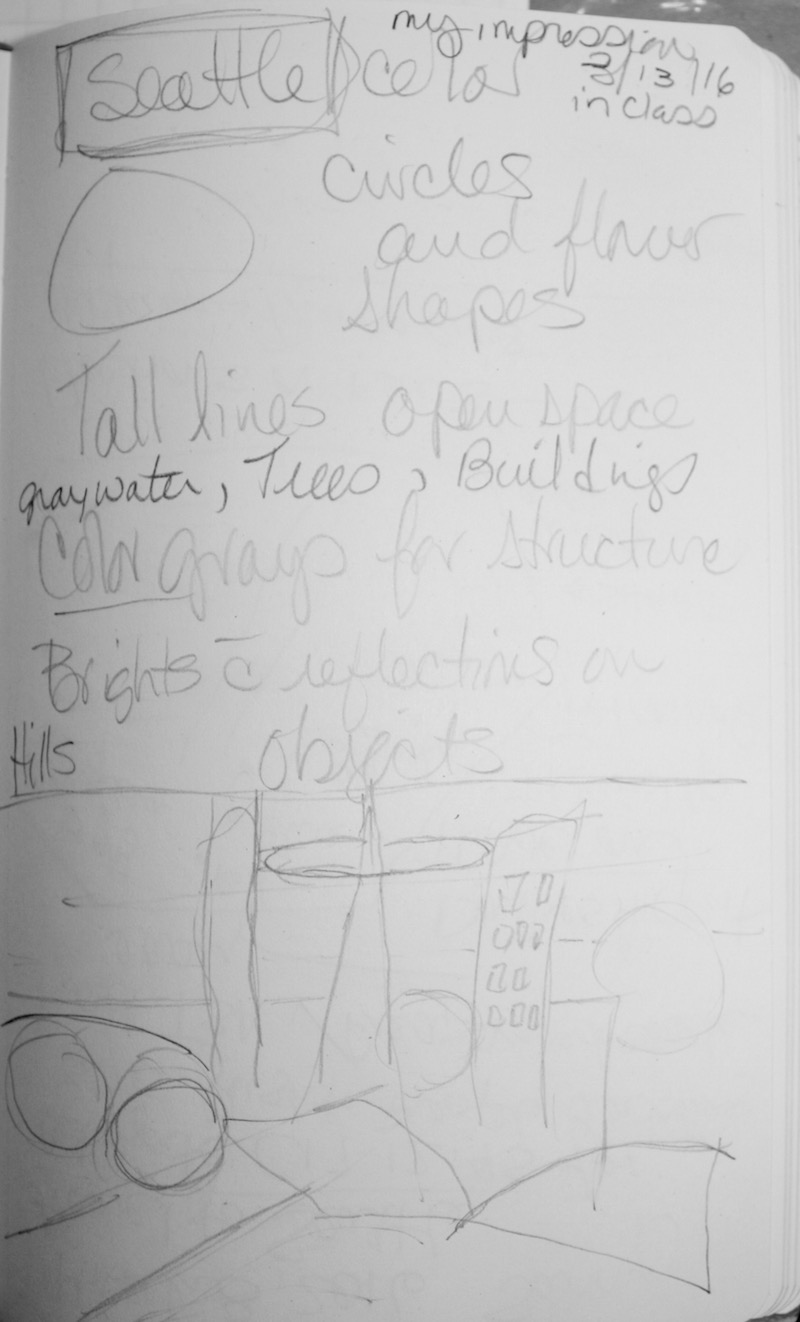
Thanks go to the students in my design class at Puget Sound Rug School, who energized my own creativity. The first sketch is a result of one of the exercises. List a topic, describe it in words and motifs.

Initial Sketch

Initial Sketch

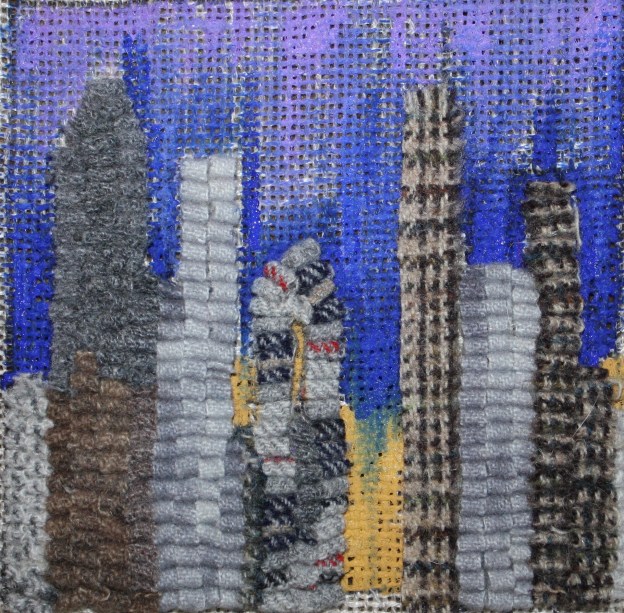
Over the past week I have developed three separate designs inspired by the trip to Seattle. The City View has seen 6 versions so far.  Next steps to decide size, techniques, materials and begin with my favorite tools-my hands. Slowly I will communicate.


Revealing Squares

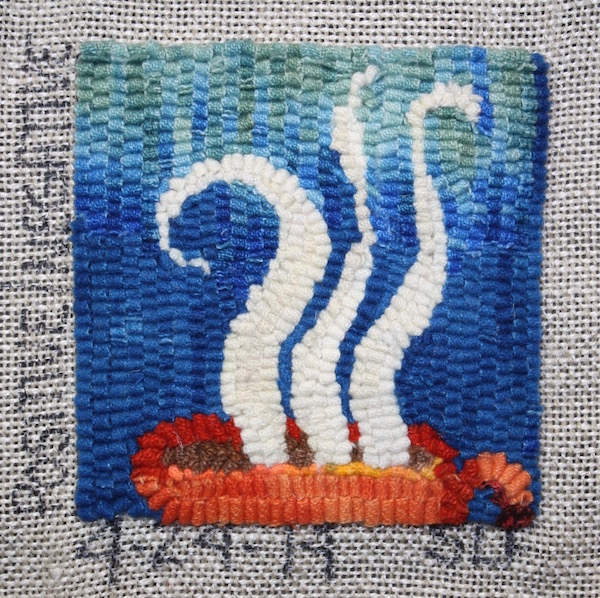
4-24-14 Positive Negative; hooked

4-24-14 Positive Negative; hooked

I am thrilled to announce the administrative work is completed and you can virtually explore the Year Study – square by square.  Review the exhibit here online.

From November 2013, through November 2014 the  individual squares are listed for sale at squareup.com/store/Susan-Feller-ArtWools select STORE then the month you are interested in or scroll through. Sold pieces are not listed on the sale site but you can still study them at www.ArtWools.com/year-study.

Looking forward to conversations in person, here online and through articles about creativity, process and product.

Finishing up the Study

March 23 I finished the last month in the Year Study.  That is not to mean every single square is completed but I can say there is an end in sight and the twelve panels will be ready for Sauder Village Rug Hooking Week August 11-15 in Archbold, OH.

Visit Year Study – Collection Gallery to see the months and individual squares.  Over time the full project will be uploaded.

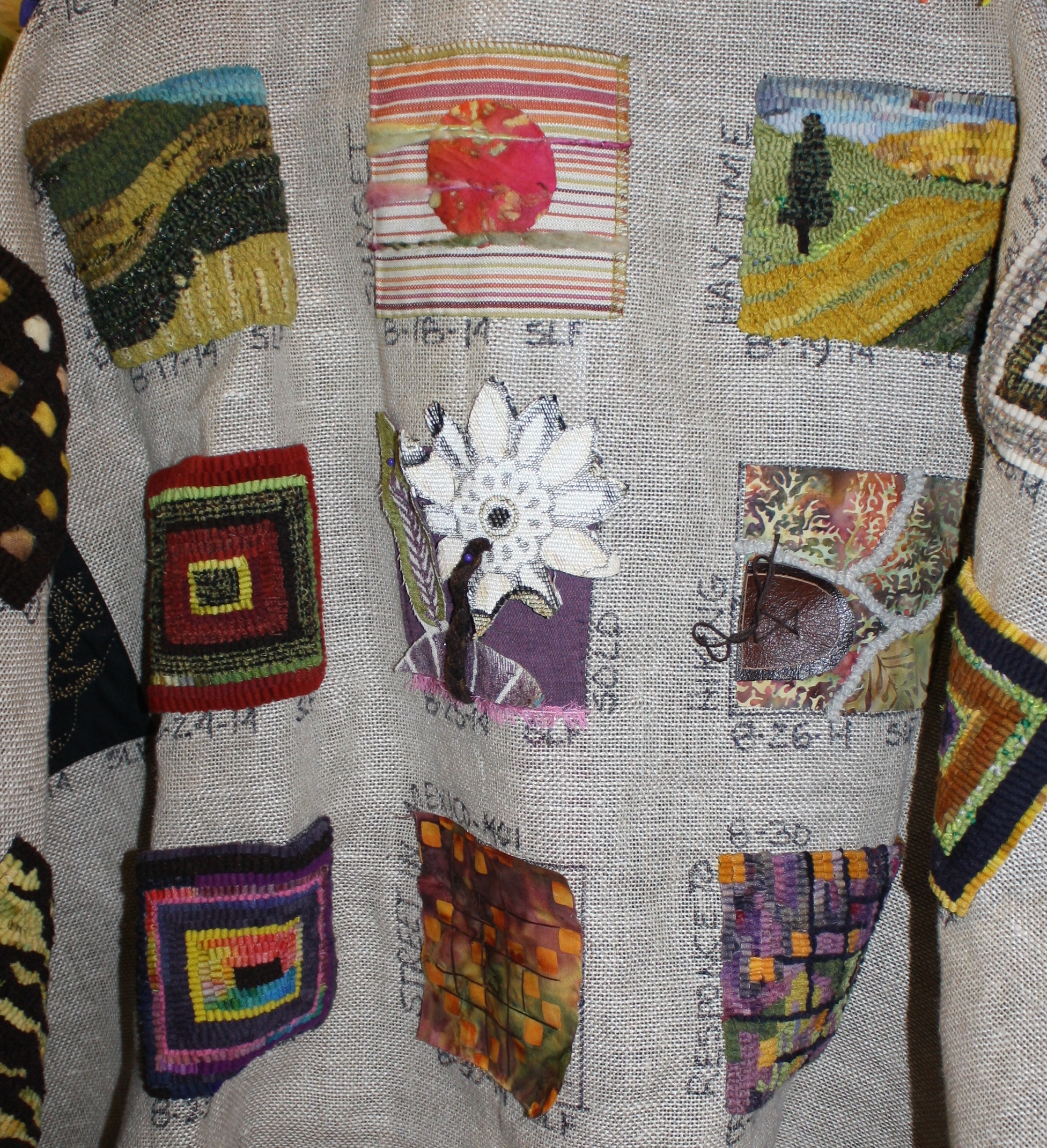
August 2014 nine squares

August 2014 nine squares

Lessons learned? Sketch and complete each subject at least within the month.  I jumped around and when busy with teaching stopped working on the pieces until months later.  The creative momentum was lost for a particular design or a techniqueI had suggested did not interest me when it came around to doing that square. So I changed it.

I still procrastinate.  Although deadlines are met, I prioritize the projects and decide whether a commitment is worth pursuing or can be shelved.  This one will be completed because I told many people, it has been accepted as an exhibit, I am happy with the results, the documentation will be useful in future articles, workshops and the direction of my artwork practices.

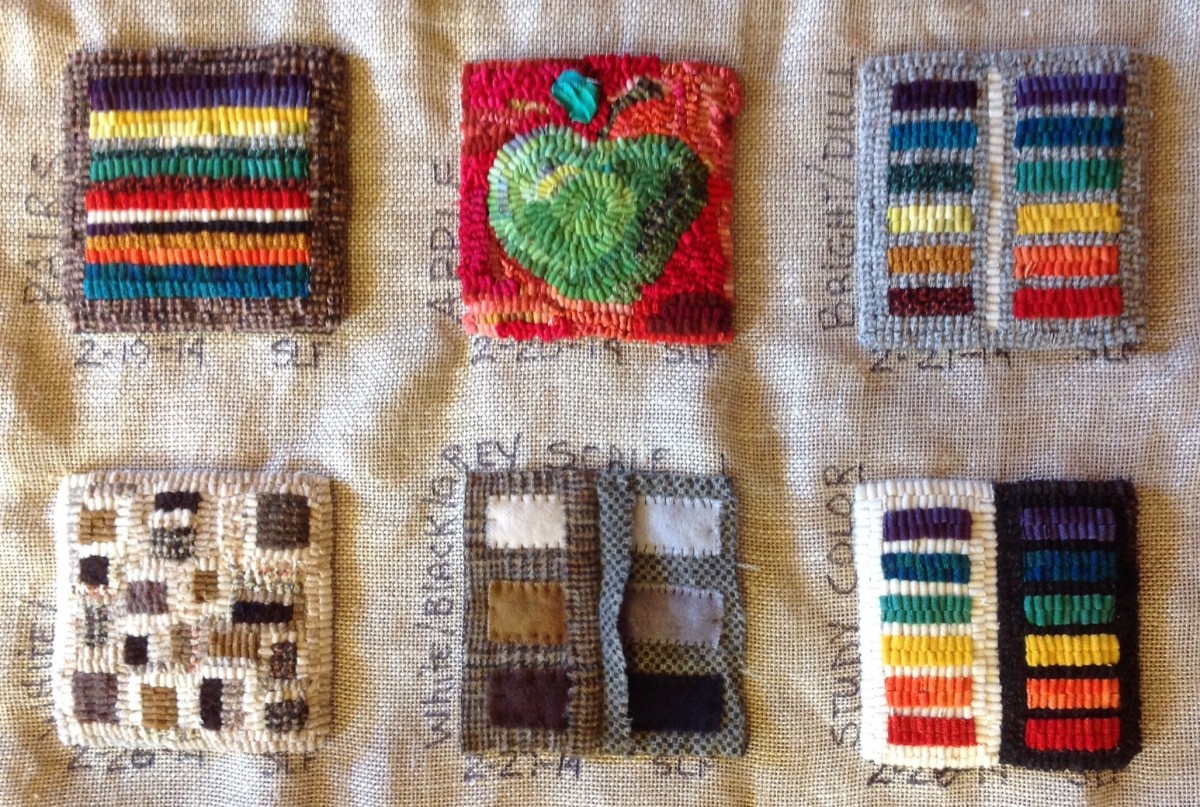
Color studies

Color studies

Solution:  Independent study with one person as student and advisor means goals or methods can be changed to meet the situation.  Stay positive do not chastise, evolve. I changed some designs from original sketch.  There were days with no sketches which I used to explore a series with pleasure.  I got through by breaking the 365+pieces  down into segments of a each month.

Results: When the project began I thought it would be rewarding to explore new techniques in surface design.  Now 18 months later and counting, that goal was met and I have set another one: to educate. During the year photographs were taken when changes were made to a piece.  I will write a series of articles describing the process, challenges and solutions.  In future posts and the pages on the site under Year Study, mini courses will develop and a dialog with viewers.  I found using social media helpful for encouragement, directed critique and developing an interested audience.

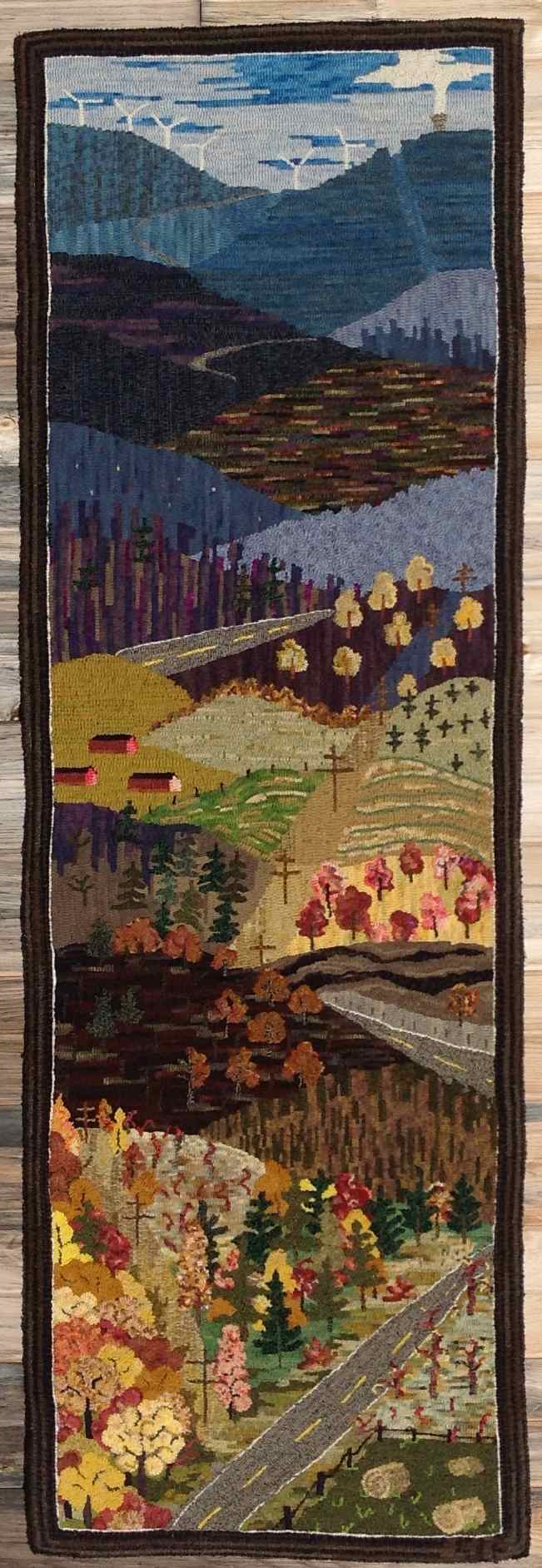
Progress in the Mountains, Susan L. Feller 2014

Progress in the Mountains, Susan L. Feller 2014

There is an urge to work on larger pieces finally.  Abstract, geometric, simplified palettes, and environmental stories are the styles and subjects which will be developed.


To be continued. I am glad to be on this creative journey with you.

Virtual Studio Visit – Susan L. Feller

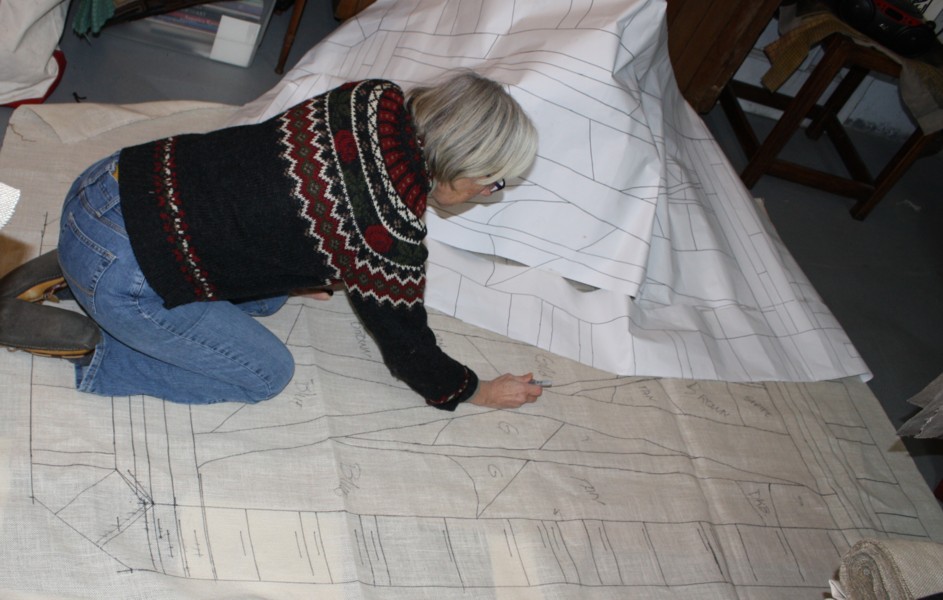
Transfer design to linen backing

Transfer design to linen backing

As a creative person I would love to stay in the studio and work, but no one sees the results unless they visit. These days a virtual visit can be arranged if some of that creative time is put into developing websites, blogs and social media avenues.

Here are ways you can view, learn about, and purchase some of that artwork:

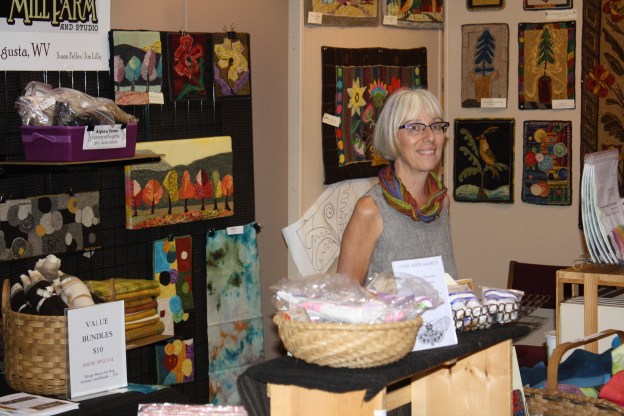
Ruckman Mill Farm color logo  We are revamping the website www.RuckmanMillFarm.com It is back up now. Hope you check it out regularly to see new and favorite rug hooking patterns, supplies, and my teaching schedule.  Use the coupon FaceShip when checking out to receive free shipping until March 31.  And please send me comments on the navigation and order process, we can improve with input. Here in the hills of West Virginia it is loading SLOWLY……

The site you are on now,  www.ArtWools.com serves as my identity as an artist and also acts as a blog. If you are new to it, I invite you to look on the right sidebar and sign up for automatic posts . Search the pages to view Galleries and biographical details.

We are now on Facebook on two pages Ruckman Mill FarmSusan L. Feller, Artwools , LIKE them for news feeds.

And I have several boards on Pinterest at Susan Feller at Artwools

Hoping to hear from you after “visiting” 24-7.

Setting up an Exhibit

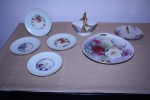
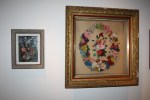
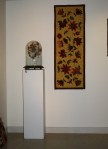
Ever wonder how an exhibit comes together for opening day?  Here are some behind the scenes shots as we set up ‘Garden to Table: hooked rugs and art from the collection at the Schwenkfelder Library and Heritage Center, 105 Seminary Street, Pennsburg, PA.

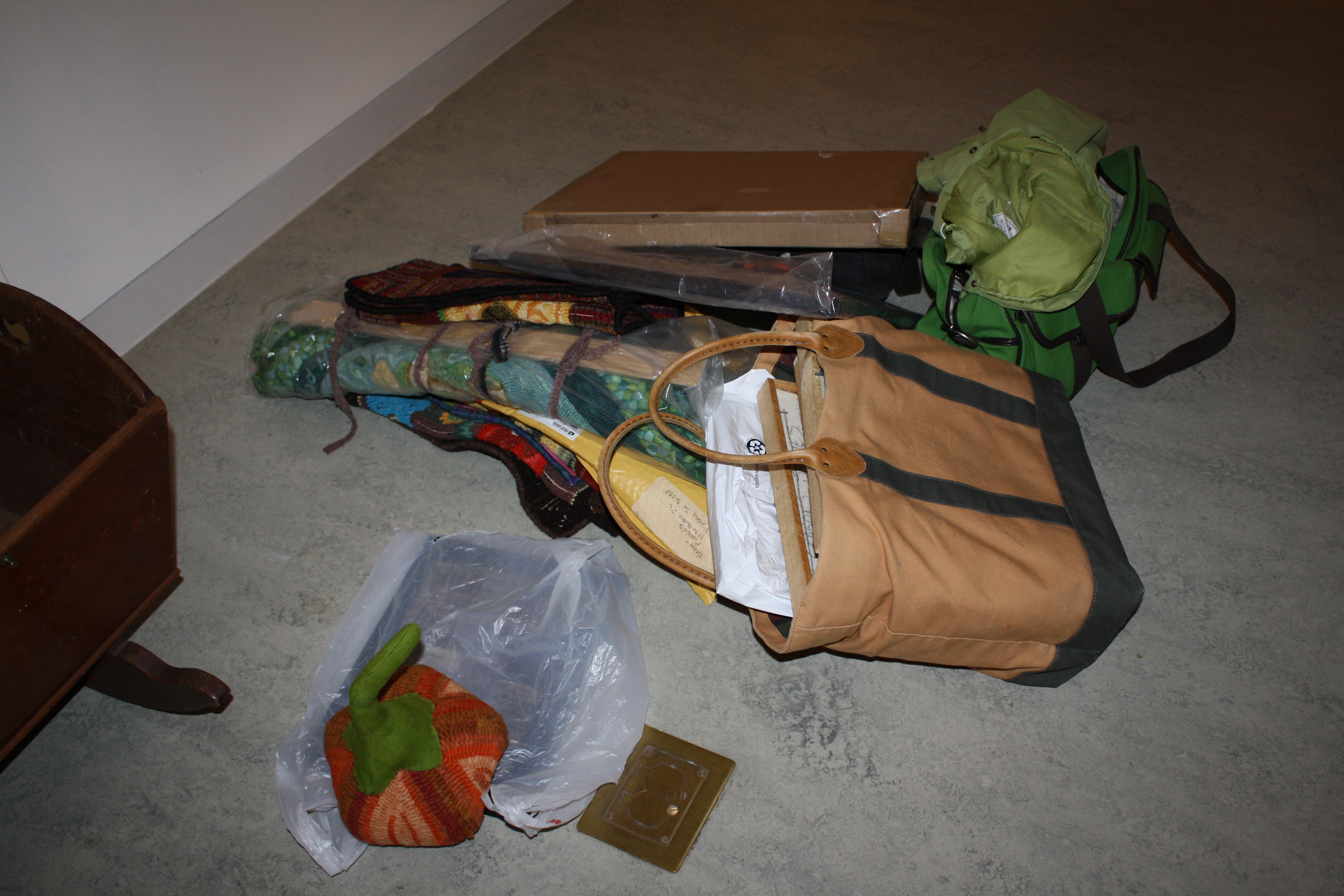
Delivery of hooked, sculpted and braided pieces

Delivery of hooked, sculpted and braided pieces

Works from Indiana, New Hampshire, Vermont, Virginia and West Virginia were collected by me complimenting the theme ‘Garden to Table’.  I brought them into the Fraktur Gallery at the Schwenkfelder on Thursday and the fun began.  The previous exhibit was off the walls but still in the room including a wooden cradle, cases and a cart filled with stuffing.

One exhibit down another going up

One exhibit down another going up

Candace Perry, Curator of Collections showed me items from their archives already on the walls including a flower wreath of feathers in a manner not known to her to be made in the 21st Century.  We discussed adding redware flower pots, hand painted china from early 20th C, an oil painting by Walter Baum, Berlin work and Frakturs representing the 19th and 18th Centuries.  Off she went into the archives and I began to intermingle the fiber work with the objects.

Why did one item end up next to another?  Sometimes it is color, could be shapes, maybe subject perhaps it is traffic flow.  All of these options came into play today.  The following two images show how moving an object slightly to the left and on an angle gives more space to the rug and flower arrangement.

Tomorrow we hang the rest of the work, bring in the large display case with four domed wax fruit compotes!, label the objects, sweep the floor and redirect the lighting just in time for the official opening on Saturday.  This exhibit will be up through March 1.  The Heritage Center is open Tuesday through Sunday visit www.Schwenkfelder.com for directions, exhibit descriptions, and hours.

Thanks to Darlene York Trout, Patsy Jones, Kris McDermet, Mary Jane Peabody, and Carolyn Boutilier for contributing hooked work to the collection.

Reflecting on a Portrait

Seems one is not enough these days. This post is how one portrait lead to another.

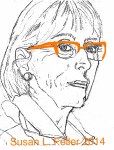
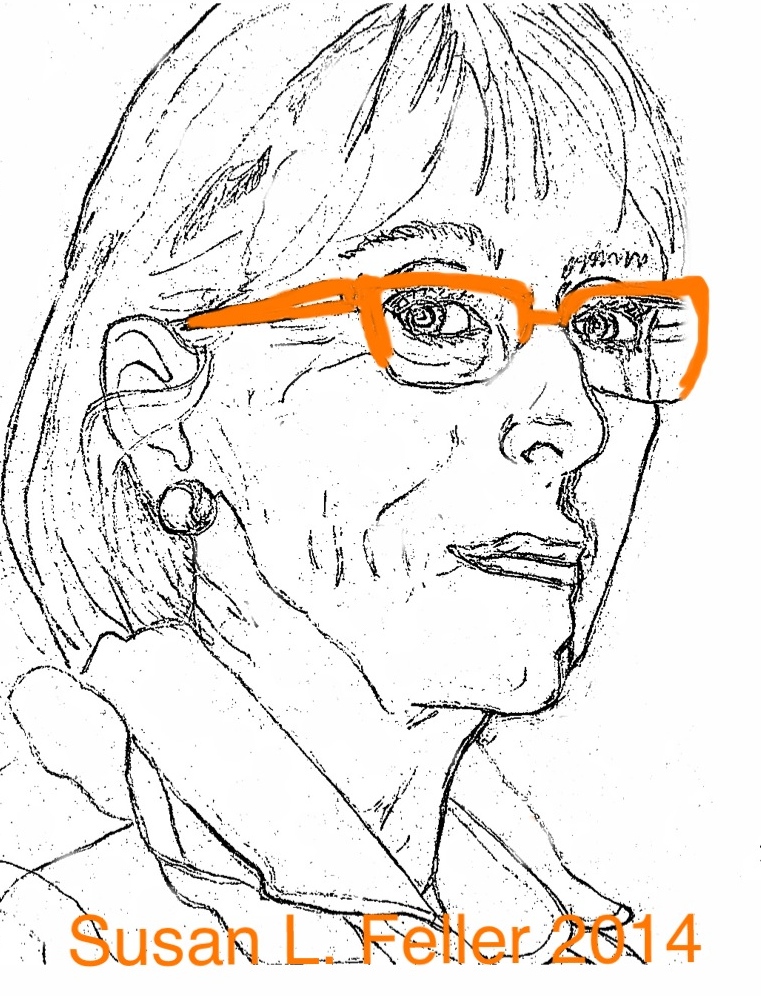
Inspired to simplify the design I hooked with such detail, I took one of the sketches and traced the outline, neck, hairline and glasses. Then out came the colored pencils and I played around with value and color.  That exercise was frustrating — wrong values, colors not quite right and I did not like “coloring”. But it did help me realize which values would communicate a face in side profile – (darker cheek behind full face, medium face and light hair); and that using color may not be how I wanted to create this work.

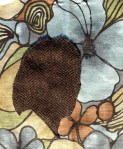
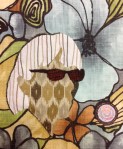
I had just picked up an armload of discontinued fabric samples from Dillon’s Furniture in Romney with intent to incorporate them into my work like the McDonald sisters of Gilmer County, WV who used scraps of fabric in their trapunto, embroidered, faux hooked tapestries circa 1964. (A post for the future).  It felt like I had hit GOLD when I looked at that pile!  Selecting a dark solid, medium texture and white lined fabric, I cut out patterns and began layering these on a MOD FLOWER pattern which said 1970’s to me. To hide the stitches I had to use threads matching the fabric.  These decisions lead me to dwell on my memory of embroidery skills.

It just happened the first layer was as dark as the lines of the pattern fabric. Noticing this, I positioned the next layers to expose the equivalent of the lines.  When in a creative session I try to remember to come out of the eagerness once in awhile and look at possibilities.  Being aware of happenstance and flexible enough to evolve is where artistic growth happens along with fun.

As you can see, the glasses were too important (and too dark), and gradually I trimmed them to just the actual frame which is enough for recognition. This piece will be finished in a thin black metal frame. Size is 14 x 11.

Although both faces are the exact same size, the positioning on background; detail in face; and scale of motifs in background mislead the viewer to think the appliquéd one is smaller.

Portrait transformation

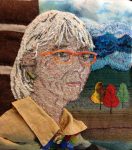
Realism is the quest in my current studies.  I decided to work a self-portrait close to life size using #3 strips (3/32″ wide) for detail.  A group in Harrisonburg, VA brought instructor Donna Hrkman in for three days and I took advantage of her expertise to start the project.   The lesson which stayed with me was to use line of pronounced value to infer shape, attitude, texture, form. Our brain will finish the picture based on its knowledge.

Susan L. Feller 2014

Susan L. Feller 2014

Lesson 1: PREPARE  I sent this photo to Donna who  created a pattern using a grid to enlarge the details.  I also ran the photo through an app for iPad called uSketch and selected a washed out version with strong main lines.

Sketch for self-portrait

Sketch for self-portrait

This image was enlarged to fit a 12 x 16 format and directly sketched  using a lightbox.  I then drew the portrait by eye (ending up with softer features than the direct sketch.) By drawing the pattern myself several times I was prepared to notice nuances and hook the shapes and lines.

Lesson 2: If the subject is close to you, draw the design yourself.  I used Donna’s pattern and my guides trying to replicate what I was seeing not my mind’s interpretation of the subject.  You will see the first image (worked on for two days) needs severe sculpting to become recognizable to my friends as me.

Day 2 Portrait Susan L. Feller, Donna Hrkman pattern

Day 2 Portrait Susan L. Feller, Donna Hrkman pattern

Lesson 3: Color can draw attention and lead the viewer to a conclusion.  Glasses, hair, and background elements are in strong recognizable colors depicting me in 2014. I had brought along the actual drapery fabric from the photo as background but Donna suggested I use symbols to highlight my rughooking journey.

Personality coming through

Personality coming through

I selected two award winning designs My Mountain State and Mountain Treeline. The abstract hooked blue/purple skyline reproduces the first and the appliquéd colored tree shapes infer the latter and my favorite season. One more element that describes me is living in a log home here in West Virginia.  I decided to take the right third behind the face to show that structure. Simple horizontal lines of dark texture and natural linen became the logs.

Lesson 4: Simplify but complete the story. I almost forgot a major element in Ruckman Mill Farm’s pattern line is FRAKTUR designs. What motifs could I insert into this natural setting that would read PA German folk art? Of course! The circle from Baptism Certificate which has my birth date, parents and my name was printed and laminated to become a pin on the shirt.  I signed the piece and added one more symbol all in one.

Symbols tell story Susan L. Feller

Symbols tell story Susan L. Feller

Lesson 5: If it is not right, fix it.  All along you will notice I got closer to a recognizable rendition of Susan Feller except for the LIPS. Donna said the lower lip usually is lighter because it protrudes slightly.  She suggested using one size larger cut for the lower lip and both larger than the #3 cuts for the face.  I looked at the photo and convinced myself the reverse would be true in my case.  Extreme light and dark values were chosen, wide cuts, narrower, slightly up turned, straight across all not quite right.  I pulled out Anne-Marie Littenberg’s book Hooked Rug Portraits by Stackpole Books and read through it.  There was one image similar to mine that used several different values to portray the light on lips.  Posted that version on Facebook and received accolades.  But it was not until I asked Roslyn Logsdon to critique the lips that I heard the answer: AGAIN—“the lower lip needs to be lighter!!!!!!”

Lesson 6: Use the right tools from your tool box.  My life has involved textiles since childhood. Hand sewing, embroidery, dying fabric and using found objects often shows up in the wall art I create.  No reason to restrict this historical portrait to just rughooking. I added my favorite linen shirt, sea glass jewelry, embroidery and appliqué to enhance the hooked features and intend to finish the piece with a tramp art frame. What fun!


Graphic Realism

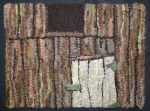
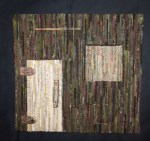
I indicated in REALISM INTERPRETED there was a second piece using the same subject. Here is the process and results.  The first work, “Neighbor’s Barn”, used the subject and evokes the natural nuances of 100 year old chestnut boards.  This piece, “Neighboring Barn”, I challenged myself to simplify using straight lines; evoke more drama with higher contrast; and in the end incorporate hardware to emphasize the design origin.

Originally I drew out a runner (18 x54), as you will see the concept morphed into a square.  Why?  As the length increased I began to ask myself what was I trying to say?  When “I do not know” came back to me I re-evaluated.  I took out the light line in lower right, inserted a dark copper wire and ended the composition at the base of the door.  This way with the hardware the viewer probably sees a weathered structure and my piece has a story to tell.

Inspirations Everywhere

Fabric Studies

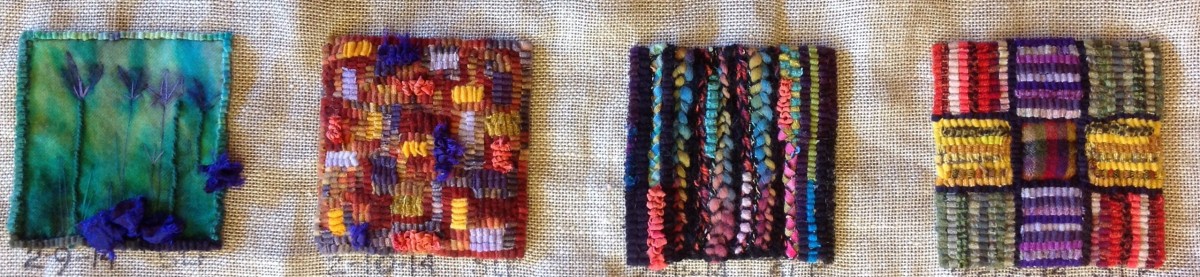
Fabric Studies in month of February 2014, Susan L. Feller

These four blocks were inspired by fabric.  The embroidered and embellished moody blue green I dyed and spoke of irises.  Next the colors from the piece used as overall background set the palette. I will line the back of this square when finished with the wool as an example.  The center panel of the striped piece is a wide, loose trim which I hooked an aqua and pink line through to anchor the fabric to backing.  Then I hooked through the edges and mimicked the patterning by hooking and braiding.  The last one was designed based on the striped fabric in center square.  I used high contrast to reproduce the stripes.

On to May journaling, the trees are bursting into bud and each migrating bird upon arrival is adding their music to the orchestra.  Sounds, sights and memories emerging as subjects.

What is new in your neighborhood? How can you record, document, or reinterpret these experiences?  Tap into your creative space and show others your thoughts.